


Introduction
You’re planning a family vacation or a trip with friends, and you’ve just found what seems like the perfect hotel room—spacious, well-located, and reasonably priced. The listing mentions it includes a “sofa bed” for additional sleeping arrangements. But before you click that “book now” button, a critical question surfaces: What does that actually mean for your comfort and the quality of your stay?
The sofa bed hotel experience has become increasingly common as travelers seek flexible accommodations that balance space and budget. Hotels market these rooms as ideal solutions for families, groups, and extended stays, promising the convenience of extra sleeping space without booking multiple rooms. However, the reality of sleeping on a hotel sofa bed can vary dramatically—from surprisingly comfortable experiences that rival regular mattresses to sleepless nights on lumpy, outdated frames that leave guests with backaches and regret.
Understanding what you’re really getting when you book a hotel room with a sofa bed isn’t just about comfort—it’s about making informed decisions that affect your entire travel experience. Will the sofa bed accommodate adults comfortably, or is it only suitable for children? Does the hotel regularly maintain these convertible furnishings, or have they been neglected for years? Can you trust the room photos and descriptions when booking online?
In this comprehensive guide, you’ll discover everything you need to know about sofa bed hotels—from the various types and quality standards you’ll encounter to expert booking strategies that help you avoid disappointment. We’ll explore real guest experiences, reveal insider tips from hotel industry professionals, examine the pros and cons of these sleeping arrangements, and answer the most frequently asked questions about hotel sofa beds. Whether you’re a parent planning a family getaway, a budget-conscious traveler, or simply curious about maximizing your accommodation options, this guide provides the practical knowledge you need to book confidently and sleep comfortably.
What Does It Mean When a Hotel Room Is Listed to Have a Sofa Bed?
When you see “sofa bed” in a hotel room description, you’re looking at accommodations that feature convertible furniture designed to serve dual purposes—comfortable seating during the day and an additional sleeping surface at night.
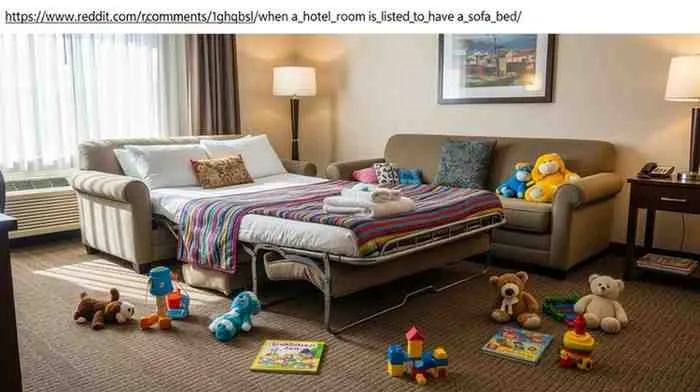
Types of Hotel Sofa Beds
Pull-Out Sofa Beds (Most Common): These traditional convertible sofas contain a folding metal frame with a thin mattress tucked inside the sofa base. Guests pull out the hidden bed frame, which unfolds to create a sleeping surface typically measuring 54-72 inches wide (full to queen size). The mattress thickness varies considerably between hotels, ranging from 4-6 inches in budget properties to 8-10 inches in upscale establishments.
Sleeper Sofas with Memory Foam: Higher-end hotels increasingly offer upgraded sleeper sofas featuring memory foam or hybrid mattresses that provide better support and comfort. These premium options address the historical complaints about traditional sofa bed discomfort and represent a significant quality improvement in the industry.
Futons: Some hotels, particularly in urban markets and extended-stay properties, install futons instead of traditional pull-out sofas. These Japanese-inspired convertibles fold flat from a sitting to sleeping position without complex mechanisms. Quality varies tremendously—from basic cotton-filled pads to substantial foam-core mattresses.
Convertible Sectionals: Luxury suites and modern boutique hotels sometimes feature sectional sofas with removable backs and ottomans that reconfigure into sleeping surfaces. While stylish, these often sacrifice comfort for aesthetic appeal.
Murphy Beds Disguised as Sofas: A newer innovation combines wall beds with sofa functionality. When closed, they appear as standard sofas; when opened, they reveal full-size mattresses that pull down from decorative cabinets or wall units.
Standard Dimensions and Capacity
Most hotel sofa beds accommodate one to two adults or up to three children comfortably. The typical sleeping surface measures:
- Full/Double Size: 54 inches wide x 72-75 inches long (most common)
- Queen Size: 60 inches wide x 75-80 inches long (upscale properties)
- Twin Size: 39 inches wide x 75 inches long (compact rooms)
Hotels calculate occupancy assuming the sofa bed provides legitimate sleeping space for additional guests beyond the primary bed(s) in the room. Understanding these dimensions helps you realistically assess whether the arrangement suits your group’s needs.
Are Hotel Sofa Beds Comfortable Enough for a Good Night’s Sleep?
The honest answer: it depends dramatically on the hotel’s quality standards, maintenance practices, and your personal comfort preferences.
Comfort Factors That Vary by Property
Mattress Thickness and Quality: Budget hotels typically install 4-5 inch mattresses with minimal padding and basic innerspring construction. Mid-range properties offer 5-7 inch mattresses with better materials. Luxury hotels invest in 6-10 inch mattresses featuring memory foam, gel layers, or hybrid construction comparable to their primary beds.
Frame Condition and Support: The metal frame supporting the mattress significantly impacts comfort. Older frames develop saggy centers, squeaky joints, and pressure points where bars press through thin mattresses. Well-maintained frames remain sturdy and provide even support across the entire sleeping surface.
Bedding Quality: The linens, blankets, and pillows provided for sofa beds often differ from those on primary beds. Premium hotels supply identical bedding quality, while budget properties sometimes provide thinner sheets and fewer pillows for sofa bed guests.
Room Temperature and Ventilation: Sofa beds positioned away from windows or HVAC vents can become uncomfortably warm or cold. The lack of a proper bed frame also means no airflow beneath the mattress, potentially causing heat retention issues.
Real Guest Comfort Ratings
Analysis of hotel reviews across major booking platforms reveals these comfort patterns:
Luxury/Upscale Hotels (4-5 Stars): Approximately 65-75% of guests report sofa beds as “comfortable” or “acceptable” for sleeping, with many noting they slept better than expected. Common positive mentions include adequate mattress thickness, quality linens, and good frame condition.
Mid-Range Hotels (3 Stars): About 45-60% find sofa beds acceptable, with comfort described as “tolerable” rather than “good.” Complaints about thin mattresses and metal bar discomfort increase significantly in this category.
Budget Hotels (2 Stars or Less): Only 25-40% rate sofa bed comfort positively. Frequent complaints include mattresses so thin that guests feel the frame, lumpy padding, stained or worn materials, and squeaky mechanisms.
Who Sleeps Comfortably on Hotel Sofa Beds?
Children and Teens: Most young people adapt well to hotel sofa beds, finding them perfectly adequate for vacation sleeping. Their lighter weight reduces pressure points, and their flexibility makes temporary sleeping arrangements less problematic.
Occasional Users: Adults who only spend 1-2 nights on a sofa bed generally tolerate the experience, especially when exhausted from travel or activities.
Back and Side Sleepers: Individuals who sleep on their backs or sides have better experiences than stomach sleepers, who often struggle with the lack of firm, even support.
Light Sleepers and Those with Back Issues: People with chronic pain conditions, sleep disorders, or particular mattress requirements frequently report unsatisfactory experiences with hotel sofa beds, regardless of quality level.
Booking a Hotel with Sofa Bed: Expert Strategies for Success
Securing a comfortable sofa bed experience begins long before check-in, starting with strategic booking practices that increase your chances of receiving quality accommodations.
Research and Verification Techniques
Read Recent Reviews Specifically Mentioning Sofa Beds: Generic positive reviews don’t reveal sofa bed quality. Filter for reviews from families or groups who actually used the convertible sleeping arrangement. Look for specific comments about mattress thickness, comfort level, and frame condition rather than vague assessments.
Examine Room Photos Carefully: Legitimate photos showing the sofa bed in both configurations (sofa and bed modes) indicate transparency. Be wary of listings that only show the sofa closed or use stock images. Zoom in on photos to assess the sofa’s apparent age and condition.
Check Hotel Renovation Dates: Recently renovated properties typically feature newer sofa beds with better mattresses and frames. Hotel websites often list renovation dates in their “About” section, or you can call directly to inquire.
Verify Mattress Specifications: Progressive hotels now list sofa bed mattress details (thickness, materials, dimensions) in their room amenities. If this information appears on the booking page, it suggests the hotel takes these sleeping arrangements seriously.
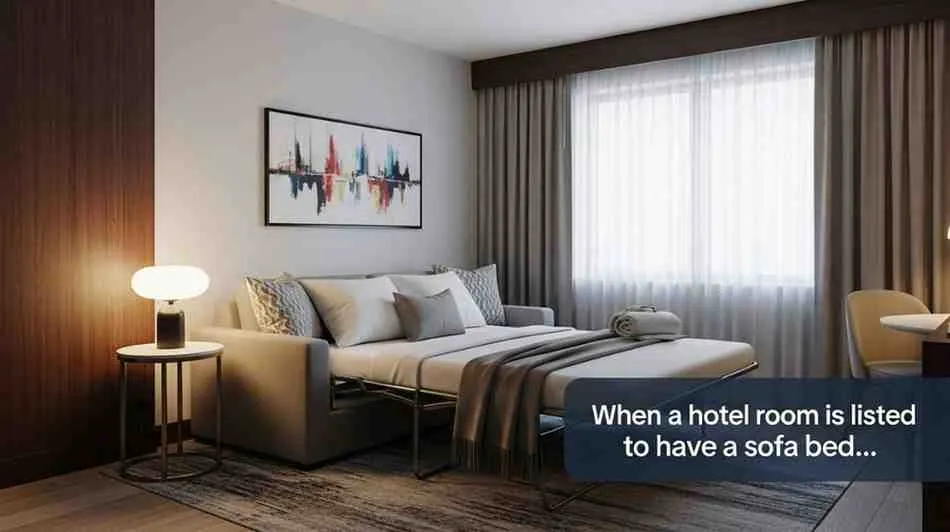
Communication Strategies
Call the Hotel Directly: After booking online, phone the property to confirm your sofa bed room and request their newest or best-maintained unit. Explain you have guests who will actually sleep on the sofa bed and ask about mattress quality. Front desk staff can often note your preference in the reservation.
Join Loyalty Programs: Hotel chain members frequently receive room upgrades, better maintenance, and more responsive service. Even free basic memberships improve your leverage when requesting specific room conditions.
Request Ground Floor or Lower Floors: These rooms often receive more frequent furniture updates due to higher housekeeping traffic and easier access for maintenance crews.
Ask About Mattress Toppers: Some hotels provide memory foam toppers upon request to improve sofa bed comfort. This simple addition dramatically enhances sleep quality at no additional cost.
Booking Platform Considerations
Direct Hotel Bookings vs. Third-Party Sites: Booking directly with hotels provides better communication channels and more flexibility for special requests. Third-party platforms offer lower prices but limit your ability to specify room conditions or communicate preferences.
Refundable Rates: Choose refundable booking options when sofa bed quality concerns you. This allows you to cancel after arrival if the sleeping arrangement proves unacceptable, particularly important for multi-night stays.
Suite Alternatives: Sometimes upgrading to a junior suite with a higher-quality sofa bed costs less than booking two separate rooms. Compare total costs including taxes and fees before assuming the sofa bed room represents the most economical choice.
Hotel Sofa Bed Comfort: What Hotels Don’t Always Tell You
The hotel industry markets sofa bed rooms as convenient, flexible accommodations, but several realities remain unspoken in official descriptions.
The Maintenance Gap
Primary hotel beds receive regular rotation, flipping, and replacement according to franchise standards or property policies. Sofa bed mattresses rarely follow the same maintenance schedules. Industry insiders report that sofa beds might go 7-10 years between replacements compared to 5-7 years for primary mattresses, resulting in deteriorated comfort long before visible wear appears.
Hotels also prioritize primary bed quality because it directly impacts review scores and repeat bookings. Sofa beds, used by a smaller percentage of guests, receive less investment and attention despite being explicitly marketed as sleeping accommodations.
The Photo Reality
Room photographs almost never show sofa beds in their deployed sleeping configuration with actual bedding. You’re seeing an attractive sofa—not the sleeping reality. The thin mattress, visible frame edges, and awkward positioning within the room remain hidden until after you’ve booked and arrived.
Some properties photograph their newest sofa bed once and use those images across multiple room categories for years, even after installing that specific unit elsewhere or allowing its condition to decline.
Hidden Costs and Fees
While the room rate appears economical, hotels sometimes charge additional fees for extra guests using the sofa bed—resort fees, additional person charges, or mandatory bedding fees that weren’t obvious during booking. These surprise costs can eliminate the economic advantage of choosing a sofa bed room over booking two standard rooms.
Size Limitations
Marketing materials describe sofa beds as “queen” or “full” size, but the actual usable sleeping surface often measures smaller due to:
- Frame edges that narrow the effective width
- Uneven surfaces where mattress sections meet
- Support bars running beneath the sleeping area
- Armrests that don’t fold flat, reducing length
A “queen” sofa bed might provide only 56 inches of comfortable width compared to a standard queen bed’s 60 inches—a meaningful difference for two adults.
The Sofa Bed Mattress Quality Question in Hotels
Understanding what you’re actually sleeping on helps set realistic expectations and informs your booking decisions.
Construction Types
Innerspring Mattresses (Most Common): Traditional metal coil systems with minimal padding layers. Budget hotels use basic innerspring construction with 4-5 inches of total thickness and perhaps 1 inch of foam padding over the coils. These provide poor pressure relief and often allow sleepers to feel the frame beneath.
Memory Foam (Growing Trend): Progressive hotels install 5-8 inch memory foam mattresses that conform to body shapes and eliminate the “metal bar” sensation. These represent significant comfort improvements but remain less common due to higher costs.
Hybrid Construction (Premium Properties): Luxury hotels combine innerspring support with memory foam or latex comfort layers, creating mattresses that rival primary bed quality. These 8-10 inch mattresses justify premium room rates and generate positive reviews.
Air Mattresses (Rare): A few innovative properties have experimented with inflatable mattresses with adjustable firmness. While theoretically customizable, these require inflation equipment and create potential failure points.
Durability Concerns
Sofa bed mattresses endure unique stresses that regular mattresses don’t face:
- Repeated Folding: Constant bending damages internal structures faster than normal wear
- Metal Frame Contact: Pressure from the frame creates permanent indentations and weak spots
- Storage Compression: Being folded inside the sofa compresses materials and reduces loft
- Inconsistent Support: The folding frame creates uneven pressure distribution that accelerates wear
Even high-quality sofa bed mattresses typically lose optimal comfort within 3-5 years compared to 7-10 years for traditional mattresses—yet hotels often extend usage far beyond these timeframes.
Health and Hygiene Considerations
Sofa bed mattresses present unique cleaning challenges. Unlike primary beds with mattress protectors changed during regular housekeeping, sofa bed mattresses often lack protective covers and receive deep cleaning only during room renovations. This raises concerns about:
- Allergen Accumulation: Dust mites, pollen, and other allergens build up in mattress materials
- Moisture Issues: Spills, humidity, and occasional accidents penetrate unprotected mattresses
- Bacterial Growth: Warm, dark storage inside sofas creates environments conducive to bacterial proliferation
Travelers with allergies or sensitivities should inquire about mattress protectors and cleaning protocols before booking sofa bed accommodations.
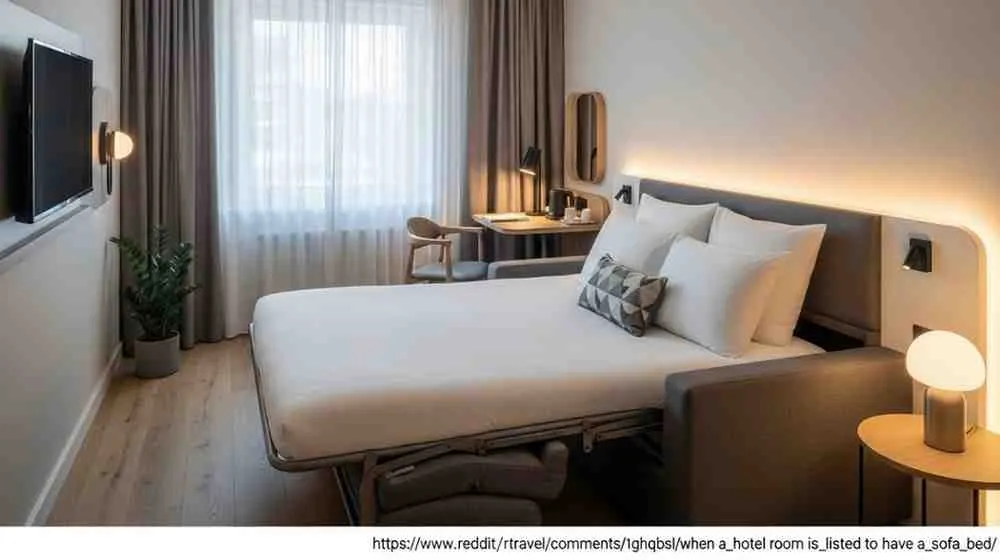
Extra Sleeping Arrangements in Hotels: Comparing Your Options
Hotels offer several alternatives to sofa beds for accommodating additional guests. Understanding these options helps you make better booking decisions.
Rollaway Beds / Cots
Many properties provide portable folding beds upon request, typically at $15-35 per night. These feature:
Advantages: Dedicated sleeping surface with 4-5 inch mattress, easier setup than sofa beds, can position anywhere in room, dedicated bed frame keeps mattress off floor.
Disadvantages: Takes up floor space during entire stay, basic comfort comparable to budget sofa beds, limited availability (first-come basis), may incur additional fees.
Best For: Single additional guests, short stays, rooms with ample floor space.
Connecting Rooms
Booking two standard rooms with a connecting door costs more but provides:
Advantages: Everyone sleeps on quality mattresses, privacy for different age groups, separate bathrooms reduce morning congestion, total space exceeds suite dimensions.
Disadvantages: Significantly higher total cost, limited availability, sound transfers between rooms, requires booking well in advance.
Best For: Families with teenagers, groups wanting privacy, extended stays where sleep quality justifies cost.
Suite Upgrades
Junior suites and one-bedroom suites typically include higher-quality sofa beds plus separated sleeping areas:
Advantages: Better sofa bed quality, spatial separation improves sleep, often includes kitchenettes, total cost may be less than two rooms.
Disadvantages: Higher nightly rate than standard rooms, still relies on sofa bed for some guests, limited availability in some properties.
Best For: Families with young children, travelers wanting living space, stays longer than 3-4 nights.
Bunk Bed Rooms
Family-focused hotel brands increasingly offer rooms with built-in bunk beds alongside standard beds:
Advantages: Real mattresses on dedicated frames, fun appeal for children, efficient space usage, no setup required.
Disadvantages: Limited to specific hotel brands and locations, upper bunk height restrictions (usually age 6+), doesn’t suit adult guests.
Best For: Families with children aged 6-14, theme park vacations, ski resort stays.
Case Study 1: Family of Four at Mid-Range Hotel Chain
The Situation: The Martinez family—parents and two children ages 8 and 11—booked a “family suite” at a major mid-range hotel chain for a four-night theme park vacation. The room listing indicated it included a queen bed plus a queen sofa bed, advertised as comfortably sleeping four guests.
The Reality: Upon arrival, the family found a clean, spacious room with the advertised beds. However, when deploying the sofa bed the first evening, they discovered:
- The mattress measured approximately 4 inches thick with minimal padding
- A metal support bar ran horizontally across the middle of the sleeping surface
- The bedding provided consisted of thinner sheets than those on the primary bed
- The frame creaked noticeably with any movement
The Experience: The parents initially assigned the sofa bed to their children, who reported discomfort after the first night. The 11-year-old complained about feeling the metal bar through the mattress. On night two, the parents switched, with the father sleeping on the sofa bed. After a poor night’s sleep, they called the front desk.
The Resolution: The hotel provided two memory foam mattress toppers (3 inches thick) at no charge, which significantly improved comfort. The family completed their stay with the toppers in place, reporting the sofa bed became “tolerable” though not comparable to the primary bed.
Key Takeaways: This experience illustrates typical mid-range hotel sofa bed quality and demonstrates the importance of immediate communication with hotel staff when accommodations prove unsatisfactory. The complimentary toppers cost the hotel minimal expense but transformed a negative review into a neutral one.
Case Study 2: Business Traveler at Luxury Property
The Situation: A business professional booked a one-bedroom suite at an upscale hotel for a week-long project, with plans to host a colleague overnight mid-stay. The suite included a living room with a queen sleeper sofa, advertised with a “premium comfort mattress.”
The Reality: The guest found exceptional quality throughout:
- The sofa bed featured an 8-inch memory foam mattress with cooling gel layer
- High-quality linens matched those on the primary bed
- The frame operated smoothly without noise
- The hotel provided a mattress topper, additional pillows, and a duvet without prompting
The Experience: The colleague who stayed overnight reported sleeping “surprisingly well” and expressed genuine surprise at the sofa bed’s comfort level. The business traveler noted this positive experience influenced his future booking preferences for this hotel brand.
Key Takeaways: This case demonstrates how investment in quality sofa beds pays dividends for luxury properties. The upscale hotel’s attention to detail—proactively providing enhanced bedding without guest request—exemplifies the service standard that justifies premium rates and builds customer loyalty.
Case Study 3: Extended Stay Disappointment
The Situation: A relocated professional booked a month-long stay at an extended-stay property while searching for permanent housing. The studio apartment-style room featured a queen bed and a full-size sofa bed, marketed as suitable for long-term guests.
The Reality: After two weeks, the guest experienced:
- Increasing back pain attributed to the aging sofa bed mattress (approximately 3 inches thick)
- Visible sagging in the mattress center where previous guests had slept
- Difficulty deploying and storing the bed mechanism, which had developed stiffness
- Staining on the mattress visible when pulling out the bed
The Experience: The guest documented the issues with photos and contacted the property manager. The hotel acknowledged the sofa bed needed replacement and offered to move the guest to a different room, but all available units had similar sofa bed conditions due to deferred maintenance.
The Resolution: The property manager provided a rental agreement concession (10% discount on remaining nights) and ordered a new sofa bed, which arrived and was installed during week three. The remaining stay proved satisfactory with the new furniture.
Key Takeaways: This situation reveals how extended-stay properties sometimes defer sofa bed maintenance, assuming most guests use them occasionally rather than nightly. It also demonstrates the importance of immediate reporting and documentation when accommodation quality issues arise—the guest’s photos and professional communication prompted responsive action from management.
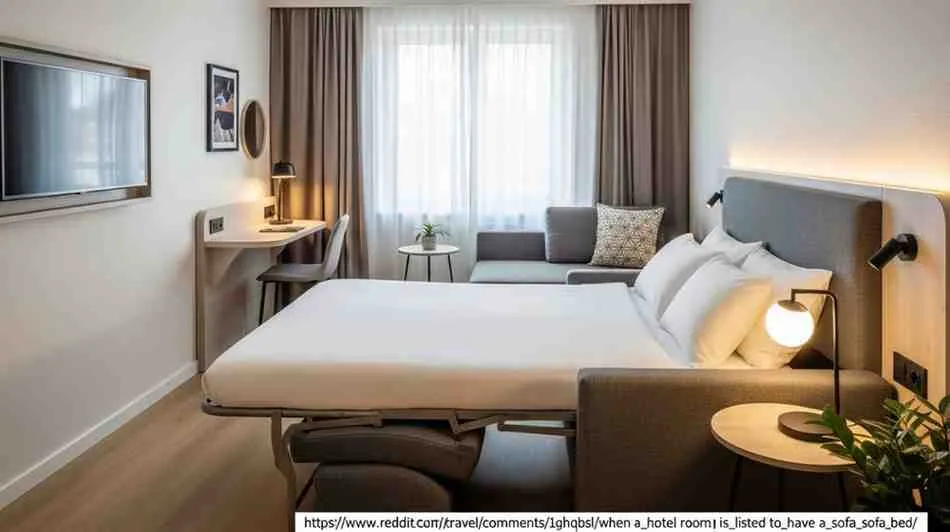
Pros and Cons of Hotel Sofa Beds
Advantages:
✅ Cost Savings: Booking one room with a sofa bed typically costs 40-60% less than reserving two separate rooms, making family travel more affordable.
✅ Spatial Togetherness: Families with young children appreciate staying in one room rather than separating across hallways, particularly for nighttime needs and morning coordination.
✅ Flexibility for Groups: Groups traveling together can share common space during evenings while maintaining separate sleeping areas with privacy curtains or room dividers.
✅ Efficient Space Usage: During daytime hours, the sofa functions as comfortable seating rather than an unusable second bed taking up valuable floor space.
✅ Accommodation Availability: Hotels often have more sofa bed rooms available than suites or connecting rooms, particularly during peak travel seasons.
✅ Suite-Like Amenities Without Suite Prices: Many sofa bed rooms include kitchenettes, additional bathrooms, or extra square footage at rates below traditional suites.
✅ Easy for Children: Young guests generally sleep comfortably on hotel sofa beds regardless of quality, making them practical for family vacations.
✅ Short-Term Adequacy: For 1-2 night stays, most adults tolerate sofa bed comfort levels that would be unacceptable for longer durations.
Disadvantages:
❌ Inconsistent Comfort Quality: The wide variation in sofa bed quality—from acceptable to terrible—creates uncertainty and risk when booking sight unseen.
❌ Setup and Breakdown Hassle: Converting sofas to beds and back requires physical effort, particularly with stiff mechanisms or heavy mattresses, adding daily inconvenience.
❌ Reduced Sleep Quality for Adults: Many adults experience poorer sleep on hotel sofa beds compared to primary beds, leading to fatigue that impacts vacation or business activities.
❌ Maintenance Neglect: Sofa beds receive less consistent maintenance than primary hotel beds, increasing the likelihood of encountering worn, uncomfortable units.
❌ Hidden Costs: Additional guest fees, bedding charges, or resort fees can eliminate the economic advantage of choosing sofa bed rooms.
❌ Limited Space When Deployed: The extended bed consumes significant floor space, restricting movement within the room during sleeping hours.
❌ Noise and Disturbance: Metal frames often squeak or creak with movement, potentially disturbing other guests in the room or adjacent rooms.
❌ Hygiene Concerns: The difficulty of cleaning sofa bed mattresses combined with less frequent deep cleaning creates potential health and allergy issues.
❌ Misleading Marketing: Photos and descriptions rarely show the sofa bed’s actual sleeping configuration or clearly communicate mattress quality.
❌ Age and Condition Unpredictability: Even within the same hotel, sofa bed condition varies by room based on replacement schedules and previous guest usage.
What to Check Before Booking a Hotel Room with Sofa Bed
Implement this comprehensive checklist to increase your chances of booking comfortable sofa bed accommodations:
Pre-Booking Research
Review Analysis: Read at least 15-20 recent reviews (within the past 6 months) specifically searching for mentions of “sofa bed,” “pullout,” “sleeper sofa,” or “extra bed.” Note patterns in comfort complaints or praise.
Photo Examination: Look for images showing:
- The sofa bed fully extended with bedding
- Close-ups revealing mattress thickness
- The room configuration with bed deployed
- Overall furniture condition and age
Property Age and Renovation History: Research when the hotel was built and last renovated. Properties renovated within the past 3 years typically have newer sofa beds. Check the hotel website’s “About” section or call to inquire.
Brand Standards: Major hotel chains maintain different quality standards:
- Luxury Brands (Four Seasons, Ritz-Carlton, Waldorf Astoria): Typically invest in premium 6-10 inch sofa bed mattresses
- Upscale Brands (Marriott, Hilton, Hyatt standard properties): Generally provide 5-7 inch mattresses with reasonable quality
- Mid-Range Brands (Holiday Inn, Best Western, La Quinta): Expect 4-6 inch mattresses with variable quality
- Budget Brands (Motel 6, Super 8, Red Roof Inn): Often feature 3-5 inch basic mattresses
Specific Room Questions to Ask:
When calling the hotel directly, ask:
- “How thick is the sofa bed mattress in this room type?”
- “When were the sofa beds last replaced in your property?”
- “Can you provide memory foam toppers for sofa bed guests?”
- “Do you have photos showing the sofa bed deployed with bedding?”
- “Are there any additional fees for extra guests using the sofa bed?”
- “What’s your policy if the sofa bed proves uncomfortable—can you provide alternatives?”
Alternative Room Types: Before committing to a sofa bed room, compare total costs including fees for:
- Two standard rooms
- A junior suite or one-bedroom suite
- A room with bunk beds (family-focused properties)
- Connecting rooms with a door between them
Sometimes the price difference is minimal, making higher-quality sleeping arrangements worth the modest additional expense.
Upon Arrival Inspection
Immediate Testing: Before settling in, fully deploy the sofa bed and conduct this inspection:
- Mattress Thickness: Measure with your hand—it should be at least 5-6 inches for adult comfort
- Surface Evenness: Lie down and assess for lumps, sagging, or prominent metal bars
- Frame Condition: Check for broken slats, rust, or instability
- Cleanliness: Examine the mattress for stains, odors, or visible wear
- Mechanism Function: Ensure smooth deployment and storage without excessive force
- Bedding Quality: Verify adequate sheets, blankets, and pillows are provided
Immediate Communication: If the sofa bed proves unacceptable, contact the front desk within 30 minutes of check-in—before unpacking completely. Hotels are far more accommodating about room changes before you’re fully settled. Document issues with photos if the condition is particularly poor.
Request Enhancements: Even if the sofa bed seems adequate, ask for:
- Extra pillows (hotels often store additional inventory)
- Mattress topper if available
- Additional blankets for added cushioning
- Upgraded sheets if standard bedding seems thin
Front desk staff can often provide these items from housekeeping inventory at no charge, significantly improving comfort.
How Often Do Hotels Update Sofa Bed Availability and Quality?
Understanding hotel maintenance cycles helps manage expectations and timing for bookings.

Furniture Replacement Schedules
Franchise Standards: Major hotel brands typically mandate furniture replacement every 5-7 years as part of franchise agreements. However, sofa beds sometimes receive extended use:
- Primary Beds: Replaced every 5-7 years per most franchise requirements
- Sofa Beds: Often extended to 7-10 years due to “occasional use” classification
- Luxury Properties: May replace sofa beds every 3-5 years to maintain brand standards
- Independent Hotels: No standardized schedule—replacement occurs when funds allow or condition becomes untenable
Best Times to Find Updated Sofa Beds
Post-Renovation Periods: Hotels advertise renovations prominently. Booking within 6-18 months of completion increases your chances of receiving newly installed furniture.
Off-Season Maintenance: Many properties perform room updates during slow seasons (typically January-March and September-November in most markets). Booking immediately after these periods means accessing recently serviced rooms.
New Property Openings: Hotels less than 2 years old obviously feature the newest furnishings. While rates may be premium, quality consistency is highest during this period.
Online Listing Accuracy
Photo Update Frequency: Hotels typically update room photos every 2-4 years or after major renovations. The images you see during booking may not reflect current furniture condition, particularly for properties that haven’t renovated recently.
Availability Accuracy: Online booking systems generally reflect accurate real-time room availability. “Sofa bed room” availability shown on booking platforms is typically reliable—the uncertainty lies in the quality of the specific sofa bed you’ll receive, not whether one exists.
Mattress Specification Disclosure: Progressive hotel brands have begun listing sofa bed mattress specifications (thickness, materials, dimensions) in their room descriptions. This transparency trend is growing but remains inconsistent across the industry.
Can a Sofa Bed in a Hotel Accommodate Extra Guests Safely?
Safety considerations extend beyond comfort when evaluating hotel sofa beds for additional guests.
Weight Capacity and Structural Limits
Most hotel sofa beds are engineered to support 400-600 pounds total weight. This accommodates:
- Two average adults (up to 300 pounds combined) comfortably
- Three children or small adults (up to 350 pounds combined)
- One larger adult (up to 350 pounds) safely
Exceeding these limits risks:
- Frame collapse or bending
- Mattress damage and accelerated wear
- Potential injury from structural failure
- Hotel liability concerns and potential charges for damage
Age Restrictions and Child Safety
Hotels don’t typically impose explicit age restrictions for sofa bed use, but safety considerations suggest:
Children Under 5: Should sleep on primary beds or in cribs/pack-n-plays rather than sofa beds, as:
- Metal frame edges pose bruising risks
- Gaps between mattress and frame can trap small limbs
- Lack of guardrails increases fall risk
- Parents cannot easily supervise from primary bed
Children 5-12: Generally safe on sofa beds with parental supervision and clear instructions about safe usage.
Teenagers and Adults: No safety concerns for appropriately maintained sofa beds within weight limits.
Accessibility Considerations
Sofa beds present challenges for guests with mobility limitations:
- Deployment Effort: Pulling out and setting up sofa beds requires strength and flexibility that some guests lack
- Low Height: Sofa bed mattresses sit lower than standard beds (typically 12-15 inches vs. 24-30 inches), making transfers difficult for those with joint issues
- Stability: The lack of a solid bed frame means shifting weight during sleep, potentially problematic for guests with balance concerns
Guests requiring ADA-compliant accommodations should request rollaway beds or accessible room configurations rather than relying on sofa beds.
Should I Trust Sofa Bed Listings When Booking a Hotel Room?
This critical question deserves a nuanced answer based on multiple factors.
What You Can Generally Trust
Physical Presence: If a hotel lists a sofa bed in the room, that furnishing almost certainly exists. Hotels face significant liability and reputation damage from advertising amenities they don’t provide.
Basic Dimensions: Stated sizes (full, queen) generally reflect the extended mattress dimensions, though usable sleeping space may measure slightly smaller due to frame construction.
General Configuration: Room layouts, window placements, and spatial arrangements typically match photos and floor plans accurately.
What Requires Skepticism
Comfort Representations: Descriptors like “comfortable sleeper sofa” or “premium mattress” lack standardized definitions and often represent marketing language rather than objective quality assessments.
Photo Currency: Room images may show the newest sofa bed installed years ago, not the specific unit you’ll receive in your assigned room.
Maintenance Condition: Listings cannot predict whether your specific room’s sofa bed represents the best-maintained or most-neglected unit in the property.
Bedding Quality: Photos rarely show the actual sheets, blankets, and pillows provided for sofa bed guests, which often differ from primary bed linens.
How to Increase Booking Reliability
Book Directly with Hotels: Direct bookings enable pre-arrival communication and special requests that third-party platforms don’t accommodate effectively.
Join Loyalty Programs: Even free basic memberships improve your leverage for requesting specific room conditions and complaining about inadequate accommodations.
Read Between Marketing Lines: Hotels that provide specific mattress details (thickness, materials, brand) demonstrate transparency suggesting better quality than properties using vague descriptors.
Request Room Numbers: When booking high-stakes stays (long durations, important occasions), ask the hotel to pre-assign a specific room number, then research that room through review sites where guests sometimes mention room numbers.
Build Backup Plans: For critical stays, research nearby alternative hotels and understand cancellation policies. If the sofa bed proves unacceptable upon arrival, you’ll have options rather than feeling trapped.