



Introduction: Historic Relief Package Becomes Reality
On March 11, 2021, President Joe Biden signed into law one of the most ambitious economic relief packages in American history—the American Rescue Plan Act of 2021–[https://finanzasdomesticas.com/plan-de-estimulo-joe-biden-aprobado]. This $1.9 trillion economic stimulus bill was passed by the 117th United States Congress to speed up the country’s recovery from the economic and health effects of the COVID-19 pandemic and recession.
The approval of Biden’s stimulus plan marked a pivotal moment in America’s fight against the devastating impacts of COVID-19. After months of political negotiation and debate, the sweeping legislation promised direct financial relief to millions of Americans, extended critical unemployment benefits, funded vaccination programs, and provided unprecedented support to state and local governments struggling under the weight of pandemic-related budget shortfalls.
This comprehensive guide will walk you through everything you need to know about the Joe Biden stimulus plan approved in March 2021. You’ll discover exactly what was included in the American Rescue Plan, who qualified for benefits, how the money was distributed, the real-world impact on families and businesses, and expert analysis of this landmark legislation. Whether you received stimulus payments or simply want to understand this historic moment in economic policy, this article provides clear, factual information about one of the most consequential bills of the 21st century.
What Is the American Rescue Plan? Understanding Biden’s COVID-19 Relief Package
The American Rescue Plan Act of 2021 represents the Biden administration’s comprehensive strategy to combat both the public health crisis and economic devastation caused by COVID-19. First proposed on January 14, 2021, the package builds upon many of the measures in the CARES Act from March 2020 and in the Consolidated Appropriations Act, 2021, from December.
The Legislative Journey
President Biden unveiled his $1.9 trillion proposal just days before his inauguration, signaling that pandemic relief would be his administration’s top priority. The path to approval involved intense political maneuvering, as Democrats pushed the bill through Congress using a special budgetary process called reconciliation, which allowed passage without Republican support.
The timeline unfolded as follows:
January 14, 2021: Biden announced the $1.9 trillion American Rescue Plan February 27, 2021: The House passed the initial version (219-212 vote) March 6, 2021: The Senate approved an amended version (50-49 vote) March 10, 2021: The House passed the reconciled bill (220-211 vote) March 11, 2021: President Biden signed the bill into law
Democrats passed the bill in Congress without a Republican vote through the budget reconciliation process. This partisan divide reflected fundamentally different views about the scope and necessity of additional stimulus spending, with Republicans arguing the economy was already recovering and Democrats insisting comprehensive support remained essential.
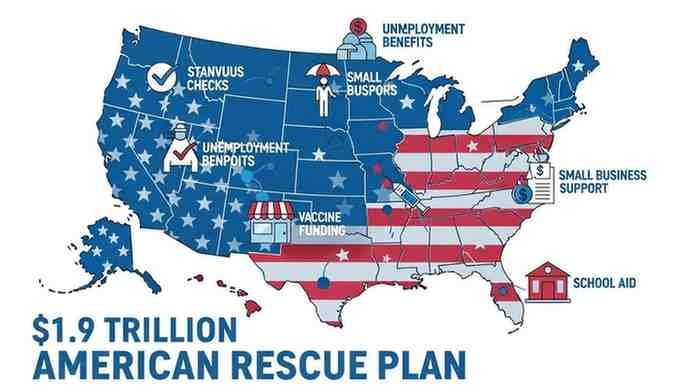
Core Objectives of the Relief Package
The American Rescue Plan pursued multiple interconnected goals:
Public Health Response: Accelerating COVID-19 vaccinations, expanding testing capacity, and supporting healthcare systems overwhelmed by the pandemic
Direct Economic Relief: Providing immediate cash assistance to individuals and families struggling with lost income and mounting bills
Unemployment Support: Extending enhanced jobless benefits to prevent millions from falling into financial crisis
Business Assistance: Helping small businesses stay afloat and retain employees during continued economic uncertainty
Government Support: Preventing devastating cuts to state and local services by providing emergency funding
Long-term Recovery: Investing in infrastructure, education, and social programs to build a more resilient, equitable economy
Key Provisions: What’s Inside the $1.9 Trillion Stimulus Package?
The American Rescue Plan contained numerous provisions touching virtually every aspect of American life. Here’s a detailed breakdown of the major components:
1. Direct Stimulus Payments to Americans
One of the most visible and impactful elements was the third round of stimulus checks.
Payment Amounts: The Act provided for $1,400 direct economic stimulus payments to individuals. These payments were designed to complement the earlier $600 checks approved in December 2020, bringing total direct payments to $2,000 as Biden had promised during the Georgia Senate runoff campaigns.
Eligibility Criteria: Single people making less than $75,000, heads of household making less than $112,500, and married couples filing jointly making less than $150,000 qualify for stimulus checks.
The phase-out structure worked as follows:
- Full $1,400 payment for individuals earning up to $75,000
- Partial payments for individuals earning between $75,000 and $80,000
- No payment for individuals earning above $80,000
- Similar thresholds applied for heads of household and married couples
Expanded Coverage: Unlike previous rounds, the American Rescue Plan included dependent payments for college students and adult dependents, addressing a significant gap that had left millions without assistance in earlier distributions.
Distribution Timeline: Direct deposits will start hitting Americans’ bank accounts as soon as this weekend, White House press secretary Jen Psaki said Thursday. The rapid distribution demonstrated the administration’s commitment to delivering relief quickly.
164 million people received direct stimulus payments of up to $1,400.
2. Unemployment Benefits Expansion
For the millions of Americans who had lost jobs during the pandemic, extended unemployment benefits provided a critical lifeline.
Enhanced Weekly Payments: The bill will also extend a $300 per week unemployment insurance boost until Sept. 6, though Biden had initially proposed increasing the supplement to $400 weekly. This compromise emerged from negotiations with moderate Democrats concerned about costs and work incentives.
Extended Duration: The plan extended two crucial pandemic unemployment programs through September 6, 2021:
- Pandemic Emergency Unemployment Compensation (PEUC) for those who exhausted regular state benefits
- Pandemic Unemployment Assistance (PUA) for self-employed workers, gig workers, and others not traditionally eligible
Tax Relief for Unemployed Workers: The Act made the first $10,200 in unemployment benefits for 2020 non-taxable for households with incomes below $150,000, thus avoiding the risk of many workers incurring surprise federal tax liability. This provision prevented millions of unemployed Americans from facing unexpected tax bills.
3. Enhanced Child Tax Credit
The American Rescue Plan dramatically expanded the Child Tax Credit, representing one of the most progressive anti-poverty measures in recent American history.
Increased Credit Amounts: The American Rescue Plan increased the amount of the Child Tax Credit from $2,000 to $3,600 for children under age 6, and $3,000 for other children under age 18.
Monthly Advance Payments: Rather than requiring families to wait until tax season, the IRS distributed advance payments monthly from July through December 2021, providing consistent financial support when families needed it most.
Expanded Eligibility: The credit became fully refundable, meaning even families with little or no income tax liability could receive the full benefit—a game-changing provision for low-income households.
Unprecedented Impact: The child tax credits provided more than 36 million households with nearly 90 percent of children in the United States a tax cut, cutting the child poverty rate in half.
4. Funding for COVID-19 Vaccinations and Testing
Recognizing that economic recovery depended on controlling the virus, the plan allocated substantial resources to public health infrastructure.
Vaccination Program Support: The plan calls for investing $20 billion in a national vaccination program, including launching community vaccination centers around the country and mobile units in hard-to-reach areas.
Testing Expansion: An additional $50 billion supported widespread COVID-19 testing, enabling schools, workplaces, and communities to identify outbreaks quickly and implement targeted responses.
Healthcare Workforce: The plan funded hiring of public health workers for contact tracing, vaccine outreach, and health education, creating employment while building capacity to fight the pandemic.
5. State and Local Government Aid
The American Rescue Plan will provide $350 billion in payments to U.S. territories, states, and local and tribal governments as crucial assistance for budgets depleted by COVID-19.
This historic investment prevented devastating cuts to essential services:
Distribution Structure:
- $195.3 billion to states and territories
- $130.2 billion to local governments
- $20 billion to tribal governments
- $4.5 billion for U.S. territories
Permitted Uses: Governments could use funds to:
- Replace lost revenue due to the pandemic
- Respond to COVID-19 public health emergencies
- Provide premium pay for essential workers
- Invest in water, sewer, and broadband infrastructure
6. Support for Schools and Education
The plan would provide an additional $170 billion to K-12 schools, colleges and universities to help them reopen and operate safely or to facilitate remote learning.
These funds enabled schools to:
- Improve ventilation systems and air quality
- Reduce class sizes for social distancing
- Provide personal protective equipment
- Address learning loss from pandemic disruptions
- Expand summer learning and after-school programs
$120 billion was provided to help schools in all 50 states stay open for in-person learning and improve school infrastructure and ventilation systems.
7. Small Business and Economic Support
Restaurant Revitalization Fund: A dedicated $28.6 billion fund provided grants specifically for restaurants and food service businesses, which faced unique hardships during lockdowns.
Employee Retention Tax Credit: Enhanced tax credits helped businesses retain employees rather than conducting layoffs, preserving jobs and maintaining employer-employee relationships for faster recovery.
Targeted EIDL Advances: Additional funding for Economic Injury Disaster Loan advances supported the smallest businesses and those in underserved communities.
8. Healthcare Coverage Expansion
The American Rescue Plan includes significant changes to the Medicaid program, including higher federal matching funds to states to promote home- and community-based services; allowing states the option to cover 12 months of post-partum coverage for new mothers; requiring coverage of COVID-19 vaccines and treatment
ACA Subsidy Enhancement: For 2021 and 2022, the ARP enhanced financial assistance for low- and middle-income families, enabled those with family incomes of up to 150 percent of the FPL to enroll in a ACA Silver plan with no premium cost, and made premium tax credits newly available to people with family incomes above 400 percent of the FPL, who were not previously eligible for financial assistance.
COBRA Subsidies: The American Rescue Plan provides a 100% federal continuation health coverage (COBRA) subsidy through September 1, ensuring that those who lose their jobs or lose their health care due to reduced hours don’t lose their health care.
9. Nutrition Assistance and Housing Support
SNAP Benefits Extension: Biden would extend the 15% increase in food stamp benefits through September, instead of having it expire in June.
Emergency Rental Assistance: The plan provided $21.55 billion for emergency rental assistance to help families avoid eviction, alongside $5 billion for emergency housing vouchers and $750 million for housing counseling.
Homeowner Assistance Fund: A $10 billion fund helped homeowners catch up on mortgage payments, property taxes, and utilities, preventing foreclosures.
10. Expanded Earned Income Tax Credit
The plan nearly tripled the EITC for childless workers, increasing the maximum credit from approximately $543 to $1,502—recognizing that low-wage workers without children also faced economic hardship.

Who Qualified for Benefits? Eligibility Requirements Explained
Understanding eligibility helped Americans determine which benefits applied to their situations.
Stimulus Payment Eligibility
Income Thresholds: Under pressure from Manchin, Biden agreed to have the direct payments phase out for high-income taxpayers, including some who received stimulus checks in previous stimulus rounds. The stimulus benefit began to phase out for individual taxpayers making $75,000, single parents making $112,500, and couples making $150,000.
Who Was Included:
- U.S. citizens and resident aliens
- Adults and qualifying dependents (including college students and adult dependents)
- Mixed-status households (addressing a previous exclusion)
Who Was Excluded:
- Single filers earning above $80,000
- Heads of household earning above $120,000
- Married couples earning above $160,000
- Non-resident aliens
- Those who could be claimed as a dependent by someone else (with few exceptions)
Unemployment Benefit Eligibility
Qualifying Individuals:
- Traditional W-2 employees receiving state unemployment
- Self-employed individuals through PUA
- Gig economy workers
- Those who exhausted regular unemployment benefits
- Part-time workers seeking part-time work
Child Tax Credit Eligibility
Qualifying Children:
- Under age 18 (expanded from previous age 16 limit)
- U.S. citizens, nationals, or resident aliens
- Living with the taxpayer for more than half the year
- Not providing more than half their own support
Income Limits: Full credits available to:
- Single filers earning up to $75,000
- Heads of household earning up to $112,500
- Married couples earning up to $150,000
Real-World Impact: How the American Rescue Plan Changed Lives
Statistics tell part of the story, but understanding the human impact requires examining real experiences and measurable outcomes.
Economic Recovery Acceleration
The American Rescue Plan accelerated the economic recovery throughout 2021 and made it more resilient to challenges: one analysis found that the law resulted in 4 million more jobs and nearly doubled GDP growth – and that without it, the United States would have come close to a double-digit recession in spring 2021.
Employment Growth: The year following the American Rescue Plan saw remarkable job creation, with unemployment falling from 6.2% in February 2021 to 3.9% by December 2021—one of the fastest declines in modern history.
GDP Expansion: Real GDP growth rose to 6.3% in the first quarter and 6.6% in the second quarter of 2021, with personal consumption growth (the largest component of GDP) rising at an impressive 11.4% in Q1 and 11.9% in Q2 on an annualized basis.
Child Poverty Reduction
The expanded Child Tax Credit achieved historic results in fighting poverty.
Poverty Rate Decline: Child poverty rates fell by approximately 40% during the months when monthly payments were distributed, lifting 3.7 million children out of poverty according to Census Bureau data.
Food Security Improvement: Food insecurity among families with children dropped 24 percent after the distribution of the first Child Tax Credit payments, as measured by the Census Bureau
Immediate Use for Basic Needs: Families predominantly used Child Tax Credit payments for essential expenses like food, clothing, utilities, and rent—demonstrating the critical need these funds addressed.
Housing Stability
Due to the Administration’s efforts to prevent evictions, including the implementation of ERA programs, eviction filings have remained at roughly 60 percent of historical levels in the five full months since the eviction moratorium ended.
Rental Assistance Distribution: These governments have made approximately 4.3 million ERA payments to eligible households as of January 2022, preventing mass displacement during a vulnerable period.
Foreclosure Prevention: Foreclosure filings in 2021 were at a historic low with 29 percent fewer filings than in 2020 and 95 percent below the 2010 peak experienced in the previous economic downturn during the Great Recession.
Healthcare Access Expansion
The ARP’s affordability provisions contributed to historic enrollment levels, with 14.5 million Americans enrolling in 2022 marketplace coverage.
The enhanced ACA subsidies meant millions of previously uninsured Americans could afford health coverage, while the COBRA subsidies ensured job loss didn’t immediately result in loss of health insurance.
School Reopening Success
Historic investments were made in K-12 schools, which—along with the administration’s use of its full force to get educators, staff and students vaccinated—enabled 95 percent of public elementary and middle schools to be open in person, full time, in early January 2022, compared with just 46 percent in January 2021.
State and Local Government Resilience
The $350 billion in state and local aid prevented catastrophic service cuts that typically follow economic downturns.
Workforce Preservation: Rather than conducting mass layoffs of teachers, first responders, and other public employees—as occurred during the 2008-2009 recession—governments maintained and even expanded services.
Transformative Investments: In 2021, “A striking 78 percent of mayors told us they would use the money from the American Rescue Plan to accomplish ‘transformative’ things that would reshape their cities’ long-term futures”
Cities and counties invested in broadband infrastructure, affordable housing development, small business support, workforce training programs, and community health initiatives that will benefit residents for years to come.
Case Studies: Americans Who Benefited from the Stimulus Plan
While aggregate statistics demonstrate broad impact, individual stories illustrate how the American Rescue Plan translated into real assistance for struggling families and businesses.
Case Study 1: Single Mother Avoids Eviction
Background: Maria, a single mother of two in Phoenix, lost her restaurant job when indoor dining closed in winter 2021. With $3,200 in back rent owed and facing eviction, she was desperate.
American Rescue Plan Assistance:
- $4,200 in stimulus payments ($1,400 for herself and each child)
- $300 weekly unemployment supplement
- $600 monthly advance Child Tax Credit payments
- Emergency rental assistance covering back rent
Outcome: Maria caught up on rent, avoided eviction, and used the financial breathing room to complete an online certification program. She secured a higher-paying healthcare administration position by fall 2021.
Impact: “Without those stimulus checks and the rental assistance, my kids and I would have been homeless. Instead, I was able to get training and find a better job. The American Rescue Plan didn’t just help us survive—it helped us build a better future.”
Case Study 2: Small Restaurant Saved from Closure
Background: The Garcia family’s Mexican restaurant in Austin, Texas, saw revenue plummet 70% during the pandemic. Despite receiving earlier PPP loans, they were on the verge of permanent closure by early 2021.
American Rescue Plan Assistance:
- $186,000 Restaurant Revitalization Fund grant
- Enhanced Employee Retention Tax Credits
- Local government grants funded by State and Local Fiscal Recovery Funds
Outcome: The restaurant rehired laid-off staff, upgraded outdoor dining facilities, and invested in marketing. By summer 2021, they were operating at 90% of pre-pandemic revenue levels.
Impact: “The Restaurant Revitalization Fund literally saved our business. We’ve been serving this community for 23 years, and we thought COVID would end that legacy. This funding gave us a second chance, and we’re now stronger than ever.”
Case Study 3: School District Addresses Learning Loss
Background: A rural school district in Kentucky struggled with pandemic learning loss, inadequate technology infrastructure, and ventilation systems that made safe in-person learning difficult.
American Rescue Plan Assistance:
- $12 million in Elementary and Secondary School Emergency Relief (ESSER) funds
- Additional state-allocated funds from State and Local Fiscal Recovery program
Outcome: The district upgraded HVAC systems in all buildings, purchased laptops for every student, hired additional tutors and counselors, and launched summer learning programs. Student attendance increased from 78% to 94% when schools fully reopened.
Impact: Superintendent statement: “This funding didn’t just help us reopen schools—it allowed us to address inequities that existed long before COVID. Students who never had home internet access now have devices and hotspots. Our buildings have clean air. We have the staff to provide individualized support. It’s transformative.”
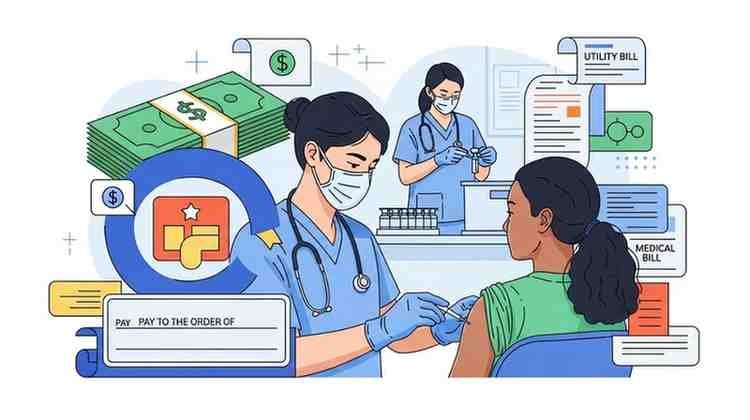
Case Study 4: Healthcare Worker Receives Essential Support
Background: David, a hospital respiratory therapist in New York, worked overtime throughout the pandemic while his wife stayed home with their newborn after losing her job. Mounting childcare costs and medical bills strained their finances.
American Rescue Plan Assistance:
- $2,800 stimulus payment
- Enhanced Child Tax Credit ($3,600 annually, paid monthly)
- Free COBRA coverage continuation for his wife
- Subsidized childcare through expanded tax credits
Outcome: The family stabilized financially, and David’s wife secured remote work that allowed her to care for their child while earning income. The COBRA coverage ensured their newborn received necessary medical care without crushing bills.
Impact: “As a frontline healthcare worker, I was focused on saving lives during the worst of COVID. But my own family was struggling. The American Rescue Plan meant I could focus on my patients without worrying whether we’d make rent or lose our health insurance.”
Pros and Cons: Balanced Analysis of the American Rescue Plan
Like any major legislation, the American Rescue Plan generated both praise and criticism. Understanding multiple perspectives provides a complete picture.
Advantages of Biden’s Stimulus Package
✓ Prevented Economic Collapse: Economic analysis suggests the plan prevented what could have been a severe double-dip recession in spring 2021, maintaining economic momentum as vaccines became available.
✓ Reduced Poverty Dramatically: The expanded Child Tax Credit alone cut child poverty nearly in half—one of the most significant anti-poverty achievements in decades.
✓ Supported Rapid Vaccine Distribution: Funding for vaccination programs helped the U.S. achieve widespread vaccine availability months ahead of initial projections.
✓ Protected State and Local Services: Unlike previous recessions, massive layoffs of teachers, first responders, and public employees were largely avoided, preventing a drag on recovery.
✓ Equitable Recovery: Its results have also been historically equitable, with major progress against child poverty, food insecurity, and unemployment for low-income communities and communities of color.
✓ Prevented Mass Displacement: Rental assistance and foreclosure prevention programs kept millions of families in their homes during an unprecedented crisis.
✓ Maintained Consumer Spending: Direct payments and enhanced unemployment benefits maintained consumer demand, supporting businesses and preventing a downward economic spiral.
✓ Addressed Healthcare Coverage Gaps: Enhanced ACA subsidies and COBRA support expanded health insurance access during a public health emergency.
✓ Flexibility for Local Needs: State and Local Fiscal Recovery Funds allowed communities to address their specific challenges rather than one-size-fits-all federal mandates.
Disadvantages and Criticisms
✗ Inflation Concerns: A March 2022 study released by the Federal Reserve Bank of San Francisco estimated that U.S. fiscal support measures designed to counteract the severity of the pandemic’s economic effect (among them, the American Rescue Plan and the 2020 CARES Act) may have raised core inflation about 3 percentage points by the end of 2021
Critics, including economist Larry Summers, warned the package was too large and could overheat the economy, contributing to the inflation surge of 2021-2022.
✗ Partisan Division: Complete absence of Republican support raised concerns about governance by party-line votes rather than bipartisan consensus on major legislation.
✗ Minimum Wage Increase Excluded: Biden’s proposal to raise the federal minimum wage to $15 per hour was stripped from the final bill, disappointing progressive advocates.
✗ Some Poorly Targeted Benefits: Critics argued stimulus payments going to middle and upper-middle-class families who faced minimal pandemic hardship wasted resources that could have been better targeted.
✗ Temporary Nature of Key Provisions: The expanded Child Tax Credit, enhanced ACA subsidies, and other provisions expired after one or two years, leading to concerns about “cliff effects” when benefits ended.
✗ Implementation Challenges: Some programs, particularly rental assistance, faced slow rollout and bureaucratic obstacles that delayed relief reaching intended recipients.
✗ Added to National Debt: The $1.9 trillion package increased federal borrowing, raising long-term concerns about debt sustainability and future fiscal constraints.
✗ Work Disincentive Concerns: Some economists and business owners argued enhanced unemployment benefits discouraged workforce participation, though research on this effect remains mixed.
✗ Fraud and Waste Risks: Rapid distribution of vast sums with limited oversight created opportunities for fraudulent claims, though the full extent remains under investigation.

Frequently Asked Questions (FAQs)
When was the Joe Biden stimulus plan approved?
The Joe Biden stimulus plan was approved and signed into law on March 11, 2021. The House initially passed the bill on February 27, the Senate approved it on March 6, and after reconciliation, the House passed the final version on March 10, with President Biden signing it the following day.
How much was the stimulus payment in the American Rescue Plan?
The American Rescue Plan provided $1,400 direct stimulus payments per person for eligible Americans, including dependents. This brought the total payment to $2,000 when combined with the $600 payment from the December 2020 relief package, fulfilling Biden’s campaign promise.
Who qualified for the $1,400 stimulus check?
Single filers earning up to $75,000, heads of household earning up to $112,500, and married couples earning up to $150,000 qualified for the full $1,400 payment. Partial payments went to those earning slightly above these thresholds, with complete phase-out at $80,000 (single), $120,000 (head of household), and $160,000 (married couples).
Did the American Rescue Plan help with unemployment?
Yes, the plan extended $300 weekly federal unemployment supplements through September 6, 2021, extended pandemic unemployment programs for self-employed and gig workers, and made the first $10,200 of 2020 unemployment benefits tax-free for households earning under $150,000.
What was the Child Tax Credit expansion in Biden’s stimulus?
The American Rescue Plan increased the Child Tax Credit from $2,000 to $3,600 for children under 6 and $3,000 for children ages 6-17. The credit was made fully refundable and distributed as monthly advance payments from July through December 2021, cutting child poverty nearly in half.
How much money did states and local governments receive?
State, local, and tribal governments received $350 billion in the American Rescue Plan—$195.3 billion for states and territories, $130.2 billion for local governments, $20 billion for tribal governments, and $4.5 billion for U.S. territories. This funding prevented massive service cuts and layoffs.
Did the American Rescue Plan include funding for schools?
Yes, the plan provided $170 billion for K-12 schools, colleges, and universities to support safe reopening, improve ventilation, address learning loss, and facilitate in-person instruction. An additional $120 billion specifically helped schools stay open for in-person learning.
What healthcare provisions were in Biden’s stimulus plan?
The American Rescue Plan expanded ACA subsidies making health insurance more affordable, provided 100% COBRA premium subsidies through September 2021, increased Medicaid funding, required free COVID-19 vaccine and treatment coverage, and expanded options for postpartum Medicaid coverage.
How did the stimulus affect inflation?
Economic research suggests the American Rescue Plan, along with earlier pandemic relief measures, may have contributed approximately 3 percentage points to inflation by late 2021. However, economists note these measures also prevented deflation and economic contraction that would have been more difficult to reverse.
What happened after the American Rescue Plan provisions expired?
Many temporary provisions expired after one or two years. When monthly Child Tax Credit payments ended in January 2022, child poverty increased by over 40%, pushing 3.7 million children back into poverty. Enhanced unemployment benefits ended in September 2021, and enhanced ACA subsidies required congressional extension.
Conclusion: The Lasting Impact of Biden’s Historic Stimulus Plan
The approval of ` in March 2021 represented a defining moment in the federal government’s response to COVID-19. This sweeping legislation touched virtually every aspect of American life—from direct payments landing in bank accounts, to schools reopening safely, to small businesses staying afloat, to families keeping roofs over their heads.
Key Takeaways:
- The American Rescue Plan delivered immediate relief to over 160 million Americans through $1,400 stimulus payments while extending critical unemployment benefits
- The expanded Child Tax Credit achieved historic reductions in child poverty, demonstrating how direct cash assistance can transform lives
- Investment of $350 billion in state and local governments prevented the devastating public sector layoffs that typically follow economic downturns
- Funding for vaccinations, testing, and schools accelerated the safe reopening of the economy and return to normal life
- The plan successfully prevented a double-dip recession and contributed to rapid economic recovery, though it may have also contributed to inflationary pressures
Looking Forward:
The American Rescue Plan’s legacy continues to shape policy debates about government’s role in economic crises, the effectiveness of direct cash assistance, the balance between stimulus spending and inflation risk, and the challenge of sustaining temporary emergency measures that prove highly effective.
Many provisions that dramatically reduced poverty and expanded healthcare access have expired, raising questions about whether temporary crisis measures should become permanent features of America’s social safety net. The success of programs like the expanded Child Tax Credit has fueled ongoing discussions about establishing guaranteed income for families with children.
Your Voice Matters:
Understanding the American Rescue Plan helps you participate in informed discussions about economic policy, evaluate political claims about government spending, and advocate for policies that reflect your values.
Have you been affected by the American Rescue Plan? Whether you received stimulus payments, benefited from extended unemployment, saw your child’s school reopen safely, or worked for a business that received support, your experience is part of this historic moment. Share your story in the comments below.
Want to stay informed about economic policy and government benefits? Subscribe to our newsletter for updates on tax credits, stimulus programs, and policy changes that affect your finances.
Found this guide helpful? Share it with family and friends who want to understand this landmark legislation and its impact on American families, businesses, and communities.
The American Rescue Plan represented an ambitious bet that aggressive government intervention could accelerate recovery from an unprecedented crisis. The data shows it succeeded in many objectives while potentially creating new challenges. As we move forward, learning from this experience will inform how America responds to future economic emergencies and addresses persistent inequality. Your engagement with these issues helps shape the future of economic policy in America.