


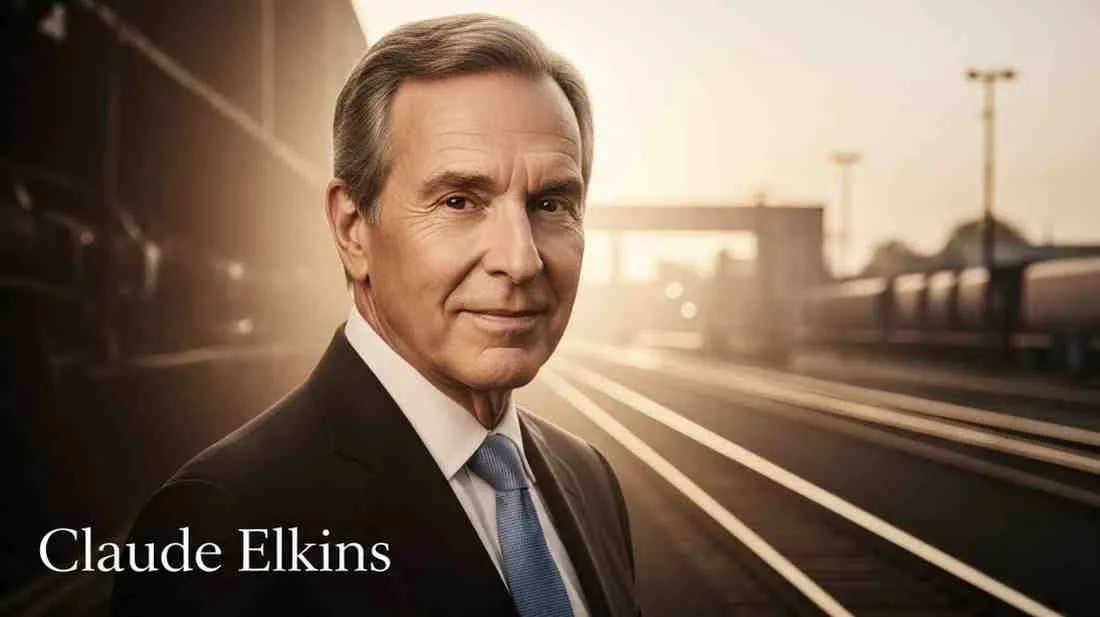
Introduction: An American Success Story in Rail Transportation
In an industry where corporate executives often rise through business schools and fast-track management programs, one leader stands out for taking the road less traveled—literally working on the rails before reaching the executive suite. Claude E. Elkins, known professionally as Ed Elkins, represents a rare breed of corporate leadership: someone who started at the absolute bottom of the organizational ladder and climbed all the way to the top through dedication, continuous learning, and an unwavering commitment to excellence.
Today, as Executive Vice President and Chief Commercial Officer at Norfolk Southern Corporation, Claude Elkins oversees billions of dollars in business operations across multiple divisions including Intermodal, Automotive, and Industrial Products. His journey from a road brakeman in 1988 to one of America’s most influential rail industry executives is not just an inspirational story—it’s a masterclass in leadership development, career progression, and the value of understanding business from the ground up.
This comprehensive profile explores Claude E. Elkins’ career history, his contributions to the rail industry, his leadership philosophy, and the lasting legacy he’s building at Norfolk Southern and throughout the American freight transportation sector.
Who is Claude E. Elkins? Understanding the Man Behind the Executive Title
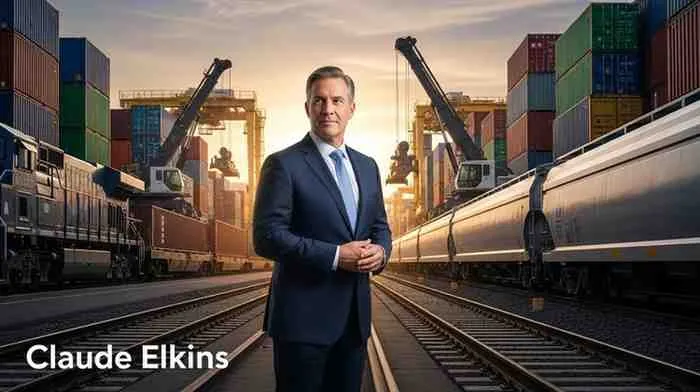
Claude Edward Elkins Jr., commonly referred to as Ed Elkins in professional circles, currently serves as Executive Vice President and Chief Commercial Officer at Norfolk Southern Corporation, one of America’s premier Class I railroad companies. Born and raised in Southwest Virginia, Elkins embodies the values of hard work, discipline, and community that characterize his Appalachian roots.
What distinguishes Claude Elkins from many corporate leaders is his uncommon career trajectory. Starting as a brakeman in 1988, he worked hands-on with trains in all weather conditions, gaining firsthand understanding of railroad operations from the ground level. This foundation of operational experience gives him unique insight into every aspect of railroad operations, from the challenges faced by frontline workers to the strategic decisions made in executive suites.
Before joining Norfolk Southern, Elkins served in the United States Marine Corps, where he developed the leadership skills, discipline, and resilience that would define his professional career. The Marine Corps instilled in him values that he would later apply to corporate leadership—commitment to mission, respect for those you lead, and the importance of leading by example rather than title alone.
Educational Background and Continuous Learning
Claude E. Elkins’ educational journey reflects his commitment to continuous self-improvement and professional development. He earned a Bachelor of Arts degree in English from the University of Virginia’s College at Wise, demonstrating strong communication skills that would prove invaluable in his marketing and commercial leadership roles. This humanities background provided him with critical thinking abilities and communication expertise that complement his operational knowledge.
Understanding that the logistics industry requires specialized knowledge, Elkins pursued an MBA with a concentration in Port & Maritime Economics from Old Dominion University’s Strome College of Business. This advanced degree gave him the economic and strategic frameworks necessary to navigate the complex intermodal and supply chain landscape that defines modern rail transportation.
His commitment to learning didn’t stop with his MBA. Elkins completed the General Management Program at Harvard Business School and advanced executive education at the University of Virginia’s Darden School of Business, consistently investing in his leadership development throughout his career. This combination of operational experience, formal education, and continuous professional development positioned him perfectly for executive leadership in one of America’s most challenging industries.
Claude E. Elkins’ Career Path: From Operations to Executive Management
The career trajectory of Claude Elkins at Norfolk Southern spans over three decades and illustrates a remarkable journey through virtually every level of railroad operations and management. His story provides valuable insights into how operational expertise combined with strategic vision can create transformational leadership.
The Foundational Years: Learning the Railroad Business from the Ground Up (1988-2000s)
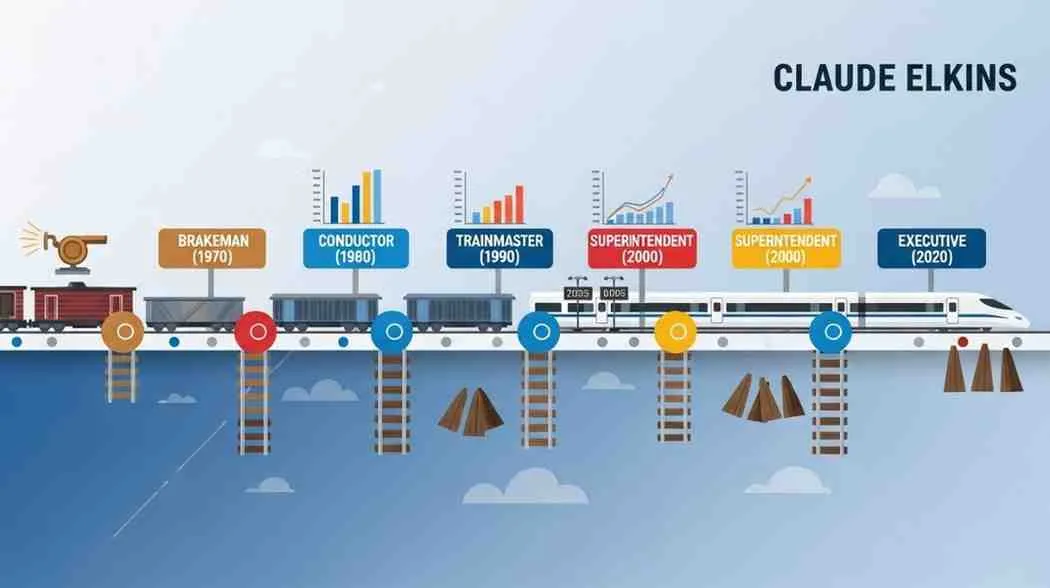
After completing his service in the Marine Corps, Claude E. Elkins joined Norfolk Southern as a Road Brakeman in 1988. This entry-level position required physical endurance, technical precision, and complete focus on safety. Brakemen work directly with trains in all weather conditions, coupling and uncoupling cars, operating switches, inspecting trains, and ensuring safe operation of freight lines. It’s one of the most demanding and potentially dangerous jobs in railroading.
The role gave Elkins invaluable firsthand experience with the railroad’s operational demands. He learned how trains actually work, understood the challenges of moving freight efficiently, and developed deep respect for the men and women who keep America’s rail network running 24 hours a day, seven days a week. This wasn’t theoretical knowledge gained in a classroom—it was practical wisdom earned through experience.
From brakeman, Elkins advanced to conductor, taking on greater responsibility for train operations and crew coordination. He then became a locomotive engineer, operating the trains themselves and gaining technical expertise in railroad equipment and operations. He also served as a relief yardmaster, giving him experience in coordinating complex rail yard operations and managing the flow of freight through critical transportation hubs.
These roles weren’t just stepping stones to something better—they were invaluable learning experiences that would inform every decision Elkins made as an executive. Unlike many corporate leaders who never worked on the front lines, Elkins can relate to the challenges faced by employees at every level of the organization.
Transition to Marketing and Commercial Leadership (2000s-2016)
After mastering operational roles, Claude E. Elkins transitioned into Norfolk Southern’s marketing department, starting as a pricing coordinator. This move marked the beginning of his shift from operations to commercial strategy, where his operational knowledge became a competitive advantage.
Elkins spent nearly two decades in Intermodal Marketing, where he built his reputation and developed expertise in one of the most critical and rapidly growing segments of rail transportation. Intermodal freight—the movement of containers using multiple transportation modes like rail and truck—has become increasingly important as supply chains globalize and companies seek more efficient, environmentally friendly freight solutions.
During this period, Elkins built strong relationships with customers, developed innovative service offerings, and helped Norfolk Southern expand its intermodal operations. Understanding how the trains actually worked allowed him to design marketing strategies that were both ambitious and achievable—a rare combination in corporate America. He could promise services confidently because he understood the operational realities of delivering them.
His success in intermodal marketing demonstrated that his career path from operations to commercial leadership wasn’t just about climbing the corporate ladder—it was about building genuine expertise that created value for customers and the company. He became known for customer-first solutions backed by operational feasibility, a reputation that would open doors to senior leadership positions.
Rising Through Senior Management (2016-2021)
In 2016, Claude E. Elkins’ expertise and track record earned him appointment as Group Vice President of Chemicals Marketing. This promotion placed him in charge of one of Norfolk Southern’s most important business segments. Chemical transportation is complex, highly regulated, and critically important to American manufacturing and industrial operations. The role required balancing customer service with safety requirements, regulatory compliance, and operational efficiency.
His performance in chemicals marketing demonstrated his ability to manage large, complex business portfolios and lead teams through challenging market conditions. The chemical sector faces unique challenges including market volatility, safety concerns, and evolving regulations. Elkins navigated these successfully while growing the business and strengthening customer relationships.
Just two years later, in 2018, Elkins was promoted to Vice President of Industrial Products. This position further expanded his influence within Norfolk Southern, giving him responsibility for transporting construction materials, metals, and other industrial commodities across the rail network. Industrial products represent a significant portion of railroad freight revenue and connect closely to economic cycles and manufacturing activity.
In this role, Elkins managed multimillion-dollar business portfolios and developed strategies for growth in critical sectors of Norfolk Southern’s operations. His leadership during this period helped position the company for the challenges that would emerge in the following years, including supply chain disruptions and changing customer expectations.
Appointment to Executive Leadership: Chief Commercial Officer (2021-Present)
The pinnacle of Claude E. Elkins’ career came in December 2021, when he was appointed Executive Vice President and Chief Marketing Officer at Norfolk Southern Corporation. The title was later updated to Chief Commercial Officer, reflecting the comprehensive scope of his responsibilities and the evolving nature of his role in an increasingly complex transportation landscape.
As Executive Vice President and Chief Commercial Officer, Elkins now leads Norfolk Southern’s Intermodal, Automotive, and Industrial Products business divisions—three of the company’s most critical revenue generators. He also oversees Real Estate, Industrial Development, Short Line Marketing, Field Sales, and Customer Logistics business groups, making him one of the most influential executives in America’s freight transportation industry.
His responsibilities are vast and consequential. Norfolk Southern delivers more than 7 million carloads annually, serves a majority of the country’s population and manufacturing base, and connects to every major container port on the Atlantic coast as well as the Gulf of Mexico and Great Lakes. The company operates the most extensive intermodal network in the eastern United States and is the largest rail shipper of auto products and metals in North America.
As of 2025, Claude Edward Elkins Jr is 58 years old, with over 37 years of experience in the rail industry. His leadership has been crucial during one of the most challenging periods for railroad operations, including pandemic-related supply chain disruptions, evolving customer demands, labor shortages, and increasing pressure for sustainable transportation solutions.
Claude E. Elkins’ Leadership Style and Professional Impact
What makes Claude Elkins effective as a leader is his unique combination of operational expertise, strategic vision, and genuine empathy for the employees who execute the work. His leadership philosophy is rooted in his uncommon career path and shaped by lessons learned at every level of the organization.
Operational Credibility Creates Strategic Effectiveness
Having worked in nearly every area of the rail business, Elkins leads with practical wisdom and realistic expectations. He understands what’s operationally feasible and what sounds good in a boardroom but can’t be executed on the ground. This operational credibility makes him particularly effective when implementing strategic initiatives—employees trust him because he’s done the work himself, and customers believe in his promises because they’re grounded in operational reality.
This credibility is particularly valuable during challenging times. When supply chains were disrupted during the pandemic, Elkins could evaluate solutions not just theoretically but with a practical understanding of what would actually work in rail operations. His decisions reflected both strategic thinking and operational pragmatism.
Leading with Empathy and Understanding
Unlike executives who never worked on the front lines, Elkins can relate to the challenges faced by employees at every level of the organization. He understands the physical demands of railroad work, the stress of operating heavy equipment safely, the frustration when equipment fails or schedules don’t align, and the pride that comes from doing difficult work well.
This empathy shapes his leadership approach. Employees report that Elkins listens genuinely, considers operational realities when making decisions, and maintains respect for the expertise of frontline workers. This doesn’t mean avoiding difficult decisions, but it does mean making them with full awareness of their human impact.
His leadership style emphasizes clear communication, realistic goal-setting, and recognition of the people who make the railroad run. He bridges the gap between corporate strategy and daily operations, helping employees understand how their work contributes to larger organizational goals while ensuring executive decisions reflect operational realities.
Customer-Centric Commercial Strategy
In his commercial leadership role, Elkins has emphasized customer satisfaction and relationship-building over transactional sales approaches. His philosophy recognizes that in the railroad industry, long-term customer relationships create sustainable competitive advantage. Satisfied customers become partners, collaborating on solutions rather than just purchasing services.
Under his leadership, Norfolk Southern has focused on redesigning services around customer needs rather than traditional railroad practices. This customer-centric approach required cultural change within the organization, moving from “here’s what we offer” to “what do you need and how can we deliver it?” Elkins’ operational background made this transition credible—he could promise service improvements because he understood how to operationally deliver them.
His approach to intermodal business expansion exemplifies this philosophy. Rather than simply offering rail transportation, Norfolk Southern under Elkins’ leadership provides integrated supply chain solutions that combine rail efficiency with trucking flexibility, creating seamless multimodal transportation that meets modern customer expectations.
Key Achievements and Contributions to the Rail Industry
Claude E. Elkins’ tenure in leadership positions at Norfolk Southern has been marked by significant achievements in operations, commercial strategy, and industry innovation.
Expansion of Intermodal and Industrial Business
Under Elkins’ leadership, Norfolk Southern has significantly expanded its intermodal network and industrial products business. Intermodal freight has grown substantially as companies seek more environmentally sustainable transportation options and as supply chains become increasingly complex and globalized.
His strategic initiatives helped position Norfolk Southern as the leader in eastern U.S. intermodal operations, with extensive infrastructure and partnerships that create seamless connections between ports, manufacturing centers, and distribution hubs. This network expansion has created value for customers while improving Norfolk Southern’s competitive position.
In industrial products, Elkins led efforts to diversify the customer base, improve service reliability, and introduce innovative pricing and service structures that align railroad capabilities with customer needs. His operational background enabled him to identify efficiency improvements that reduced costs while improving service quality—a combination that’s difficult to achieve but creates sustainable competitive advantage.
Digital Transformation and Technology Integration
Recognizing that modern freight transportation requires sophisticated technology, Elkins has championed digital transformation initiatives at Norfolk Southern. These include real-time tracking systems that give customers visibility into their shipments, predictive maintenance technologies that reduce equipment failures, and automation in freight operations that improve efficiency and safety.
From AI-driven safety systems to digital customer interfaces, his initiatives have positioned Norfolk Southern at the forefront of smart rail solutions. These technologies improve operational efficiency, reduce costs, enhance safety, and meet customer expectations for transparency and reliability.
His approach to technology reflects his operational background—focus on solutions that create genuine value rather than implementing technology for its own sake. Each initiative is evaluated based on whether it improves safety, efficiency, customer service, or competitive advantage.
Sustainability Leadership and Environmental Stewardship
Under Claude E. Elkins’ commercial leadership, Norfolk Southern has emphasized sustainability as both a corporate responsibility and a competitive advantage. Railroads are inherently more fuel-efficient than trucks, and rail transportation helps customers reduce their carbon footprint—a fact that Elkins effectively communicates in commercial discussions.
Norfolk Southern’s operations help customers avoid approximately 15 million tons of yearly carbon emissions by shipping via rail instead of truck. Elkins has made this environmental benefit central to the company’s value proposition, appealing to customers’ sustainability goals while differentiating Norfolk Southern from other transportation options.
His sustainability initiatives include fleet modernization with energy-efficient locomotives, route optimization that reduces fuel consumption, and partnerships with customers to identify opportunities for shifting freight from road to rail. These efforts balance environmental responsibility with operational efficiency and profitability—demonstrating that sustainability can be good business.
Safety Culture and Operational Excellence
Safety has always been a cornerstone of Norfolk Southern, and Elkins has continued this tradition while introducing new initiatives to reduce workplace accidents, improve training programs, and modernize safety equipment. His operational background gives him unique insight into safety challenges, and his leadership has emphasized practical solutions that actually improve safety rather than simply checking compliance boxes.
He has championed initiatives that empower frontline employees to stop work when safety concerns arise, improved communication about safety incidents and lessons learned, and invested in technology that reduces human error in dangerous operations. These efforts reflect genuine commitment to protecting employees and the public rather than managing liability.
Industry Leadership and Community Engagement
Beyond his responsibilities at Norfolk Southern, Claude E. Elkins has demonstrated commitment to broader industry leadership and community engagement, recognizing that business success depends on healthy industries and thriving communities.
Professional Associations and Industry Organizations
Elkins currently serves as Vice Chair of the Georgia Chamber of Commerce Executive Committee, playing an instrumental role in shaping the state’s business environment and economic development policies. Georgia is a critical logistics hub, and his leadership helps ensure that transportation infrastructure and policies support economic growth.
He sits on the boards of directors of the National Association of Manufacturers, the East Lake Foundation, and TTX Company (a leading provider of railcar equipment). These board positions allow him to influence industry policy, contribute to community development, and shape the future of freight transportation.
Elkins also represents Norfolk Southern as an active member of the Traffic Clubs of Chicago, New York, and Pittsburgh and the North American Rail Shippers Association. He serves on the Georgia State University Marketing RoundTable and is a member of The Conference Board’s Council for Chief Marketing Officers, where he engages with other senior executives to address challenges and innovations in commercial leadership.
Economic Development and Community Investment
Through his various board positions and community involvement, Elkins contributes to economic development initiatives that extend beyond Norfolk Southern’s direct business interests. His work with the East Lake Foundation supports community revitalization efforts, while his involvement with educational institutions helps develop the next generation of logistics and transportation professionals.
This community engagement reflects his leadership philosophy that successful businesses have responsibilities beyond shareholders—to employees, communities, and society. He recognizes that Norfolk Southern’s long-term success depends on healthy communities, quality education systems, and economic opportunities throughout the regions the railroad serves.
Challenges and Obstacles: The Reality of Railroad Leadership
While Claude E. Elkins’ career trajectory is inspiring, honest assessment requires acknowledging the challenges and obstacles he has faced and continues to navigate as a senior railroad executive.
Market Volatility and Economic Uncertainty
The freight transportation industry is cyclical and sensitive to economic conditions. Manufacturing slowdowns, trade policy changes, and economic recessions directly impact freight volumes and railroad revenues. As Chief Commercial Officer, Elkins must navigate these external forces while maintaining service quality, managing costs, and protecting employee welfare.
Chemical and industrial products markets, in particular, experience significant volatility based on global economic conditions, energy prices, and manufacturing trends. Leading these business segments requires balancing short-term pressures with long-term strategy, making difficult decisions about capacity, and sometimes disappointing customers or shareholders with realistic assessments of market conditions.
Competitive Pressures and Industry Disruption
Norfolk Southern faces intense competition from other Class I railroads, intermodal competitors, trucking companies, and emerging logistics technologies. The rise of e-commerce has changed freight patterns and customer expectations, requiring railroads to adapt service models developed for a different era.
Elkins must position Norfolk Southern competitively while managing the reality that railroads have significant fixed infrastructure costs and can’t pivot as quickly as asset-light logistics companies. Finding the right balance between innovation and operational discipline, between customer service and operational efficiency, remains an ongoing challenge.
Regulatory Complexity and Policy Uncertainty
The railroad industry operates under complex federal and state regulations covering safety, environmental standards, labor relations, and economic practices. Changes in regulations can require significant operational adjustments and capital investments. Policy debates about railroad competition, customer access, and service standards create uncertainty that complicates long-term planning.
As a senior executive, Elkins must navigate this regulatory environment while advocating for policies that allow Norfolk Southern to compete effectively and invest in infrastructure. This requires engaging with regulators, industry associations, and political leaders—activities that didn’t prepare him for during his years as a brakeman but which are essential to executive leadership.
Supply Chain Disruptions and Operational Challenges
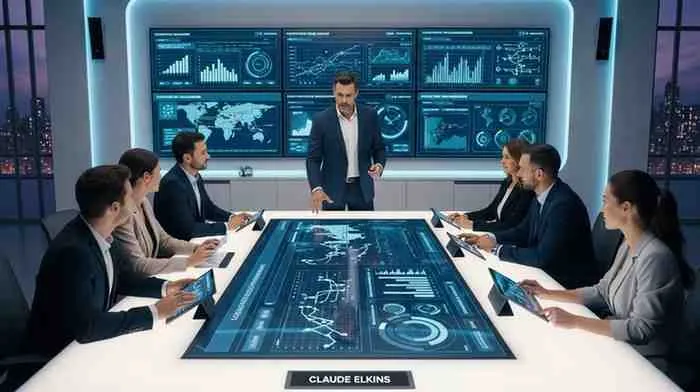
The pandemic exposed vulnerabilities in global supply chains and created unprecedented operational challenges for freight railroads. Equipment shortages, labor availability issues, port congestion, and demand volatility all impacted railroad operations. As Chief Commercial Officer during this period, Elkins had to manage customer expectations while working with operations teams to address problems beyond Norfolk Southern’s direct control.
These challenges tested his leadership and required drawing on both his operational expertise and his commercial acumen. Solutions required coordination across the organization and with external partners, clear communication with frustrated customers, and difficult resource allocation decisions.
Balancing Sustainability with Profitability
While railroads are more environmentally friendly than trucks, they still face pressure to further reduce environmental impacts. Achieving sustainability goals requires significant capital investment in new equipment, technology, and infrastructure. Balancing these investments with shareholder expectations for profitability and operational efficiency creates ongoing tension.
Elkins must make the business case for sustainability investments, demonstrating that environmental responsibility can drive competitive advantage and customer loyalty rather than simply representing cost increases. This requires sophisticated commercial strategy and the ability to articulate long-term value creation to stakeholders focused on short-term results.
The Legacy of Claude E. Elkins: Lessons for Future Leaders
As Claude Elkins continues his leadership at Norfolk Southern, his career offers valuable lessons for aspiring leaders in any industry about perseverance, learning, and effective leadership.
The Value of Starting from the Bottom
Elkins’ journey demonstrates that starting at the bottom of an organization provides invaluable perspective for leadership. His operational experience gives him credibility, empathy, and practical understanding that executives with more traditional career paths often lack. When he makes decisions, employees and customers know they’re informed by genuine understanding rather than theoretical knowledge.
For aspiring leaders, this suggests the importance of seeking operational experience even in technology and service industries where many executives come from consulting or finance backgrounds. Understanding how work actually gets done, what challenges frontline employees face, and how systems really operate creates foundation for effective strategic leadership.
Continuous Learning as Career Strategy
Throughout his career, Elkins invested in education and professional development. From his English degree through his specialized MBA to executive education at Harvard and Darden, he consistently expanded his knowledge and capabilities. This commitment to learning allowed him to transition from operations to marketing to senior executive leadership.
His educational journey illustrates that formal credentials matter, but so does choosing education that adds genuine value. His MBA in Port & Maritime Economics wasn’t just checking a box—it provided specific knowledge relevant to his industry. His executive education built leadership capabilities and exposed him to best practices from other industries and companies.
Earning Respect Through Performance
Elkins didn’t rise through political maneuvering or personal connections—he advanced by consistently performing well, solving problems, growing businesses, and earning respect from colleagues, customers, and supervisors. Each promotion came after demonstrated success in his current role, building a track record that justified additional responsibility.
This career path required patience. He didn’t jump from brakeman to executive in a few years—it took decades of consistent performance, learning, and growth. For young professionals seeking rapid advancement, his journey suggests the value of building genuine expertise and earning credibility through sustained excellence rather than seeking shortcuts.
Balancing Ambition with Humility
Despite reaching the executive suite, colleagues describe Elkins as approachable, respectful, and willing to listen to ideas from anyone regardless of their position. His leadership doesn’t rely on formal authority or title—it comes from expertise, empathy, and ability to inspire confidence in his decisions.
This combination of ambition and humility is rare but powerful. Elkins wanted to advance and was willing to work for it, but he didn’t let ambition make him arrogant or dismissive of others. He recognizes that he leads effectively because of the people he leads, not despite them.
Giving Back to Community and Industry
Through his board service, industry association involvement, and community engagement, Elkins demonstrates that true success includes contributing to something larger than yourself and your organization. He uses his platform and expertise to support economic development, mentor emerging leaders, and strengthen the transportation industry.
This commitment to service mirrors his Marine Corps background and reflects understanding that businesses don’t exist in isolation—they depend on healthy communities, quality education, sound infrastructure, and effective industry practices. Leaders have responsibility to contribute to these broader goods, not just maximize shareholder returns.
Claude E. Elkins in the Context of Norfolk Southern’s History
To fully appreciate Claude Elkins’ contributions, it’s helpful to understand Norfolk Southern’s history and the broader context of American railroading.
Norfolk Southern: A Legacy of Railroad Excellence
Norfolk Southern Corporation was formed in 1982 through the merger of Norfolk & Western Railway and Southern Railway, combining two proud railroad traditions. The company traces its heritage to 1827, making it one of America’s oldest business enterprises. Throughout its history, Norfolk Southern has been known for operational excellence, safety culture, and adaptation to changing economic conditions.
Today, Norfolk Southern operates approximately 19,000 route miles in 22 states and the District of Columbia, serving every major container port in the eastern United States and connecting to rail networks that reach the entire country. The company employs approximately 19,000 people and generates billions in annual revenue.
The Evolution of Freight Railroading
The American railroad industry has undergone tremendous transformation since deregulation in 1980. Railroads have consolidated, modernized operations, invested in technology, and adapted to changing freight patterns as manufacturing evolved and supply chains globalized. Intermodal freight—barely existent in 1980—now represents a major portion of railroad revenue.
Throughout these changes, successful railroads needed leaders who understood both the industry’s proud traditions and the necessity for innovation and adaptation. Elkins represents this balance—respecting railroad heritage while embracing necessary change.
Claude Elkins as Bridge Between Railroad Heritage and Future
Elkins embodies the connection between Norfolk Southern’s operational excellence heritage and its future as a technology-enabled, customer-centric, sustainable transportation provider. His career path mirrors the railroad industry’s evolution—from labor-intensive operations to sophisticated logistics management, from commodity transportation to integrated supply chain solutions.
He understands what made railroads successful historically—safety culture, operational discipline, infrastructure investment, skilled workforce—while recognizing what’s required for future success—technology integration, customer service orientation, environmental sustainability, and talent development. This dual perspective makes him particularly effective at leading organizational change while maintaining core values.
Frequently Asked Questions About Claude E. Elkins
Who is Claude E. Elkins?
Claude E. Elkins, known professionally as Ed Elkins, is the Executive Vice President and Chief Commercial Officer at Norfolk Southern Corporation. He leads the company’s Intermodal, Automotive, and Industrial Products business divisions and oversees several other commercial business groups, making him one of the most influential executives in American freight transportation.
What was Claude E. Elkins’ role at Norfolk Southern before becoming an executive?
Before his executive appointments, Elkins started as a Road Brakeman in 1988 after serving in the U.S. Marine Corps. He then worked as a Conductor, Locomotive Engineer, and Relief Yardmaster, gaining comprehensive operational experience. He later transitioned to marketing roles, spending nearly two decades in Intermodal Marketing before advancing to senior management positions in Chemicals Marketing and Industrial Products.
How did Claude E. Elkins rise from brakeman to executive?
Elkins’ rise resulted from consistent excellent performance, continuous education, operational expertise combined with strategic thinking, and relationship-building throughout the organization. He earned promotions by demonstrating capability in each role, investing in his education (including an MBA and executive education programs), and developing expertise in both operations and commercial strategy. His 37-year career at Norfolk Southern reflects sustained excellence and continuous growth.
What are the major achievements of Claude E. Elkins in the rail industry?
Major achievements include expanding Norfolk Southern’s intermodal network and industrial products business, championing digital transformation and technology integration, strengthening customer relationships and service reliability, leading sustainability initiatives that reduce environmental impact, and maintaining operational excellence during challenging periods including pandemic-related supply chain disruptions.
What was Claude E. Elkins’ career background before becoming EVP/CMO?
Elkins began his professional life in the U.S. Marine Corps, developing leadership and discipline. He joined Norfolk Southern as a brakeman in 1988 and worked various operational roles before transitioning to marketing. He spent two decades in Intermodal Marketing, then served as Group VP of Chemicals Marketing (2016) and VP of Industrial Products (2018) before his appointment as EVP and Chief Marketing Officer (later Chief Commercial Officer) in 2021.
When did Claude E. Elkins start working in rail?
Elkins started his railroad career in 1988 when he was hired as a Road Brakeman at Norfolk Southern, shortly after completing his service in the United States Marine Corps. He has now spent over 37 years in the railroad industry, gaining experience across operations, marketing, and executive leadership.
What divisions and responsibilities does Claude E. Elkins oversee?
As Executive Vice President and Chief Commercial Officer, Elkins leads Norfolk Southern’s Intermodal, Automotive, and Industrial Products business divisions—the company’s three largest revenue generators. He also oversees Real Estate, Industrial Development, Short Line Marketing, Field Sales, and Customer Logistics business groups, making him responsible for virtually all commercial aspects of Norfolk Southern’s operations.
What is the legacy of Claude E. Elkins for Norfolk Southern and rail freight transport?
Elkins’ legacy includes demonstrating that operational expertise combined with strategic vision creates effective executive leadership, building Norfolk Southern’s reputation for customer service and reliability, advancing technology integration and sustainability in rail transportation, and serving as an example of career progression through dedication and continuous learning. His leadership during challenging periods has strengthened Norfolk Southern’s competitive position and industry standing.
Why is Claude E. Elkins remembered by colleagues and the industry?
Colleagues remember Elkins for his operational credibility, empathetic leadership style, commitment to safety and service excellence, ability to bridge operational realities with strategic vision, and approachability despite his executive position. Industry peers respect his contributions to railroad innovation, his leadership in industry associations, and his advocacy for sustainable transportation solutions.
How did Claude E. Elkins contribute to intermodal, automotive, and industrial freight shipping?
In intermodal, Elkins expanded Norfolk Southern’s network and capabilities, improved customer service and reliability, and positioned rail as an environmentally sustainable alternative to trucking. In automotive, he helped Norfolk Southern maintain its position as the largest rail shipper of auto products in North America. In industrial products, he diversified the customer base, introduced innovative service structures, and improved operational efficiency—all while maintaining service quality and safety standards.
Conclusion: Leadership Built on Foundation, Not Shortcuts
The story of Claude E. Elkins is remarkable not because it’s unusual for someone to advance from entry-level to executive positions—many leaders do this in various industries. What makes Elkins’ journey exceptional is that he advanced through one of America’s most traditional, operational-intensive industries by genuinely mastering every level of the business before moving to the next.
In an era when many corporate executives jump between companies and industries, leveraging MBA credentials and consulting experience to accelerate advancement, Elkins took a different path. He spent 37 years with one company, learning its operations intimately, building relationships throughout the organization, earning credibility through performance, and continuously developing his capabilities.
His career demonstrates that genuine leadership requires more than ambition and intelligence—it requires empathy born from shared experience, credibility earned through demonstrated competence, and wisdom developed through decades of learning from both successes and failures. These qualities can’t be fast-tracked, but they create a foundation for leadership that endures through challenges.
As Executive Vice President and Chief Commercial Officer of Norfolk Southern, Claude Elkins now influences an industry that moves the American economy. The rail network he helps lead transports the food we eat, the cars we drive, the materials that build our homes, and the goods we purchase. His decisions affect thousands of employees, hundreds of customers, and millions of Americans who benefit from efficient freight transportation.
Yet those who know Elkins report that success hasn’t changed his fundamental character. He remains approachable, respectful of others regardless of their position, genuinely interested in operational details, and committed to the values that guided him as a young brakeman—safety, service, and integrity.
For aspiring leaders in any industry, Claude E. Elkins’ career offers inspiration and practical lessons. Success doesn’t require starting with advantages or taking shortcuts. It requires identifying a field you find meaningful, committing to excellence in whatever role you’re given, continuously learning and developing new capabilities, treating people with respect at every level, and persevering through challenges and setbacks.
The railroad industry, like America itself, thrives when it balances tradition with innovation, respects heritage while embracing necessary change, and develops leaders who understand both where we’ve been and where we’re going. Claude E. Elkins represents this balance—a leader whose operational expertise grounds strategic vision in reality, whose career path validates the dignity of all work, and whose leadership demonstrates that the journey matters as much as the destination.
His legacy extends beyond business metrics and operational achievements. He proves that American opportunity still exists for those willing to work for it, that genuine expertise creates lasting competitive advantage, and that leadership is most effective when built on foundation rather than shortcuts.
Join the Conversation
What aspects of Claude E. Elkins’ career journey resonate most with you? Have you witnessed similar examples of leaders who rose through the ranks through dedication and continuous learning? What lessons from his career could apply to your own professional development? Share your thoughts in the comments below.
Connect with the broader discussion about leadership development, career progression, and the future of freight transportation. Your insights and experiences enrich the conversation for everyone.
Related Resources and Further Reading
Industry Organizations and Information:
- Association of American Railroads – Learn about railroad industry trends, safety initiatives, and economic impact: aar.org
- Norfolk Southern Corporation – Explore company history, operations, and career opportunities: norfolksouthern.com
- Surface Transportation Board – Understand railroad regulation and policy: stb.gov
Professional Development:
- Harvard Business School Executive Education – Explore programs similar to those Claude Elkins completed
- Darden School of Business Executive Education – Leadership development for experienced professionals
- Old Dominion University Port & Maritime Economics – Specialized education in logistics and transportation economics
Rail Industry News and Analysis:
- Railway Age Magazine – Industry news and leadership profiles
- Progressive Railroading – Coverage of operations, technology, and business strategy
- Trains Magazine – Railroad operations, history, and industry trends
About This Profile: This comprehensive profile of Claude E. Elkins was researched and written to provide accurate information about his career, contributions to Norfolk Southern and the railroad industry, and the leadership lessons his journey offers. Information was gathered from official Norfolk Southern sources, industry publications, and public records. This profile is intended for educational and informational purposes.
Last Updated: December 2025