


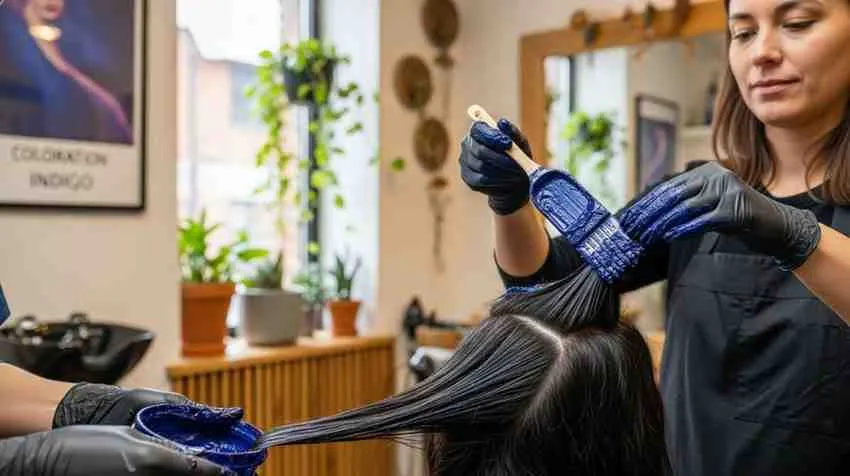
Introduction: Rediscovering Ancient Beauty Through Coloration Indigo
Imagine achieving rich, vibrant hair color without exposing your scalp to harsh chemicals, ammonia, or synthetic ingredients. For thousands of years, people across Asia, Africa, and the Middle East have turned to nature’s own dye—indigo—to transform their hair while simultaneously nourishing it. Today, as consumers increasingly seek natural hair color alternatives, coloration indigo is experiencing a remarkable renaissance in the beauty world.
Whether you’re looking to cover gray hair naturally, seeking a scalp-friendly hair color option, or simply wanting to avoid the damaging effects of conventional chemical dyes, indigo powder for hair offers a compelling solution. This ancient botanical hair coloring method, derived from the Indigofera tinctoria plant, provides deep blue-black tones that can stand alone or combine beautifully with henna for a range of natural shades from rich brown to jet black.
In this comprehensive guide, you’ll discover everything you need to know about indigo hair dye: its fascinating history, the science behind how it works, step-by-step application instructions, and honest comparisons with chemical alternatives. We’ll explore the unique benefits of this herbal hair dye, address common concerns about gray hair coverage, and provide practical tips for achieving salon-quality results at home. By the end, you’ll understand why this traditional indigo use has become a modern solution for health-conscious individuals seeking beautiful, naturally colored hair.
What is Coloration Indigo? Understanding the Natural Dye
The Botanical Origins: Indigofera Tinctoria
Coloration indigo refers to the hair dyeing process using powder derived from the Indigofera tinctoria plant, a member of the legume family. This plant-based hair dye has been cultivated for millennia, primarily in tropical regions of India, Southeast Asia, and parts of Africa. The indigo plant produces leaves rich in indican, a colorless precursor compound that transforms into the vibrant blue dye indigotin when exposed to oxygen.
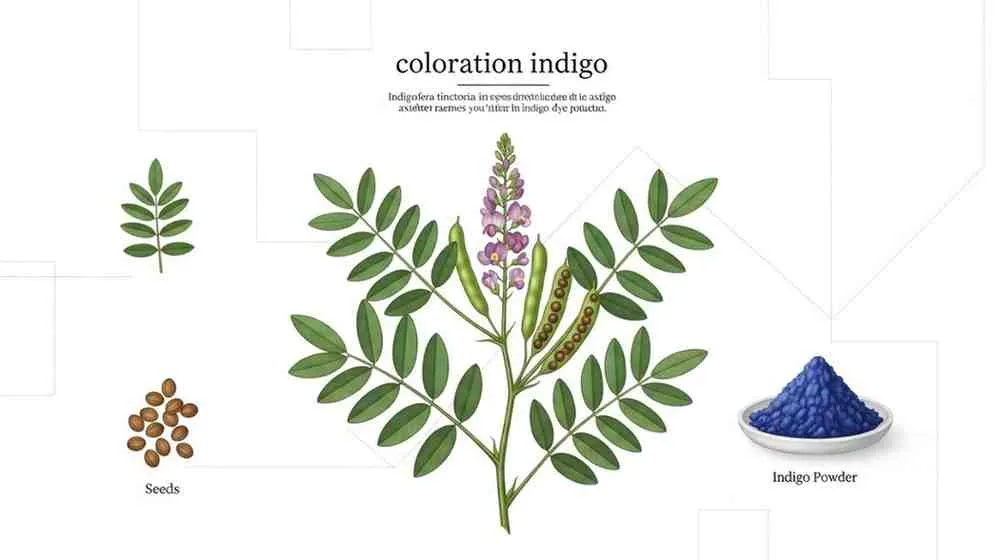
Unlike synthetic hair dyes that penetrate the hair shaft and alter its internal structure, natural indigo dye works by coating the hair externally. The powdered leaves, when mixed with water and applied to hair, undergo oxidation—a chemical reaction with air that develops the characteristic deep blue-black color. This external coating mechanism makes indigo fundamentally different from conventional dyes, offering both advantages and unique considerations.
From Fabric to Hair: The Versatility of Indigo
While most people associate indigo with fabric dyeing—particularly the iconic blue of denim jeans—the same Indigofera tinctoria plant has served as a hair colorant for centuries. Ancient texts from India, Egypt, and Persia document the use of indigo for hair coloring, often in combination with henna (Lawsonia inermis) to achieve various shades of brown and black.
The process of using organic indigo hair dye for hair differs slightly from textile applications. Hair dyeing requires fresher powder, careful pH management, and specific application techniques to ensure color adherence and longevity. The powder must be finely sifted and properly prepared to achieve smooth, even coverage without clumping or uneven color development.
Chemical-Free Hair Coloring: What Makes It Natural
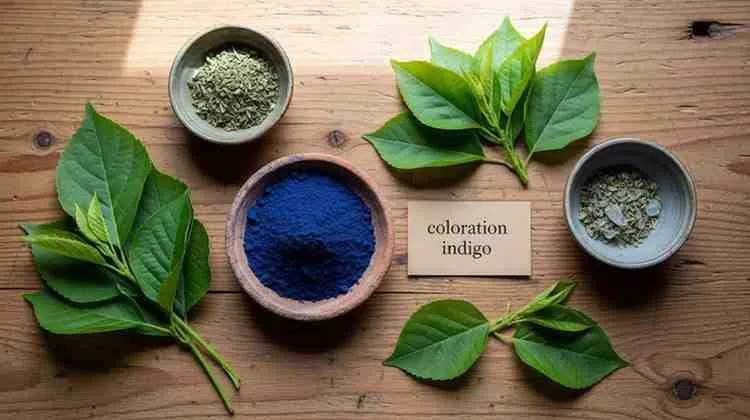
True coloration indigo contains only one ingredient: pulverized leaves of the indigo plant. Quality products are:
- 100% Natural: No synthetic dyes, PPD (para-phenylenediamine), or ammonia
- Minimally Processed: Leaves are dried and ground without chemical extraction
- Free from Additives: No preservatives, fragrances, or metallic salts
- Vegan and Cruelty-Free: Plant-derived without animal testing
This purity makes indigo hair care particularly appealing for individuals with chemical sensitivities, scalp conditions, or those following natural lifestyle choices. However, it’s crucial to verify product authenticity, as some commercial “indigo” dyes contain synthetic additives or metallic compounds that compromise the natural benefits.
The Rich History of Indigo: From Ancient Civilizations to Modern Revival
Traditional Indigo Use Across Cultures
The indigo color history spans over 6,000 years, making it one of humanity’s oldest dyes. Archaeological evidence from Peru shows indigo-dyed fabrics dating to 4000 BCE, while ancient Indian texts from 2500 BCE describe indigo cultivation and processing.
In Ancient India: Indigo production flourished in the Indian subcontinent, where it was called “nīla” in Sanskrit. Traditional Ayurvedic practices incorporated indigo plant hair color for both aesthetic and therapeutic purposes. Women combined indigo with henna to achieve black hair, believing the practice also strengthened hair roots and promoted scalp health.
In Ancient Egypt: Egyptian mummies from 2400 BCE show traces of indigo-dyed cloth. While less documented than henna, indigo likely served as a hair colorant among nobility, particularly for achieving deeper, richer tones.
In the Middle East and Mediterranean: Persian and Arab traders spread indigo throughout the Middle East, where it became integrated into traditional beauty practices. The combination of indigo and henna for hair coloring became particularly refined in these regions.
In Asia: Chinese, Japanese, and Southeast Asian cultures developed distinct indigo traditions, though primarily for textiles. However, traditional medicine systems in these regions recognized indigo’s antimicrobial and anti-inflammatory properties.
The Colonial Indigo Trade
By the 16th century, European colonizers recognized indigo’s commercial value, leading to large-scale cultivation in India, the Caribbean, and the American South. This period, while economically significant, involved exploitative labor practices that cast a shadow over indigo’s history. The trade eventually declined with the invention of synthetic indigo in 1878 by Adolf von Baeyer, which could be produced more cheaply than natural indigo.
Modern Renaissance: The Return to Natural
In recent decades, growing awareness of synthetic dye toxicity has sparked renewed interest in botanical hair coloring. Consumers increasingly seek alternatives to chemical dyes linked to allergic reactions, scalp irritation, and potential long-term health concerns. This shift has positioned coloration indigo as a premium, eco-conscious choice for natural beauty enthusiasts.
Contemporary users appreciate not just the aesthetic results but also the sustainable, environmentally friendly nature of plant-based dyes. Unlike synthetic dyes that pollute waterways with toxic compounds, natural indigo biodegrades harmlessly, making it an environmentally responsible choice.
How Does Indigo Hair Dye Work? The Science Behind Natural Color
The Chemistry of Indigo Oxidation
Understanding how natural indigo hair dye works requires a basic grasp of its chemistry. Fresh indigo leaves contain indican, a glycoside compound that is colorless and water-soluble. When leaves are processed into powder and that powder is mixed with water, enzymes break down indican into indoxyl. Upon exposure to oxygen, indoxyl molecules bond together, forming indigotin—the insoluble blue pigment responsible for indigo’s characteristic color.
This oxidation process is crucial for hair coloring:
- Initial Application: When freshly mixed indigo paste is applied to hair, it appears greenish and the indoxyl molecules haven’t fully oxidized
- Oxidation Phase: Over the next 24-48 hours, oxygen exposure causes the dye molecules to transform and bond
- Color Development: The hair gradually darkens from green to blue to deep blue-black as oxidation completes
- Color Stabilization: Full color development typically requires 3-4 days, during which washing should be avoided
How Indigo Coats the Hair Shaft
Unlike chemical dyes that open the hair cuticle and deposit color internally, indigo works by coating the hair shaft externally. The oxidized indigo molecules are too large to penetrate deep into the hair structure. Instead, they form a layer around each strand, similar to how paint coats a surface.
This coating mechanism explains several characteristics of indigo powder for hair:
- No Hair Damage: Since the hair structure remains intact, there’s no weakening or breakage from dye penetration
- Gradual Fading: Color fades as the external coating wears away rather than growing out from roots
- Build-up Potential: Repeated applications can create layered color depth
- Texture Change: The coating can slightly thicken hair strands, adding body and reducing frizz
The pH Factor in Indigo Application
Indigo dye release and hair adherence are pH-sensitive. The powder naturally produces a slightly alkaline solution (pH 8-9) when mixed with water. This alkalinity helps the dye molecules bond to hair proteins, but excessive alkalinity can damage hair over time.
Many experienced users add a small amount of salt or lemon juice to their indigo mix to achieve optimal pH balance (around 5.5-7), which maximizes color uptake while maintaining hair health. This is where herbal hair dye application becomes both art and science.
Benefits of Coloration Indigo: Why Choose Natural Over Chemical?
Scalp-Friendly Hair Color for Sensitive Individuals
One of the most compelling benefits of coloration indigo is its gentleness on the scalp. Chemical hair dyes often contain harsh ingredients that can cause:
- Allergic reactions ranging from mild irritation to severe dermatitis
- Scalp burns and lesions from ammonia or peroxide
- Respiratory issues from volatile organic compounds (VOCs)
- Long-term sensitivity development with repeated exposure
In contrast, is coloration indigo safe for sensitive scalp? For most people, yes. Pure indigo powder contains no synthetic chemicals, making it suitable for individuals with chemical sensitivities. However, as with any botanical product, rare allergic reactions to the plant itself can occur. A patch test is always recommended before full application.
Hair Health Benefits Beyond Color
Traditional indigo hair care practices recognize that this herbal dye offers benefits beyond mere coloration:
Strengthening Properties: The tannins in indigo can help strengthen hair strands, reducing breakage and split ends over time.
Scalp Conditioning: Indigo has natural cooling and soothing properties, beneficial for irritated or inflamed scalps. Traditional medicine systems credit indigo with antimicrobial properties that may support scalp health.
Volume and Body: The coating effect of indigo can add thickness to fine hair, creating the appearance of fuller, more voluminous locks.
Shine Enhancement: When properly applied, indigo can impart a subtle, natural-looking shine without the artificial gloss of chemical dyes.
No Ammonia or PPD: Perhaps most importantly, organic indigo hair dye avoids para-phenylenediamine (PPD), a common allergen in conventional dyes linked to severe reactions, and ammonia, which damages the hair cuticle and causes dryness.
Environmental and Ethical Advantages
Choosing plant-based hair dye extends benefits beyond personal health:
- Biodegradable: Natural indigo breaks down harmlessly without polluting water systems
- Sustainable Cultivation: Indigo plants are nitrogen-fixing legumes that enrich soil
- Low Carbon Footprint: Processing requires minimal energy compared to synthetic dye manufacture
- Ethical Production: Most natural indigo is produced by small-scale farmers using traditional methods
- No Animal Testing: Plant-based dyes inherently avoid animal testing concerns
Long-Term Hair Health
Regular users of coloration indigo often report improved hair condition over time, contrasting sharply with chemical dye users who frequently experience:
- Progressive hair thinning and breakage
- Increased dryness requiring intensive conditioning
- Scalp sensitivity that worsens with each application
- Color-related damage requiring professional repair treatments
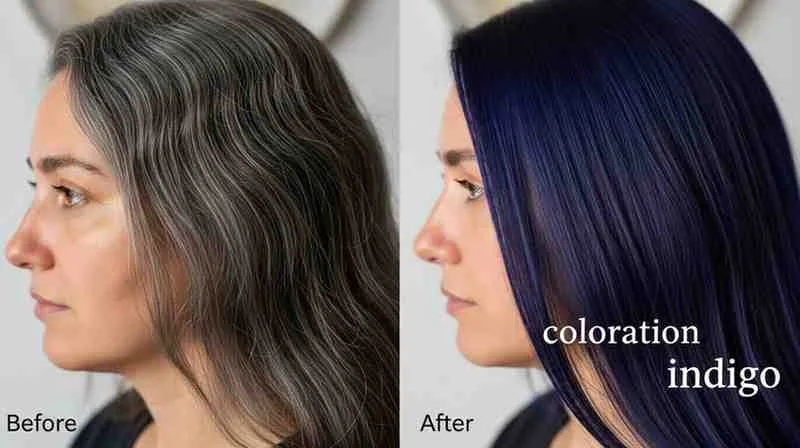
Natural indigo’s non-penetrating mechanism preserves hair integrity, allowing users to color regularly without the cumulative damage associated with chemical processes.
Gray Hair Coverage Naturally: Can Coloration Indigo Cover Gray Effectively?
The Challenge of Gray Hair
Gray hair presents unique challenges for any dye because it lacks melanin (natural pigment), making the hair structure more porous and sometimes resistant to color uptake. Chemical dyes address this by forcibly opening the cuticle and depositing synthetic pigments deep within the hair shaft.
Can coloration indigo cover gray hair effectively? The answer is nuanced: indigo alone typically produces blue or blue-green tones on gray hair, which isn’t usually desirable. However, when used strategically—particularly in combination with henna—indigo can achieve beautiful, natural-looking coverage of gray hair.
The Two-Step Process: Henna First, Indigo Second
The most effective method for gray hair coverage naturally using indigo involves a two-step process that leverages the complementary properties of henna and indigo:
Step 1: Henna Application
- Apply pure henna (Lawsonia inermis) to clean, dry hair
- Leave for 2-4 hours (longer for stubborn grays)
- Henna deposits orange-red pigment, providing a base color
- This step is crucial because indigo bonds better to henna-coated hair than to bare gray strands
Step 2: Indigo Application
- After rinsing and drying henna, apply indigo mixture
- Leave for 1-2 hours
- Indigo’s blue pigment combines with henna’s orange-red
- The result is various shades of brown to black, depending on proportions and timing
This indigo and henna process for gray hair works because of color theory: blue (indigo) + orange-red (henna) = brown to black, depending on the ratio and processing time.
Single-Step Option: Pre-Mixed Indigo and Henna
Some users prefer mixing henna and indigo together in a single application. While more convenient, this method offers less control over the final shade and generally produces less reliable results on gray hair. The mixed approach works better for:
- Those with less than 30% gray hair
- Touch-ups on previously colored hair
- Achieving lighter brown tones rather than deep black
Color Variations and Gray Coverage Results
The indigo and henna mix ratio determines the final color:
- More Henna (2:1 or 3:1): Produces auburn, reddish-brown, or chestnut tones
- Equal Parts: Yields medium to dark brown
- More Indigo (1:2 or 1:3): Creates deep brown to blue-black
- Indigo Only (after henna): Produces jet black
Gray hair typically requires more processing time and may need repeated applications for complete, even coverage. First-time users often notice gray hairs appear lighter initially, darkening with subsequent treatments as color builds up.
Step-by-Step Application Guide: How to Use Indigo Powder for Hair Coloration
Preparation Phase: Gathering Materials
Before beginning your coloration indigo journey, assemble these materials:
Essential Items:
- High-quality indigo powder (freshly opened if possible)
- Glass or ceramic mixing bowl (avoid metal, which can react with dye)
- Wooden or plastic spoon for mixing
- Warm water (not boiling)
- Application brush or gloves for hand application
- Old towel or cape to protect clothing
- Plastic shower cap or cling wrap
- Timer
Optional Enhancers:
- Sea salt (1 teaspoon per cup of powder for better dye release)
- Lemon juice (1 tablespoon for pH adjustment, use cautiously)
- Henna powder (if doing the two-step or mixed method)
- Coconut or olive oil (for dry hair protection)
Natural Indigo Hair Dye Preparation Steps
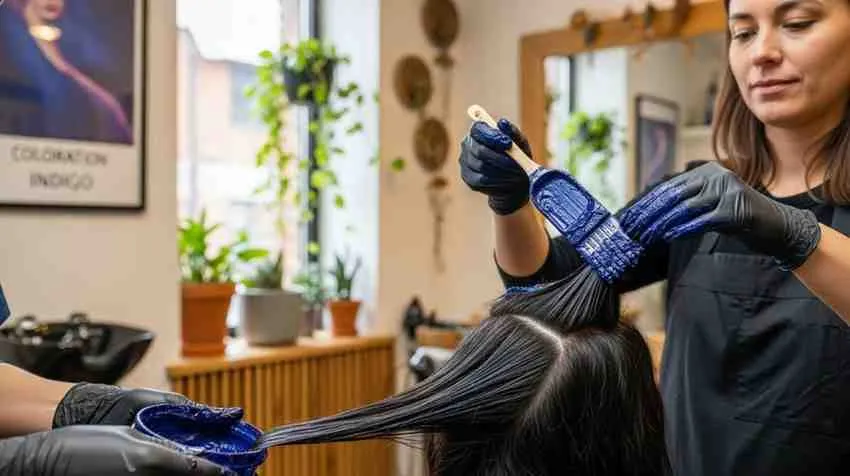
Step 1: Mix the Indigo Paste
Unlike henna, which requires several hours of dye release time, indigo should be used immediately after mixing for optimal results:
- Sift indigo powder to remove any lumps or coarse particles
- Place desired amount in your mixing bowl (100-150g for shoulder-length hair)
- Add warm water gradually, stirring constantly
- Aim for a yogurt-like consistency—not too thick, not too runny
- Add salt if using (helps dye molecules bind to hair)
- Mix thoroughly for 2-3 minutes until completely smooth
- Use immediately; indigo begins oxidizing rapidly once mixed
Step 2: Prepare Your Hair
For best results:
- Start with clean, dry hair (if following henna with indigo, ensure henna is completely dry)
- Detangle thoroughly
- Section hair into manageable portions (4-6 sections depending on thickness)
- Apply coconut oil to hairline, ears, and neck to prevent staining
- Wear old clothes; indigo can stain fabric
Step 3: Application Technique
Proper application ensures even coverage and maximum color uptake:
- Work in Sections: Start at the nape of the neck and work upward
- Apply Generously: Use enough paste to thoroughly saturate each section
- Root to Tip Coverage: Pay special attention to roots and gray areas
- Massage Gently: Work the paste into hair without being too aggressive
- Pile and Secure: Once all sections are covered, gather hair on top of head
- Wrap Thoroughly: Cover with plastic wrap or shower cap to prevent drying and oxidation
Step 4: Processing Time
- For Dark Brown: 1-1.5 hours
- For Black: 2-3 hours
- For Gray Coverage: 2-4 hours (or longer for resistant grays)
Keep in mind that longer isn’t always better—over-processing can lead to excessively dark results or green tones if the indigo hasn’t fully oxidized.
Step 5: Rinsing Process
Rinsing indigo requires patience:
- Rinse with lukewarm water only (no shampoo)
- Gently massage scalp to remove paste
- Continue rinsing until water runs clear
- Don’t panic if hair appears greenish—this is normal
- Pat dry with an old towel (may stain)
- Allow hair to air dry if possible
Step 6: Post-Application Care
- Avoid shampooing for 48-72 hours to allow full color development
- Expect color to darken significantly over 3-4 days
- Use sulfate-free, mild shampoos for subsequent washes
- Deep condition weekly to maintain hair health
Troubleshooting Common Issues
Problem: Hair looks green after indigo
- Solution: This is normal; green tones oxidize to blue-black within 24-48 hours. If it persists beyond 72 hours, the indigo may be old or low quality.
Problem: Uneven color coverage
- Solution: Ensure thorough saturation during application; gray areas may need extra attention or repeated treatments.
Problem: Color too dark
- Solution: Reduce processing time in future applications; consider oil treatments to accelerate fading.
Problem: Color fades quickly
- Solution: Avoid harsh sulfates; use cold water for rinsing; apply indigo glosses (short 15-minute applications) monthly for maintenance.
Coloration Indigo vs Chemical Hair Dye: An Honest Comparison
Safety and Health Considerations
Chemical Hair Dyes:
- Contain PPD, ammonia, resorcinol, and peroxide
- Linked to allergic reactions (affects 1-3% of users)
- Associated with potential long-term health concerns in some studies
- Can cause scalp burns, hair damage, and respiratory irritation
- Require ventilation during application
Coloration Indigo:
- 100% botanical with no synthetic additives (when pure)
- Rare allergic reactions (primarily in those allergic to legumes)
- No known long-term health risks
- Gentle on scalp and hair structure
- Safe to use in enclosed spaces
Winner: Indigo for safety and health
Color Results and Predictability
Chemical Hair Dyes:
- Highly predictable results matching box color
- Wide range of shades available
- Consistent coverage from first application
- Can lighten or darken hair significantly
Coloration Indigo:
- Results vary based on original hair color, texture, and porosity
- Limited to brown-black color range (requires henna for variation)
- May require multiple applications for full gray coverage
- Cannot lighten hair (only darken)
- Color develops over several days
Winner: Chemical dyes for predictability and color range
Application and Convenience
Chemical Hair Dyes:
- Quick application (30-45 minutes total)
- Available pre-mixed in convenient packaging
- One-step process
- Immediate color results visible after rinsing
Coloration Indigo:
- Requires mixing and preparation
- Two-step process often needed for optimal results
- Longer processing time (1-4 hours)
- Full color not visible until 3-4 days post-application
- More technique-dependent
Winner: Chemical dyes for convenience
Longevity and Maintenance
Chemical Hair Dyes:
- Permanent dyes last 4-6 weeks
- Distinct root regrowth line requires touch-ups
- Color fades and can develop unwanted tones
- Repeated applications accumulate damage
Coloration Indigo:
- Fades gradually without harsh root lines
- Color refreshes easily with shorter applications
- Can build color intensity over time
- No cumulative damage from repeated use
- Requires more frequent maintenance (every 3-4 weeks)
Winner: Tie—depends on priorities (low maintenance vs. natural appearance)
Cost Comparison
Chemical Hair Dyes:
- Box dyes: $8-20 per application
- Professional salon: $50-200+ per visit
- More expensive if correcting damage
Coloration Indigo:
- Powder: $10-30 per application (depending on hair length)
- Initial investment in tools
- Potential savings over time (DIY-friendly)
- No damage correction costs
Winner: Indigo for long-term cost-effectiveness
Environmental Impact
Chemical Hair Dyes:
- Petroleum-based synthetic ingredients
- Pollute water systems with toxic compounds
- Non-biodegradable packaging
- High carbon footprint manufacturing
Coloration Indigo:
- Biodegradable and eco-friendly
- Sustainable plant cultivation
- Minimal processing required
- Often packaged in recyclable materials
Winner: Indigo decisively for environmental responsibility
The Indigo and Henna Combination: Achieving Perfect Shades
Why Henna and Indigo Work Together
The indigo and henna mix has become the gold standard for natural hair coloring because these two plant dyes complement each other perfectly:
Henna Contributions:
- Provides warm undertones (orange-red)
- Conditions and strengthens hair
- Creates a base for indigo to bond with
- Offers UV protection
- Improves color longevity
Indigo Contributions:
- Adds cool, dark tones (blue-black)
- Neutralizes henna’s orange-red when combined
- Provides depth and richness
- Offers additional scalp benefits
- Creates final brown-to-black shades

Application Methods for Henna-Indigo Coloring
Method 1: Sequential Two-Step (Most Reliable)
This approach offers maximum control and predictability:
- Apply pure henna first (2-4 hours)
- Rinse thoroughly and allow hair to dry
- Apply indigo (1-3 hours depending on desired darkness)
- Rinse with water only
This method works best for achieving deep, rich browns and true blacks with complete gray coverage.
Method 2: Simultaneous Mix (Convenience Option)
Mix henna and indigo together before application:
- Prepare henna as usual (mix and let sit 8-12 hours)
- Add indigo powder just before application
- Apply immediately (indigo begins oxidizing)
- Process for 2-3 hours
- Rinse thoroughly
This method offers convenience but less color control and can produce unpredictable results on gray hair.
Method 3: Layered Approach (For Specific Effects)
Some advanced users apply henna to certain sections and indigo to others, creating natural-looking dimensional color with subtle highlights and lowlights.
Ratio Guide for Different Shades
Adjust the henna-to-indigo ratio to achieve various natural colors:
Light to Medium Brown:
- Henna: 75-80%
- Indigo: 20-25%
- Processing time: 1-2 hours for indigo step
Medium to Dark Brown:
- Henna: 50%
- Indigo: 50%
- Processing time: 2-3 hours for indigo step
Deep Brown to Soft Black:
- Henna: 25%
- Indigo: 75%
- Processing time: 3-4 hours for indigo step
Jet Black:
- Apply henna first (full application)
- Follow with pure indigo (no henna mixed in)
- Processing time: 4+ hours for indigo step
Remember that personal hair characteristics affect results. Keep notes on your ratios and processing times to refine your perfect formula.
Suitability for Different Hair Types and Conditions
Fine vs. Coarse Hair
Fine Hair: Coloration indigo can add body and thickness to fine hair due to its coating effect. However, users should:
- Use less powder to avoid weighing hair down
- Apply more diluted mixtures
- Process for shorter times to prevent excessive buildup
- Consider indigo glosses between full applications
Coarse Hair: Thicker strands typically absorb indigo well and benefit from:
- More generous application amounts
- Longer processing times for full penetration
- Regular deep conditioning to maintain manageability
- Potential for richer, more intense color results
Straight vs. Curly Hair
Straight Hair:
- Shows indigo color most uniformly
- May reveal subtle color variations more visibly
- Requires careful application to avoid patches
Curly and Textured Hair:
- Benefits from indigo’s conditioning properties
- Natural texture helps conceal minor application inconsistencies
- May require more product due to volume
- Often experiences excellent curl definition after treatment
Many users with Afro-textured hair report that indigo hair care routines help maintain moisture and reduce frizz while adding rich color.
Virgin vs. Previously Colored Hair
Virgin Hair (Never Chemically Treated):
- Achieves most predictable results
- Full color development typically in first application
- Best candidate for pure natural coloring
Previously Chemically Colored Hair:
- Results can be unpredictable due to existing synthetic pigments
- May require strand testing before full application
- Indigo can interact strangely with certain chemical dyes (especially reds and coppers)
- Often needs multiple applications to achieve even color
- Highly damaged hair may absorb color unevenly
If transitioning from chemical to natural dyes, patience is essential. Many colorists recommend growing out chemical color completely before applying indigo for most predictable results.
Special Considerations for Damaged Hair
While botanical hair coloring is gentler than chemical alternatives, severely damaged hair requires extra care:
- Complete a series of protein and moisture treatments before coloring
- Use oil pre-treatments to protect porous sections
- Reduce processing time to prevent over-saturation
- Focus on repair between coloring sessions
- Consider consulting with a natural hair specialist
Real-Life Examples: Success Stories with Coloration Indigo
Case Study 1: Transitioning from Chemical Dyes
Background: Maria, 42, had been chemically coloring her hair black for 15 years. She developed increasing scalp sensitivity and noticed significant hair thinning.
Approach: After consulting a natural hair specialist, Maria began a transition plan:
- Stopped chemical coloring immediately
- Waited 3 months while existing color grew out
- Started with henna-only applications to repair damage
- Introduced indigo after 2 henna treatments
- Used the two-step method every 5 weeks
Results: After 8 months:
- Complete elimination of scalp irritation
- Noticeable increase in hair thickness
- Rich, natural-looking black color
- Improved overall hair health and shine
Key Lesson: Patience during transition pays off; hair health improvements often take several months.
Case Study 2: Gray Coverage for Professional Setting
Background: David, 58, had approximately 60% gray hair. As a corporate executive, he wanted professional-looking gray coverage without obvious “dyed” appearance.
Approach:
- Selected medium brown as target color
- Used 50/50 henna-indigo simultaneous mix
- Applied every 4 weeks
- Kept processing time to 2 hours for natural, subtle results
Results:
- Natural-looking gray blending (not complete coverage, which was his preference)
- Colleagues noticed improved appearance without obvious “hair dye” look
- No scalp irritation despite sensitive skin history
- Easy maintenance routine
Key Lesson: Indigo can create professional, natural-looking results when goals are realistic and methods are tailored.
Case Study 3: Enhancing Natural Color
Background: Priya, 31, had naturally dark brown hair but wanted added depth and shine without chemical processing.
Approach:
- Used indigo gloss treatments (diluted indigo for 30 minutes monthly)
- No henna needed due to naturally dark base
- Focus on enhancing existing color rather than dramatic change
Results:
- Enhanced depth and dimension
- Improved shine and reduced frizz
- Maintained natural appearance
- Minimal time investment
Key Lesson: Indigo works beautifully for enhancing natural dark hair, not just covering gray.
Pros and Cons of Coloration Indigo: An Honest Assessment
Advantages of Natural Indigo Hair Dye
Health and Safety:
- Chemical-free formula safe for sensitive scalps
- No ammonia, PPD, or synthetic additives
- Suitable for pregnant and nursing women (consult healthcare provider)
- Can actually improve hair and scalp health over time
Environmental Benefits:
- Fully biodegradable and eco-friendly
- Sustainable cultivation practices
- Zero pollution to waterways
- Minimal carbon footprint
Hair Quality Improvements:
- Strengthens hair structure through coating effect
- Adds body and volume to fine hair
- Reduces frizz and improves manageability
- Provides natural-looking shine
Color Characteristics:
- Rich, multi-dimensional tones
- Gradual, natural-looking fade
- No harsh regrowth lines
- Builds depth with repeated applications
Cost-Effectiveness:
- Lower long-term costs than salon visits
- DIY-friendly once technique is mastered
- No expense for damage repair treatments
Limitations and Challenges
Color Limitations:
- Cannot lighten hair (only darken)
- Limited to brown-black spectrum
- Unpredictable on chemically treated hair
- Requires henna for most flattering shades
Application Complexity:
- More time-consuming than chemical dyes
- Requires learning curve for optimal technique
- Two-step process often necessary
- Messy application (staining potential)
Results Variability:
- Outcomes vary based on hair type and history
- Gray coverage may require multiple applications
- Color develops over several days (requires patience)
- Less predictable than box dyes
Maintenance Requirements:
- More frequent touch-ups needed (every 3-4 weeks)
- Specific care routine necessary (sulfate-free products)
- Cannot easily change to lighter colors once established
- Removal is extremely difficult if desired
Time Investment:
- Preparation and application: 30-60 minutes
- Processing: 1-4 hours
- Full color development: 3-4 days
- Total first session can take 6+ hours for two-step method
Who Should Choose Coloration Indigo?
Ideal Candidates:
- Individuals with chemical sensitivities or allergies
- Those seeking to improve hair health while coloring
- Environmentally conscious consumers
- People with naturally dark hair wanting enhancement
- Anyone transitioning from chemical dyes
- Those patient enough for gradual, natural-looking results
Consider Alternatives If:
- You need dramatic lightening
- Time commitment is impossible
- Extremely predictable results are essential
- You frequently change hair colors
- Professional color correction is preferred
Frequently Asked Questions About Coloration Indigo
What is coloration indigo?
Coloration indigo is a natural hair dyeing method using powder from the Indigofera tinctoria plant. This botanical hair coloring technique produces blue-black tones and is often combined with henna to create various brown shades. Unlike chemical dyes, indigo coats hair externally without penetrating or damaging the hair shaft.
How does indigo hair dye work naturally?
Indigo contains indican, a colorless compound that converts to blue indigotin pigment through oxidation. When mixed with water and applied to hair, oxygen exposure triggers this transformation. The dye molecules form a coating around hair strands, developing from green to blue-black over 24-48 hours as oxidation completes.
Can coloration indigo cover gray hair effectively?
Yes, but it typically requires a two-step process. Apply henna first to create an orange-red base, then follow with indigo. The blue indigo combines with orange henna to produce brown-to-black shades that effectively cover gray. Pure indigo alone on gray hair usually produces unwanted blue or green tones.
Is indigo hair dye better than chemical dyes?
Better for health and environment: Indigo contains no harsh chemicals, making it gentler on scalp and hair while being completely