


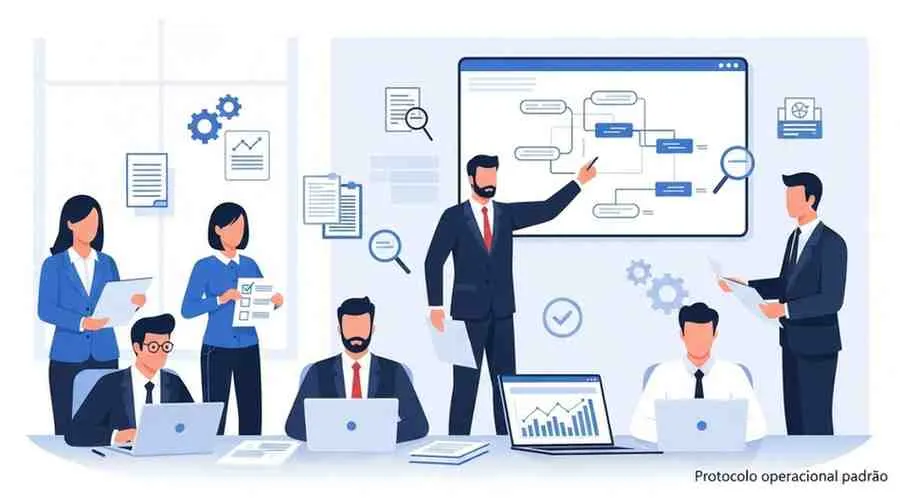
Introduction: Why Every Successful Organization Needs Protocolo Operacional Padrão
Imagine walking into a hospital where each medical professional follows their own unique approach to patient care, or boarding an aircraft where pilots use different procedures for the same flight operations. The chaos and danger would be unthinkable. This is precisely why Protocolo Operacional Padrão (POP)—known internationally as Standard Operating Procedures (SOP)—exists and serves as the backbone of operational excellence across industries worldwide.
Whether you’re managing a manufacturing facility, running a healthcare organization, overseeing food service operations, or leading any business that values consistency, quality, and safety, understanding and implementing effective POP is not optional—it’s essential for survival and growth in today’s competitive landscape.
In this comprehensive guide, you’ll discover everything you need to know about Protocolo Operacional Padrão: what it is, why it matters, how to create effective SOPs, industry-specific applications, implementation strategies, and modern digital solutions that are transforming how organizations document and maintain their operational procedures. By the end of this article, you’ll have actionable insights to develop, implement, and optimize POP within your own organization.
What is Protocolo Operacional Padrão (POP)?
Protocolo Operacional Padrão, commonly abbreviated as POP, is the Portuguese term for Standard Operating Procedure (SOP). It represents a comprehensive, written set of step-by-step instructions designed to help workers perform complex routine operations consistently, safely, and efficiently.
Core Definition and Purpose
At its essence, a POP is a documented process that outlines exactly how specific tasks should be performed within an organization. These procedures serve multiple critical functions:
- Standardization: Ensures all employees perform tasks the same way, regardless of shift, location, or individual preferences
- Quality assurance: Maintains consistent output quality and reduces variability in products or services
- Training tool: Provides clear guidance for new employees during onboarding and serves as ongoing reference material
- Compliance documentation: Demonstrates adherence to regulatory requirements and industry standards
- Risk reduction: Minimizes errors, accidents, and operational failures through proven methodologies
- Knowledge preservation: Captures institutional knowledge and prevents loss of expertise when employees leave
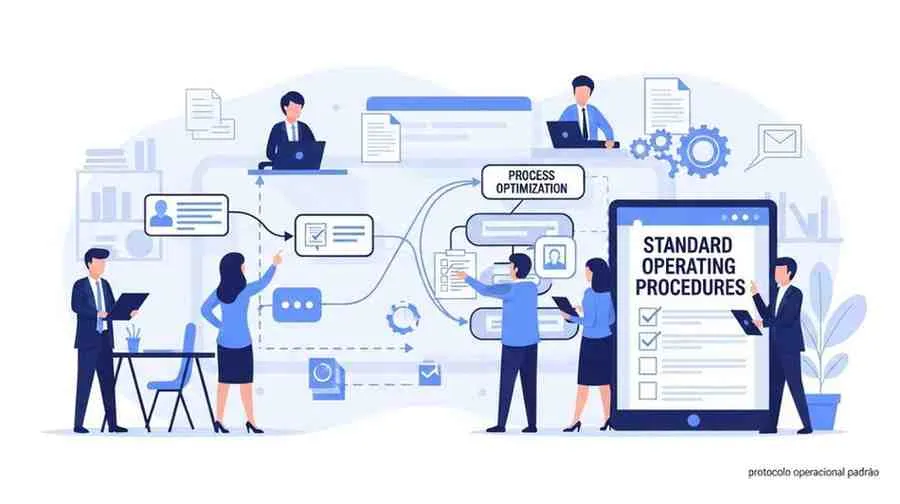
The Business Case for Protocolo Operacional Padrão
Organizations that implement robust POP systems experience measurable benefits across multiple dimensions. Research in operational management indicates that companies with well-documented standard operating procedures report up to 30% higher productivity, 50% fewer errors, and significantly improved employee satisfaction scores.
The investment in developing comprehensive POP pays dividends through:
- Reduced training time for new employees
- Lower operational costs through efficiency gains
- Decreased liability and legal exposure
- Enhanced customer satisfaction through consistent service delivery
- Improved scalability as the organization grows
- Better regulatory compliance and audit performance
Why POP Matters in Business Operations
The importance of Protocolo Operacional Padrão extends far beyond simple documentation. In the modern business environment, POP serves as a strategic asset that directly impacts organizational performance and competitive positioning.
Operational Consistency and Excellence
Without standardized procedures, organizations face inevitable variations in how tasks are performed. This inconsistency leads to unpredictable outcomes, customer dissatisfaction, and internal friction. POP eliminates this variability by establishing clear expectations and proven methods.
Consider a restaurant chain: without POP, each location might prepare signature dishes differently, leading to confused customers and damaged brand reputation. With comprehensive standard operating procedures, every location delivers identical quality, reinforcing brand promise and customer loyalty.
Regulatory Compliance and Safety
Many industries operate under strict regulatory frameworks that mandate documented procedures. Healthcare facilities must comply with standards from organizations like the Joint Commission or WHO. Manufacturing plants face OSHA safety requirements. Food service operations must adhere to FDA and local health department regulations.
Protocolo Operacional Padrão serves as evidence of compliance during audits and inspections. More importantly, it protects employees and customers by ensuring safety-critical tasks are performed correctly every time.
Traceability and Accountability
When problems occur—and they inevitably will—organizations need clear traceability to understand what happened and why. Well-maintained POP creates an audit trail that allows investigators to:
- Identify exactly which procedure was followed (or not followed)
- Determine if the procedure itself was flawed or if human error occurred
- Implement corrective actions based on evidence rather than speculation
- Hold individuals accountable when procedures are deliberately ignored
Continuous Improvement Foundation
Effective Protocolo Operacional Padrão isn’t static. The best organizations treat their SOPs as living documents that evolve based on feedback, technological advances, and lessons learned. This creates a culture of continuous improvement where employees actively contribute to refining processes.
The PDCA (Plan-Do-Check-Act) cycle integrates naturally with POP systems:
- Plan: Develop or revise the standard operating procedure
- Do: Implement the POP and train employees
- Check: Monitor performance and gather feedback
- Act: Update the POP based on insights gained
Components of an Effective Protocolo Operacional Padrão
Creating truly effective standard operating procedures requires careful attention to structure and content. While formats may vary by industry and organizational preference, successful POPs share common essential elements.
Essential POP Components
| Component | Purpose | Best Practices |
|---|---|---|
| Title & ID | Clear identification and version control | Use descriptive titles; assign unique identification numbers |
| Purpose | Explains why the procedure exists | State objectives clearly in 2-3 sentences |
| Scope | Defines applicability and boundaries | Specify which departments, roles, or situations apply |
| Responsibilities | Identifies who performs each step | Assign clear ownership; use job titles, not names |
| Materials & Equipment | Lists required resources | Include specifications, quantities, and safety equipment |
| Procedure Steps | Sequential instructions for execution | Number steps; use active voice; include decision points |
| Safety & Precautions | Highlights hazards and protective measures | Emphasize critical safety information prominently |
| Quality Checkpoints | Defines verification and testing points | Specify acceptance criteria and measurement methods |
| References | Links to related documents and regulations | Cite relevant standards, policies, and supporting materials |
| Revision History | Tracks changes over time | Document date, version, changes made, and approver |
Writing Style Guidelines for POP
The effectiveness of Protocolo Operacional Padrão depends heavily on clarity and accessibility. Follow these principles when drafting procedures:
Use simple, direct language:
- Write at an 8th-grade reading level when possible
- Avoid jargon unless industry-standard terms are necessary
- Define technical terms when first introduced
- Use short sentences (15-20 words maximum)
Employ active voice:
- ❌ “The sample should be analyzed”
- ✅ “Analyze the sample”
Be specific and concrete:
- ❌ “Heat the solution adequately”
- ✅ “Heat the solution to 75°C ± 2°C for 10 minutes”
Include visual aids:
- Flowcharts for complex decision trees
- Photographs showing proper equipment setup
- Diagrams illustrating correct techniques
- Warning symbols for safety-critical steps
Hierarchical Structure for Complex Operations
For intricate procedures involving multiple sub-processes, consider a hierarchical documentation approach:
- Level 1 – Policy: High-level statement of what and why
- Level 2 – Process: Overview of major process flows
- Level 3 – Procedure (POP): Detailed step-by-step instructions
- Level 4 – Work Instructions: Granular task-level guidance
- Level 5 – Forms & Records: Supporting documentation
This structure prevents overwhelming users with unnecessary detail while ensuring comprehensive coverage when deeper information is needed.

Step-by-Step Process to Create Protocolo Operacional Padrão
Developing effective standard operating procedures requires systematic planning and execution. Follow this proven methodology to create POPs that genuinely improve operations.
Phase 1: Preparation and Planning
Step 1: Identify priority procedures Begin by listing all processes that require standardization. Prioritize based on:
- Frequency of performance
- Risk level (safety, quality, compliance)
- Current inconsistency or error rates
- Regulatory requirements
- Impact on customer satisfaction
Step 2: Assemble the development team Include individuals with diverse perspectives:
- Subject matter experts who perform the task regularly
- Supervisors who oversee the operation
- Quality assurance representatives
- Safety officers for hazardous procedures
- Technical writers for documentation support
Step 3: Define scope and objectives Clearly articulate what the POP will cover and what it will achieve. Set measurable goals such as “reduce processing errors by 40%” or “achieve 100% compliance in audits.”
Phase 2: Documentation and Development
Step 4: Observe current practices Watch experienced personnel perform the task multiple times. Document variations in approach and identify best practices that should become standard.
Step 5: Draft the initial procedure Using the components outlined earlier, create a first draft. Include:
- Sequential numbered steps
- Decision points and alternative paths
- Quality checkpoints and verification steps
- Safety warnings and cautions
- Visual aids where beneficial
Step 6: Review and validation Circulate the draft to stakeholders for feedback. Key questions to address:
- Is every step necessary?
- Are instructions clear and unambiguous?
- Can a trained person complete the task following only these instructions?
- Are safety considerations adequately addressed?
- Does the procedure comply with applicable regulations?
Phase 3: Testing and Refinement
Step 7: Pilot testing Have employees who weren’t involved in development attempt to follow the POP exactly as written. Observe where they:
- Encounter confusion or ambiguity
- Need to ask clarifying questions
- Deviate from the written procedure
- Identify missing steps or information
Step 8: Revise based on feedback Incorporate insights from pilot testing. This iterative process may require multiple rounds before the procedure is truly effective.
Step 9: Final approval Obtain formal sign-off from appropriate authorities:
- Department managers
- Quality assurance
- Safety officers
- Executive leadership (for critical procedures)
- Legal/compliance (where regulatory implications exist)
Phase 4: Implementation and Maintenance
Step 10: Training and rollout Don’t just distribute the POP—actively train employees on:
- The purpose and importance of the procedure
- Each step in detail with hands-on practice
- What to do when problems arise
- How to provide feedback for improvement
Step 11: Monitor compliance and performance Track key metrics:
- Error rates before and after implementation
- Time required to complete tasks
- Employee compliance rates
- Quality outcomes
- Safety incidents
Step 12: Schedule regular reviews Establish a review cycle (annually, or more frequently for critical procedures). Update the POP when:
- Equipment or materials change
- Regulations are updated
- Better methods are discovered
- Performance data suggests improvements are possible
Protocolo Operacional Padrão for Quality Control & Compliance
Quality assurance and regulatory compliance represent two of the most critical applications for standard operating procedures. Organizations in regulated industries stake their very existence on documented processes.
Quality Management Integration
Protocolo Operacional Padrão forms the foundation of quality management systems (QMS) such as ISO 9001. These frameworks require organizations to:
Document procedures that affect quality:
- Product design and development
- Manufacturing and production processes
- Inspection and testing protocols
- Corrective and preventive actions
- Management review procedures
Maintain control over documentation:
- Version control to prevent use of outdated procedures
- Distribution management ensuring authorized personnel have access
- Change control procedures for updating documents
- Document retention meeting regulatory requirements
Compliance Applications by Sector
Healthcare and Medical Devices: Medical facilities operate under strict oversight from organizations like the FDA, EMA, and national health authorities. POP documentation is mandatory for:
- Clinical procedures and patient care protocols
- Sterilization and infection control
- Medication administration
- Laboratory testing procedures
- Medical device operation and maintenance
Failure to maintain adequate SOPs can result in certification loss, legal liability, and patient harm.
Food and Beverage Industry: Food safety regulations require detailed standard operating procedures covering:
- HACCP (Hazard Analysis Critical Control Points) plans
- Sanitation and cleaning protocols
- Temperature monitoring and control
- Allergen management
- Traceability from raw materials to finished products
Pharmaceutical Manufacturing: Good Manufacturing Practices (GMP) demand exhaustive documentation of every process affecting product quality:
- Raw material receiving and testing
- Manufacturing batch records
- Quality control testing procedures
- Equipment calibration and maintenance
- Deviation investigation protocols
Audit Preparation and Success
Well-maintained Protocolo Operacional Padrão dramatically improves audit outcomes. Auditors assess:
- Document adequacy: Are procedures comprehensive, current, and accessible?
- Training evidence: Can employees demonstrate competency in following SOPs?
- Compliance: Are actual practices consistent with documented procedures?
- Record-keeping: Are completed procedures properly documented and retained?
- Continuous improvement: Is there evidence of periodic review and enhancement?
Organizations that treat POP as living quality tools rather than compliance checkboxes consistently achieve superior audit results and operational performance.
Industry-Specific Applications of Protocolo Operacional Padrão
While the principles of standard operating procedures remain consistent, practical applications vary significantly across industries. Let’s examine how different sectors leverage POP for operational excellence.
Healthcare Sector
Healthcare organizations rely on Protocolo Operacional Padrão to ensure patient safety and quality care delivery.
Critical healthcare SOPs:
- Emergency response protocols (code blue, code red)
- Surgical preparation and sterile technique procedures
- Medication reconciliation processes
- Patient identification and verification
- Infection prevention and control measures
- Medical equipment operation and troubleshooting
Example: Hospital Medication Administration POP A typical medication administration SOP includes:
- Verify physician orders in the electronic health record
- Confirm patient identity using two identifiers (name + date of birth)
- Check medication against the “five rights” (right patient, drug, dose, route, time)
- Scan medication barcode and patient wristband
- Explain medication purpose and potential side effects to patient
- Observe patient taking medication
- Document administration time and patient response
- Monitor for adverse reactions per protocol
This level of detail ensures consistent, safe medication delivery across all shifts and providers.
Manufacturing and Production
Manufacturing operations use POP to maintain product quality, optimize efficiency, and ensure worker safety.
Essential manufacturing SOPs:
- Equipment setup and calibration procedures
- Production line startup and shutdown sequences
- Quality inspection and testing protocols
- Maintenance and preventive maintenance schedules
- Material handling and storage procedures
- Waste disposal and environmental compliance
Example: Assembly Line Changeover Procedure When switching between different product models, a standardized changeover POP might specify:
- Complete final quality check on previous run (10 minutes)
- Power down equipment following lockout/tagout procedure (5 minutes)
- Remove tooling and fixtures for previous product (15 minutes)
- Clean and inspect work surfaces (10 minutes)
- Install new tooling per setup specifications (20 minutes)
- Verify tool positions using gauge blocks (5 minutes)
- Perform first article inspection on new product (15 minutes)
- Total changeover time target: 80 minutes
This procedure transforms a previously chaotic process taking 3+ hours into a predictable 80-minute operation, dramatically improving productivity.
Food Service and Hospitality
Restaurants, hotels, and food service operations depend on standard operating procedures for consistency, safety, and brand integrity.
Key hospitality SOPs:
- Food preparation and cooking procedures
- Food storage and temperature monitoring
- Cleaning and sanitation schedules
- Guest service standards and scripts
- Allergen handling protocols
- Opening and closing checklists
Example: Restaurant Food Safety Temperature Log POP A food safety temperature monitoring procedure ensures compliance with health regulations:
- Calibrate thermometer daily using ice water method (0°C/32°F)
- Check refrigerator temperatures at opening, mid-shift, and closing (target: 1-4°C/34-39°F)
- Check freezer temperatures same frequency (target: -18°C/0°F or below)
- Record temperatures on daily log sheet
- If temperatures exceed limits, immediately notify manager
- Move food to backup cooler if equipment malfunction occurs
- Tag defective equipment “Do Not Use” and call for service
This simple procedure prevents foodborne illness outbreaks and protects business reputation.
Aviation and Aerospace
Perhaps no industry relies more heavily on standard operating procedures than aviation, where lives depend on precise execution.
Critical aviation SOPs:
- Pre-flight inspection checklists
- Normal and emergency flight procedures
- Maintenance and repair protocols
- Ground handling and fueling operations
- Crew resource management procedures
- Incident reporting and investigation
Commercial aviation’s extraordinary safety record—with fatal accidents occurring in fewer than 1 in 10 million flights—is directly attributable to rigorous adherence to standardized procedures.
Laboratory and Research Facilities
Scientific laboratories require Protocolo Operacional Padrão to ensure reproducible results, researcher safety, and data integrity.
Essential laboratory SOPs:
- Chemical handling and storage procedures
- Equipment operation and maintenance
- Experimental protocols and methodologies
- Sample collection, processing, and storage
- Data recording and analysis procedures
- Waste disposal and emergency response
Research conducted without documented standard procedures cannot be validated, reproduced, or published in peer-reviewed journals.
Digital Transformation of SOP: Modern Tools & Workflow Automation
Traditional paper-based Protocolo Operacional Padrão systems face significant limitations: documents become outdated, version control fails, access is restricted, and tracking compliance is nearly impossible. Digital SOP solutions are revolutionizing how organizations create, maintain, and leverage standard operating procedures.
Benefits of Digital SOP Systems
Real-time updates and version control: Digital platforms automatically distribute updated procedures to all users instantly, eliminating the risk of employees following outdated instructions. Cloud-based systems maintain complete revision history and audit trails.
Enhanced accessibility: Mobile-responsive SOP platforms allow employees to access procedures on tablets or smartphones directly at their workstations, eliminating the need to search for paper manuals or walk to desktop computers.
Interactive multimedia content: Digital SOPs can incorporate videos demonstrating proper techniques, interactive diagrams, embedded decision trees, and augmented reality overlays that guide users through complex procedures.
Automated workflows and reminders: Systems can trigger automatic notifications when procedures require periodic review, certifications need renewal, or training documentation is due.
Analytics and compliance tracking: Digital platforms provide dashboards showing:
- Which employees have read and acknowledged specific procedures
- Completion rates for procedure-based tasks
- Time spent on various operations
- Error rates correlated with procedure compliance
- Training gaps across the organization
Leading Digital SOP Solutions
Enterprise-grade platforms:
- ProcessMaker: Workflow automation with integrated SOP management
- Tallyfy: Cloud-based process documentation and tracking
- SweetProcess: Simple, user-friendly SOP creation and management
- Connecteam: Mobile-first employee management with built-in SOP library
- Dozuki: Manufacturing-focused digital work instructions
Integration capabilities: Modern SOP software integrates with:
- Learning Management Systems (LMS) for training
- Quality Management Systems (QMS) for compliance
- Enterprise Resource Planning (ERP) systems for operational data
- Document management platforms for centralized storage
- Business intelligence tools for analytics and reporting
Implementing Digital SOP Systems
Phase 1: Assessment and selection (4-6 weeks)
- Evaluate current pain points with existing documentation
- Define requirements and must-have features
- Research and demo available platforms
- Calculate ROI and obtain budget approval
Phase 2: Content migration (8-12 weeks)
- Inventory existing paper and PDF procedures
- Prioritize critical procedures for initial migration
- Convert documents to digital format
- Enhance with multimedia where beneficial
- Establish naming conventions and organizational structure
Phase 3: Pilot deployment (4-8 weeks)
- Roll out to select department or facility
- Train super-users and champions
- Gather feedback on usability and functionality
- Refine processes before full deployment
Phase 4: Organization-wide rollout (12-24 weeks)
- Deploy across all departments and locations
- Conduct comprehensive training
- Decommission paper-based systems
- Monitor adoption and address resistance
Phase 5: Optimization (ongoing)
- Analyze usage data and identify improvement opportunities
- Expand use of advanced features
- Continuously update and improve content
- Integrate with additional business systems
Artificial Intelligence and Future Trends
Emerging technologies are further transforming Protocolo Operacional Padrão:
AI-powered procedure creation: Natural language processing algorithms can analyze process data and automatically generate draft SOPs, dramatically reducing development time.
Predictive analytics: Machine learning models identify procedures with high error rates or non-compliance, triggering proactive interventions before problems occur.
Virtual and augmented reality training: Immersive simulations allow employees to practice procedures in realistic virtual environments before performing them in actual operations, particularly valuable for rare emergency procedures or hazardous operations.
Voice-activated procedure guidance: Workers can access step-by-step instructions hands-free using voice commands, ideal for manufacturing, laboratory, and field service applications.
Challenges in Implementing Protocolo Operacional Padrão & Smart Solutions
Despite the clear benefits, organizations frequently encounter obstacles when developing and implementing standard operating procedures. Understanding these challenges and proven solutions increases the likelihood of successful POP adoption.
Challenge 1: Employee Resistance
The problem: Workers often view SOPs as bureaucratic obstacles that stifle creativity, slow down work, and demonstrate management distrust. Experienced employees may resent being told “how to do their jobs.”
Smart solutions:
- Involve frontline employees in development: People support what they help create. Include actual operators in the POP writing process.
- Emphasize benefits to workers: Frame SOPs as tools that protect employees from blame when problems occur and ensure they’re never left uncertain about expectations.
- Recognize expertise: Acknowledge that SOPs capture and validate the knowledge of experienced workers rather than replacing their skills.
- Allow flexibility where appropriate: Distinguish between procedures requiring rigid compliance (safety, quality, regulatory) and those permitting reasonable variation.
Challenge 2: Keeping Procedures Current
The problem: Operational environments change constantly—new equipment, updated regulations, process improvements, personnel changes. SOPs quickly become outdated if not actively maintained.
Smart solutions:
- Assign clear ownership: Designate specific individuals responsible for each procedure with accountability for periodic review.
- Establish review schedules: Calendar automatic reviews annually (or more frequently for critical procedures).
- Create easy feedback mechanisms: Provide simple ways for employees to report issues, suggest improvements, or request clarification.
- Use digital systems: Leverage technology for automated reminders, version control, and instant distribution of updates.
- Link reviews to audits: Schedule SOP reviews following internal audits, external inspections, or incident investigations.
Challenge 3: Finding Time for Development
The problem: Creating comprehensive, high-quality Protocolo Operacional Padrão is time-consuming. Managers and subject matter experts struggle to dedicate time to documentation while maintaining daily operations.
Smart solutions:
- Start small with high-impact procedures: Don’t attempt to document everything simultaneously. Begin with critical processes.
- Use templates: Standardized formats dramatically reduce development time.
- Leverage existing documentation: Many organizations have informal documentation that can be formalized rather than creating from scratch.
- Consider professional assistance: Technical writers or consultants can interview subject matter experts and draft procedures, freeing operational staff.
- Budget dedicated time: Explicitly allocate time for POP development in project plans and performance objectives.
Challenge 4: Ensuring Readability and Usability
The problem: Technical experts often write SOPs using jargon, assuming knowledge, or providing excessive detail that obscures critical information. The result: procedures that confuse rather than clarify.
Smart solutions:
- Write for the end user: Consider the skill level and language proficiency of actual users.
- Test with representative users: Have someone unfamiliar with the task attempt to follow the procedure.
- Use plain language principles: Short sentences, active voice, concrete nouns, simple vocabulary.
- Enhance with visuals: Photographs, diagrams, and flowcharts improve comprehension.
- Separate levels of detail: Provide step-by-step instructions for procedures with supplementary technical information in appendices.
Challenge 5: Measuring Effectiveness
The problem: Organizations invest significant resources in POP development but struggle to quantify benefits or identify areas needing improvement.
Smart solutions:
- Establish baseline metrics: Measure error rates, cycle times, training duration, and other relevant metrics before implementing new procedures.
- Track compliance: Monitor whether employees actually follow documented procedures.
- Gather qualitative feedback: Survey employees about clarity, usefulness, and suggestions for improvement.
- Analyze incident reports: Examine whether failures involve procedure violations, inadequate procedures, or gaps in documentation.
- Benchmark performance: Compare metrics to industry standards or best-performing facilities within your organization.
Challenge 6: Balancing Standardization with Local Needs
The problem: Multi-site organizations face tension between corporate standardization and site-specific requirements. One-size-fits-all procedures may not accommodate legitimate local variations.
Smart solutions:
- Distinguish core from flexible elements: Identify which aspects must be identical across all locations (usually safety and quality-critical) versus where adaptation is acceptable.
- Use modular structure: Create corporate standard frameworks with placeholders for site-specific details.
- Establish approval processes: Allow local modifications with appropriate review and documentation.
- Share best practices: Create mechanisms for high-performing sites to share innovations that could benefit the broader organization.
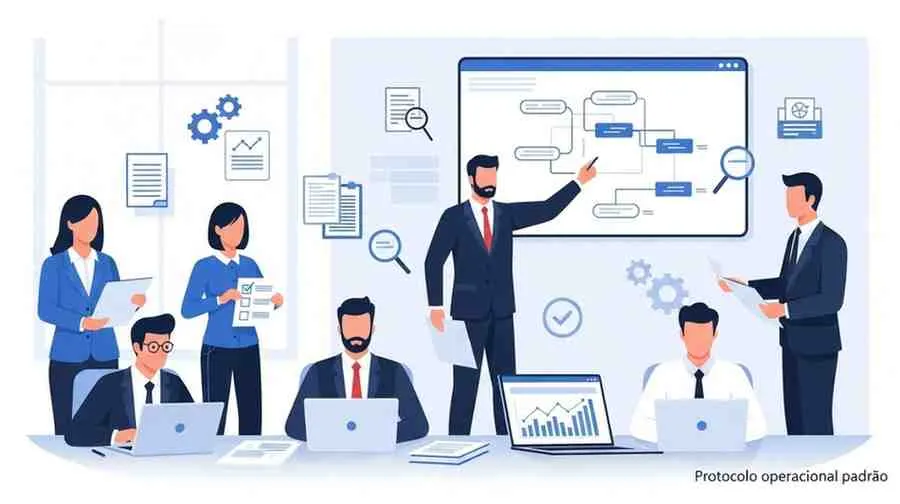
Protocolo Operacional Padrão vs SOP vs Guidelines vs Policies
Organizations use various terms to describe documented procedures, often creating confusion. Understanding the distinctions helps establish appropriate documentation structures.
Hierarchical Documentation Framework
Policies (Level 1):
- What: High-level statements of organizational intent and values
- Purpose: Establish boundaries and principles
- Example: “Our organization is committed to environmental sustainability”
- Characteristics: Brief, enduring, approved at executive level
Guidelines (Level 2):
- What: Recommended approaches offering flexibility
- Purpose: Provide general direction while permitting professional judgment
- Example: “Consider environmental impact when selecting vendors”
- Characteristics: Suggested rather than mandatory, room for interpretation
Standard Operating Procedures / Protocolo Operacional Padrão (Level 3):
- What: Detailed, step-by-step instructions for specific tasks
- Purpose: Ensure consistent execution of routine operations
- Example: “Waste Segregation and Disposal Procedure”
- Characteristics: Specific, mandatory, regularly performed operations
Work Instructions (Level 4):
- What: Granular, task-level directions
- Purpose: Guide execution of individual steps within procedures
- Example: “How to Operate the Compactor”
- Characteristics: Extremely detailed, often with visual aids
When to Use Each Documentation Type
| Situation | Appropriate Document Type |
|---|---|
| Establishing organizational values | Policy |
| Providing decision-making framework | Guideline |
| Routine operation requiring consistency | SOP/POP |
| Complex task needing detailed instruction | Work Instruction |
| Professional judgment needed | Guideline |
| Regulatory compliance requirement | SOP/POP |
| New employee task learning | Work Instruction |
International Terminology
The concept of standard operating procedures appears across languages and regulatory systems:
- English: Standard Operating Procedure (SOP)
- Portuguese: Protocolo Operacional Padrão (POP)
- Spanish: Procedimiento Operativo Estándar (POE)
- French: Procédure Opératoire Standard (POS)
- German: Standardarbeitsanweisung (SAA)
While terminology varies, the fundamental purpose—documenting consistent approaches to routine operations—remains universal.
Case Studies: Real-World Applications of Protocolo Operacional Padrão
Examining concrete examples demonstrates how organizations leverage standard operating procedures to achieve measurable improvements.
Case Study 1: Manufacturing Quality Improvement
Organization: Mid-sized automotive parts manufacturer with 450 employees
Challenge: The company faced increasing defect rates (climbing from 2.1% to 4.7% over 18 months) and customer complaints about inconsistent quality. Investigation revealed that three shifts performed critical inspection procedures differently, with some inspectors using informal “tribal knowledge” rather than documented methods.
POP Implementation: The quality team developed comprehensive standard operating procedures for:
- Incoming material inspection
- In-process quality checkpoints
- Final product testing and verification
- Non-conformance documentation and corrective action
- Calibration and maintenance of measuring equipment
Results (12 months post-implementation):
- Defect rate reduced to 1.3%
- Customer complaints decreased by 68%
- Scrap and rework costs down $340,000 annually
- Passed ISO 9001 certification audit with zero major findings
- Training time for new quality inspectors reduced from 6 weeks to 3 weeks
Key Success Factor: The company involved experienced inspectors from all shifts in developing procedures, ensuring buy-in and capturing collective expertise.
Case Study 2: Healthcare Medication Error Prevention
Organization: 200-bed community hospital
Challenge: The hospital experienced 47 medication errors in one year (23 reaching patients, fortunately without serious harm). Investigation identified inconsistent practices across nursing units, particularly for high-alert medications like insulin and anticoagulants.
POP Implementation: The pharmacy and nursing departments collaborated to create Protocolo Operacional Padrão covering:
- Medication ordering and verification
- High-alert medication administration protocols
- Insulin dosing and administration
- Double-check procedures for specified medications
- Error reporting and analysis
Results (24 months post-implementation):
- Medication errors decreased to 12 per year (74% reduction)
- Zero errors reaching patients caused harm
- Staff confidence in medication safety increased (survey scores up 42%)
- Joint Commission inspection commended medication safety practices
- Other regional hospitals requested to benchmark the program
Key Success Factor: Leadership treated errors as system problems rather than individual failures, encouraging honest reporting and continuous improvement without blame.
Case Study 3: Food Service Consistency Across Multiple Locations
Organization: Fast-casual restaurant chain with 27 locations
Challenge: Customer satisfaction scores varied dramatically across locations (ranging from 3.2 to 4.7 out of 5), with consistency of food quality cited as the primary issue. Secret shopper programs revealed significant variations in food preparation, portion sizes, and presentation.
POP Implementation: The culinary team developed detailed standard operating procedures including:
- Prep procedures with exact timing and temperatures
- Portion control standards with visual guides
- Plating presentations with photographs
- Opening and closing checklists
- Daily, weekly, and monthly cleaning schedules
Results (18 months post-implementation):
- Average customer satisfaction increased from 3.9 to 4.4
- Variation between locations reduced significantly (range: 4.2-4.6)
- Food cost percentage decreased by 3.2% through improved portioning
- Labor costs per unit decreased 8% through efficiency gains
- Three locations achieved franchisee awards for operational excellence
Key Success Factor: The company created video demonstrations of each procedure, available on tablets in every kitchen, making training visual and consistent.
Case Study 4: Laboratory Accreditation Achievement
Organization: Environmental testing laboratory with 35 employees
Challenge: The laboratory sought ISO/IEC 17025 accreditation (international standard for testing laboratories) but lacked documented procedures for critical operations. Initial gap analysis identified 67 missing or inadequate SOPs.
POP Implementation: Over 14 months, the lab developed comprehensive Protocolo Operacional Padrão for:
- Sample receiving, logging, and storage
- Analytical testing methods for each parameter
- Equipment calibration and maintenance
- Quality control and proficiency testing
- Result reporting and data review
- Document control and record retention
Results:
- Achieved ISO/IEC 17025 accreditation on first audit attempt
- Testing capacity increased 23% through improved efficiency
- Turnaround time decreased by average of 1.8 days
- Employee turnover reduced (documented procedures eased training burden)
- Revenue increased 31% as accreditation opened new customer segments
Key Success Factor: The laboratory engaged an experienced consultant who provided templates and guidance, accelerating development while ensuring compliance with accreditation requirements.
Pros and Cons of Implementing Protocolo Operacional Padrão
Like any management tool, standard operating procedures offer significant advantages but also present certain challenges and limitations.
Advantages of POP Implementation
✓ Operational consistency: Ensures all employees perform tasks identically, reducing variability in outputs
✓ Quality assurance: Maintains product and service quality standards through documented best practices
✓ Training efficiency: New employees learn faster with clear step-by-step instructions; reduces dependence on verbal knowledge transfer
✓ Risk and error reduction: Proven procedures minimize mistakes, accidents, and operational failures
✓ Regulatory compliance: Demonstrates adherence to industry standards and government regulations; essential for audits and inspections
✓ Knowledge preservation: Captures institutional expertise before experienced employees retire or leave
✓ Accountability and traceability: Clear procedures establish expectations and enable investigation when problems occur
✓ Continuous improvement foundation: Documented baseline enables measurement and systematic enhancement
✓ Scalability: Facilitates growth and replication of operations across multiple locations
✓ Reduced management burden: Employees know what to do without constant supervision
✓ Legal protection: Documented procedures provide defense in liability claims when followed correctly
✓ Improved efficiency: Optimized procedures eliminate wasted steps and unnecessary variation