

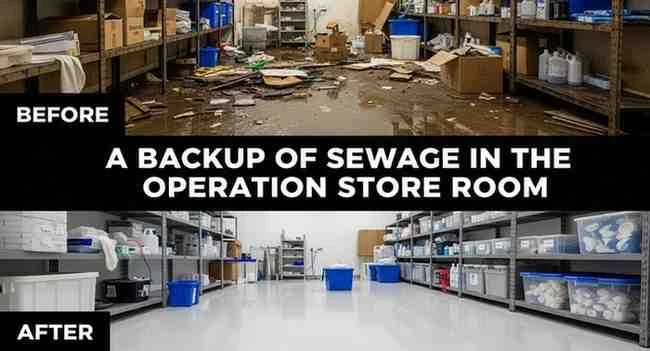
If you are studying for your ServSafe certification or managing a food establishment, you have likely come across the phrase “a backup of sewage in the operation store room.” This situation is far more serious than most people realize. It is not just a plumbing inconvenience. In the world of food safety, sewage backup is classified as a major public health hazard that can shut down your entire operation, contaminate food supplies, and expose customers to dangerous pathogens.
This article will walk you through everything you need to know — what sewage backup means in a food safety context, what ServSafe says about it, how to respond step by step, and how to prevent it from happening in the first place. Whether you are preparing for your ServSafe exam or managing a real restaurant, this is a guide you need to read carefully.
🚨 Quick Emergency Checklist: Sewage Backup in a Food Establishment
If you are dealing with a sewage backup right now, here are your immediate priorities:
- Stop all food preparation immediately
- Clear all staff and customers from the affected area
- Do not allow anyone to handle food until the area is cleared and sanitized
- Discard all food that may have been exposed to sewage or contaminated water
- Call a licensed plumber and your local health authority
- Document everything with photos and written notes
- Do not reopen until professional cleaning, sanitizing, and inspection are complete
What Is a Backup of Sewage in the Operation Store Room?
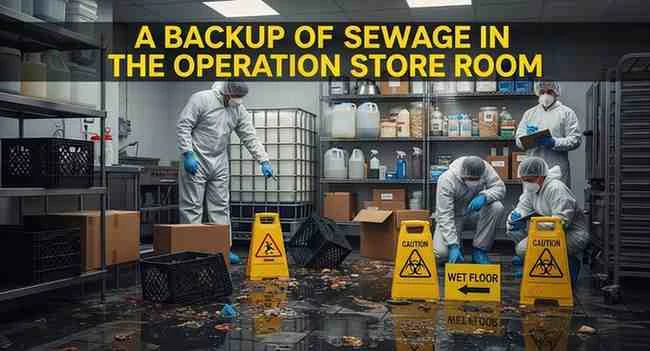
A backup of sewage in the operation store room refers to a situation where sewage water — raw waste from drains, toilets, or underground pipes — flows backward and enters an area of a food establishment, particularly into storage areas where food, equipment, or supplies are kept.
In food safety terminology, this is considered a serious physical, biological, and chemical contamination event. Sewage contains dangerous pathogens including bacteria like E. coli, Salmonella, and Shigella, as well as viruses like norovirus and hepatitis A. When these contaminants enter a store room, they can infect food products, packaging materials, cleaning supplies, and equipment surfaces.
According to ServSafe food safety standards, a backup of sewage is one of the specific conditions that requires an immediate response and potentially a full closure of the establishment. The ServSafe manager course teaches food handlers and managers to treat sewage backup as an emergency — not a routine maintenance issue.
Why Sewage Backup Is a Serious Food Safety Hazard
The Contamination Risk Is Immediate and Widespread
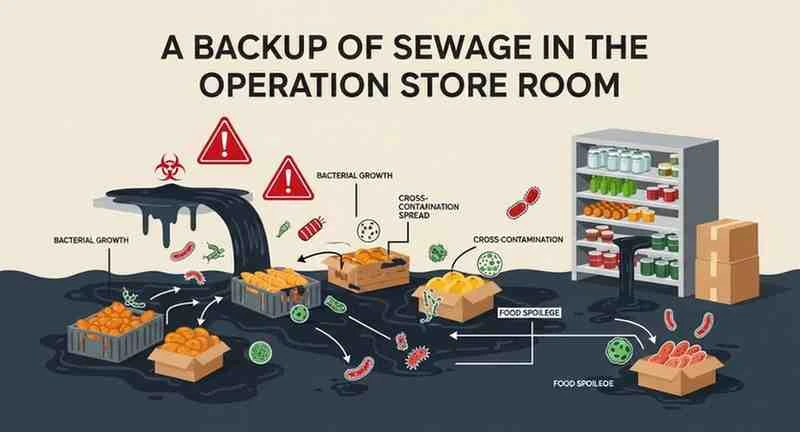
Raw sewage is one of the most contaminated substances a food establishment can encounter. It carries biological hazards in the form of bacteria, viruses, and parasites. When sewage water touches food, food contact surfaces, or packaging, it creates an immediate contamination risk that cannot simply be wiped away with a cloth.
Pathogens Found in Sewage
The pathogens found in sewage are some of the most common causes of foodborne illness outbreaks. These include:
- Norovirus — extremely contagious, spreads easily through contaminated surfaces and food
- Hepatitis A — a serious viral infection that can survive on surfaces for weeks
- E. coli — can cause severe gastrointestinal illness and kidney failure
- Salmonella — one of the leading causes of food poisoning worldwide
- Shigella — spreads rapidly in unsanitary conditions
These pathogens thrive in moist, warm environments. A store room that has been flooded with sewage provides exactly the right conditions for them to multiply rapidly, especially if the temperature falls within the danger zone of 41°F to 135°F (5°C to 57°C).
Foodborne Illness Dangers
Any food that has been exposed to sewage backup — whether directly or through contaminated surfaces, air droplets, or packaging — poses a serious risk of causing foodborne illness. Eating contaminated food can lead to nausea, vomiting, diarrhea, fever, and in severe cases, hospitalization or death. This is particularly dangerous for vulnerable populations such as children, elderly individuals, pregnant women, and people with compromised immune systems.
ServSafe Guidelines for Sewage Backup Situations
What ServSafe Says About Sewage Backup
The ServSafe food safety certification program, developed by the National Restaurant Association Educational Foundation, is one of the most widely recognized food safety training programs in the United States. ServSafe training topics specifically address emergency situations including sewage backup.
According to ServSafe definitions and course content, a sewage backup is categorized alongside other serious threats like pest infestations, loss of running water, and power outages. The ServSafe manager course teaches that managers have a legal and ethical obligation to protect public health above all operational concerns.
When to Stop Operations
ServSafe food safety rules are clear: if sewage backs up into areas that are used for food preparation, food storage, or food service, operations must stop immediately. You cannot continue cooking, serving, or selling food while sewage contamination is present in the facility. This is not optional — it is a mandatory health and safety requirement in most jurisdictions.
The ServSafe certification study guide emphasizes that continuing operations in the presence of sewage backup puts customers at risk and exposes the business to legal liability, health code violations, and potential criminal charges.
Reporting Procedures
Managers are required to report sewage backup events to the local health authority. In most jurisdictions, this is the county or city health department. Failure to report a contamination event can result in fines, license revocation, or permanent closure. The health department will typically send an inspector to assess the situation before authorizing the business to reopen.
What to Do If Sewage Backs Up in a Restaurant
Here is a detailed, step-by-step guide to handling a sewage backup in a food establishment, aligned with ServSafe exam preparation material and real-world food safety best practices.
Step 1: Stop All Food Preparation Immediately
The moment sewage backup is discovered, all food preparation must stop. This applies to the affected area and any areas that share ventilation, drainage, or proximity to the contaminated zone. Do not attempt to contain the backup yourself while food is still being prepared nearby.
Step 2: Close the Affected Area
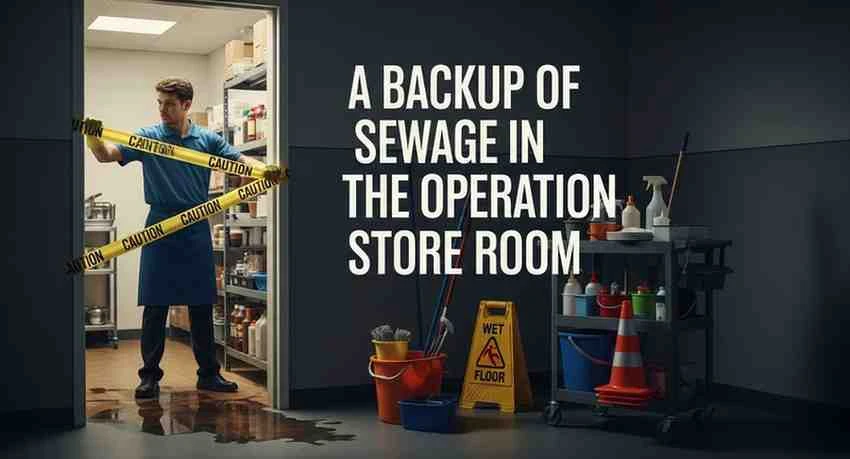
Block off the contaminated area using physical barriers like tape, cones, or locked doors. No staff or customers should enter the area until it has been professionally cleaned and cleared. If the backup is in the store room, all items in that room must be treated as potentially contaminated.
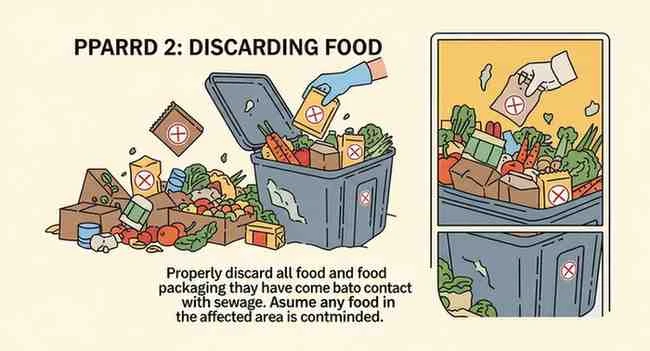
Step 3: Discard All Contaminated Food
Any food that was stored in the affected area, or that may have been exposed to sewage water, airborne particles, or contaminated surfaces, must be discarded. Do not attempt to salvage food products. Sewage contamination is not always visible, and even sealed containers may be compromised if the exterior has been in contact with sewage.
This step is non-negotiable. ServSafe food handler course materials are explicit that contaminated food must be thrown away, even if it represents significant financial loss.
Step 4: Call Licensed Professionals
Contact a licensed plumber immediately to identify and fix the source of the sewage backup. Simultaneously, notify your local health authority. Do not attempt to clean up the sewage yourself without proper training and equipment. Professional sewage cleanup services have the tools, protective equipment, and expertise to handle biological waste safely.
Step 5: Clean and Sanitize Thoroughly
Once the plumbing issue has been resolved and sewage water has been removed, the entire affected area must be cleaned and sanitized by trained personnel wearing appropriate personal protective equipment. This process is detailed in the next section.
Step 6: Get Health Department Clearance Before Reopening
Do not reopen the establishment until the local health department has inspected the premises and issued written clearance. This protects your customers, your staff, and your business.
Cleaning and Sanitizing After Sewage Backup
Proper Sanitation Procedures
Cleaning and sanitizing after sewage backup is one of the most detailed topics in ServSafe cleaning and sanitizing guidelines. The process must follow a strict sequence:
- Remove all standing sewage water using wet-dry vacuums or professional pumping equipment
- Remove all solid waste and debris from the area
- Scrub all surfaces with hot water and a heavy-duty detergent to remove visible contamination
- Rinse thoroughly to remove all cleaning residue
- Apply an EPA-approved disinfectant to all surfaces, paying special attention to floors, walls, shelving, and any equipment that came into contact with sewage
- Allow adequate contact time as specified by the disinfectant manufacturer
- Rinse again if required by the product instructions
- Allow the area to dry completely before restocking or resuming operations
Use of Disinfectants
Not all cleaning products are effective against the pathogens found in sewage. Use EPA-registered disinfectants that are specifically rated for use against bacteria and viruses. Bleach-based solutions are commonly used in food service environments, typically at a concentration of 100 to 200 parts per million for sanitizing surfaces.
Personal Protective Equipment
Anyone involved in the cleanup must wear appropriate personal protective equipment (PPE), including:
- Waterproof gloves (heavy-duty, not latex)
- Rubber boots
- Protective eyewear or face shield
- N95 respirator mask or higher
- Disposable coveralls or apron
After cleanup, all PPE must be safely disposed of or thoroughly disinfected.
How Sewage Backup Affects Food Safety Systems
HACCP Impact
Sewage backup directly disrupts HACCP — Hazard Analysis and Critical Control Points — the food safety management system used in most commercial kitchens. The presence of sewage introduces biological hazards at multiple points in the flow of food, making it impossible to maintain the critical control points that prevent contamination.
Flow of Food Disruption
The flow of food steps — from purchasing and receiving, through storage, preparation, cooking, holding, and service — are all compromised when sewage enters the store room. Food that was in storage can no longer be considered safe. Equipment used in preparation may be contaminated. The entire system must be reset.
Temperature Control Risks
During the cleanup process, food that is normally kept at safe temperatures may be left unattended or improperly stored. This increases the risk that food enters the temperature danger zone (41°F to 135°F), creating additional hazards beyond the sewage contamination itself.
Preventing Sewage Backup in Food Establishments
Prevention is always better than response. Here are the most effective strategies for preventing sewage backup in a food service operation:
Regular Plumbing Inspections
Schedule professional plumbing inspections at least twice a year. A licensed plumber can identify signs of aging pipes, blockages, or infrastructure problems before they become emergencies. Pay special attention to floor drains, grease traps, and sewer connections.
Grease Trap Maintenance
One of the most common causes of sewage backup in restaurants is a clogged or overflowing grease trap. Grease traps must be cleaned and emptied on a regular schedule — usually every one to three months, depending on usage volume. Neglecting grease trap maintenance is one of the leading causes of sewage backup in food establishments.
Staff Training
All kitchen staff should be trained to recognize early warning signs of sewage backup, including:
- Slow-draining floor drains
- Gurgling sounds from drains or toilets
- Foul odors near drains
- Water backing up in sinks or mop sinks
When staff know what to look for, problems can be caught early and resolved before they escalate.
Proper Disposal of Waste
Never pour grease, food solids, or non-biodegradable materials down drains. These contribute to pipe blockages that lead to sewage backup. Establish clear waste disposal procedures and enforce them consistently.
Real-Life Example: How a Restaurant Handled Sewage Backup the Right Way
Consider this scenario: A busy family restaurant in a mid-sized city discovered sewage backup in their store room on a Tuesday morning, just before the lunch rush. Here is how the manager responded correctly:
The manager immediately instructed the kitchen staff to stop all food preparation. She cordoned off the store room and the adjacent prep area with caution tape. She called the establishment’s plumber and the local health department within 15 minutes of discovering the backup.
All food items stored in the store room — including dry goods in sealed bags, canned items, and produce — were discarded. The manager documented every item that was thrown away for insurance purposes.
A professional sewage cleanup crew arrived within two hours. They removed the wastewater, deep-cleaned and disinfected the entire area, and provided written documentation of the sanitization process. The health department inspector arrived the following morning, reviewed the documentation, inspected the premises, and issued clearance to reopen.
The restaurant lost one full day of business and suffered significant food loss. However, by acting quickly and following the correct procedures, they avoided a potential foodborne illness outbreak, protected their reputation, and maintained their operating license.
This is the standard that ServSafe food safety training prepares managers to meet.
Pros and Cons of Strict Sanitation Protocols After Sewage Backup
| Pros | Cons |
|---|---|
| Protects customer health and prevents foodborne illness | Loss of business revenue during closure |
| Keeps the establishment in compliance with health codes | Cost of professional cleanup services |
| Reduces legal and financial liability | Food loss from discarded inventory |
| Preserves the establishment’s reputation and trust | Temporary staff disruption and scheduling challenges |
| Demonstrates commitment to food safety standards | Time-consuming documentation and reporting process |
| Allows the business to reopen with health department clearance | May require temporary facility upgrades or repairs |
Common Mistakes to Avoid During a Sewage Backup Emergency
Ignoring Early Warning Signs
Many sewage backups do not happen suddenly. They are preceded by slow drains, gurgling sounds, and foul odors. Managers and staff who dismiss these early signs allow a manageable problem to become a full-scale emergency.
Continuing Food Operations
Some managers, under pressure to meet sales targets or serve waiting customers, attempt to continue operations in unaffected parts of the establishment while sewage backup exists in the store room. This is a serious mistake. Sewage contamination can spread through airborne particles, shared ventilation systems, and foot traffic. Operations must stop completely.
Attempting DIY Cleanup
Untrained staff attempting to clean up sewage with ordinary mops and cleaning products are not only ineffective — they are putting themselves at serious health risk. Sewage cleanup requires professional equipment, EPA-approved disinfectants, and protective gear.
Failing to Discard Contaminated Food
Some operators try to salvage food from the affected area to minimize financial loss. This is never acceptable. Even food in sealed packaging can be compromised by exterior contamination, and consuming such food puts customers at serious risk of foodborne illness.
Poor Staff Training
If your staff do not know what a sewage backup looks like, what it means, or what to do about it, they cannot respond correctly. Investing in regular ServSafe food safety training — including the ServSafe manager course and ServSafe food handler course — ensures your team is prepared for emergencies.
Frequently Asked Questions
What is a backup of sewage in the operation store room?
It is a situation where raw sewage flows backward into a store room within a food establishment, creating an immediate and serious public health hazard. Sewage contains dangerous pathogens that can contaminate food, surfaces, and equipment.
What should you do if sewage backs up in a restaurant?
Stop all food preparation immediately, close the affected area, discard any food that may have been exposed, call a licensed plumber and your local health authority, and arrange for professional cleanup and sanitization before reopening.
Why is sewage backup a serious food safety hazard?
Sewage contains bacteria, viruses, and parasites — including E. coli, Salmonella, norovirus, and hepatitis A — that can cause severe foodborne illness. Contact with sewage can contaminate food, water, surfaces, and equipment throughout the establishment.
How does sewage contamination affect food safety?
It disrupts HACCP systems, contaminates the flow of food, and introduces dangerous pathogens into areas where food is stored and prepared. It makes it impossible to maintain the safe food handling standards required by food safety law.
What are the ServSafe rules for sewage backup?
ServSafe requires immediate cessation of food operations, reporting to local health authorities, professional cleanup and sanitization, and health department clearance before the establishment can reopen.
How do you clean and sanitize after sewage contamination?
Remove all sewage water and debris, scrub all surfaces with detergent, apply an EPA-approved disinfectant, allow proper contact time, rinse, and dry thoroughly. All personnel must wear appropriate PPE throughout the process.
What is the risk of foodborne illness from sewage backup?
The risk is very high. Sewage carries multiple pathogens that cause foodborne illness. Even indirect contact — through contaminated surfaces, packaging, or airborne particles — can lead to illness if food is consumed without the contamination being identified and addressed.
When should a food establishment close due to sewage issues?
The establishment must close any time sewage backup affects areas used for food storage, preparation, or service. Partial closure is not sufficient if there is any risk of cross-contamination to other areas.
How can sewage backup be prevented in restaurants?
Through regular plumbing inspections, proper grease trap maintenance, correct waste disposal practices, and thorough staff training in recognizing early warning signs.
What are the first steps during a sanitation emergency?
Stop food preparation, isolate the contaminated area, protect staff and customers, contact licensed professionals and health authorities, and begin documentation of the event.
Sanitation Emergency Checklist
Use this checklist after any sewage backup incident:
- ☐ All food preparation stopped
- ☐ Affected areas closed and barricaded
- ☐ Staff and customers cleared from contaminated zones
- ☐ Plumber contacted and on the way
- ☐ Local health department notified
- ☐ All contaminated food discarded and documented
- ☐ Professional sewage cleanup crew engaged
- ☐ PPE distributed to cleanup personnel
- ☐ Cleaning and sanitizing completed using EPA-approved disinfectants
- ☐ Health department inspection scheduled
- ☐ Written clearance obtained before reopening
- ☐ Staff briefed and retrained on sanitation procedures
Conclusion
A backup of sewage in the operation store room is one of the most serious emergencies a food service establishment can face. It is not a minor inconvenience — it is a biological contamination event that demands an immediate, professional, and well-organized response. ServSafe food safety training exists precisely to prepare managers and food handlers for situations like this, ensuring that public health is protected above all else.
The key takeaways are simple: stop operations, isolate the area, discard contaminated food, call the professionals, sanitize completely, and do not reopen without health department clearance. Following these steps protects your customers, your staff, your reputation, and your business.
Food safety is not a box to check — it is a daily commitment. Whether you are preparing for your ServSafe exam or running a restaurant kitchen, understanding how to handle a sewage backup situation is knowledge that could one day save lives.
Are you preparing for your ServSafe certification? Save this article as a study reference, share it with your team, or drop your questions in the comments below. And when you are ready to go deeper, explore our [Complete ServSafe Study Guide], [Food Safety Hazards Explained], and [Restaurant Hygiene Best Practices] for everything you need to pass your exam and run a safe, compliant food operation.
External Authority Sources:
- U.S. Food and Drug Administration — Food Safety Guidelines: https://www.fda.gov/food/food-safety-modernization-act-fsma (dofollow)
- Centers for Disease Control and Prevention — Foodborne Illness Prevention: https://www.cdc.gov/foodsafety (dofollow)
Schema Markup Recommendations: Implement FAQ Schema for the FAQ section, HowTo Schema for the step-by-step response guide, and Article Schema for the full post to maximize Google rich result eligibility.