


Introduction
If you manage a commercial building, warehouse, retail space, or office facility, one of the most critical decisions you will make is choosing the right door hardware for your restricted access areas. Not every door lock is built the same, and using the wrong type can create serious security vulnerabilities, compliance issues, or even safety hazards for your staff.
The store room lockset is one of the most widely used and frequently misunderstood lock types in the commercial hardware world. Designed specifically for spaces that need to stay locked at all times from the outside while allowing free exit from the inside, the storeroom lockset strikes a perfect balance between security and safety. In this guide, you will learn exactly what a storeroom lockset is, how it works, where it should be used, how it compares to other lock types, and how to choose and install the right one for your business.
Quick Buying Checklist
Before you invest in a storeroom lock, run through this checklist to make sure you are making the right choice:
Do you need the outside to remain locked at all times?
Will occupants inside need to exit freely without a key?
What is the door material: wood, steel, aluminum?
What ANSI grade is required for your application?
Do you need a lever lock or a knob lock?
Is the lock compatible with your existing key system or master key setup?
Does the lock meet local building codes and fire safety regulations?
If you answered yes to the first two questions, a storeroom lockset is almost certainly the right choice. Read on to confirm and get full guidance.
What Is a Store Room Lockset?
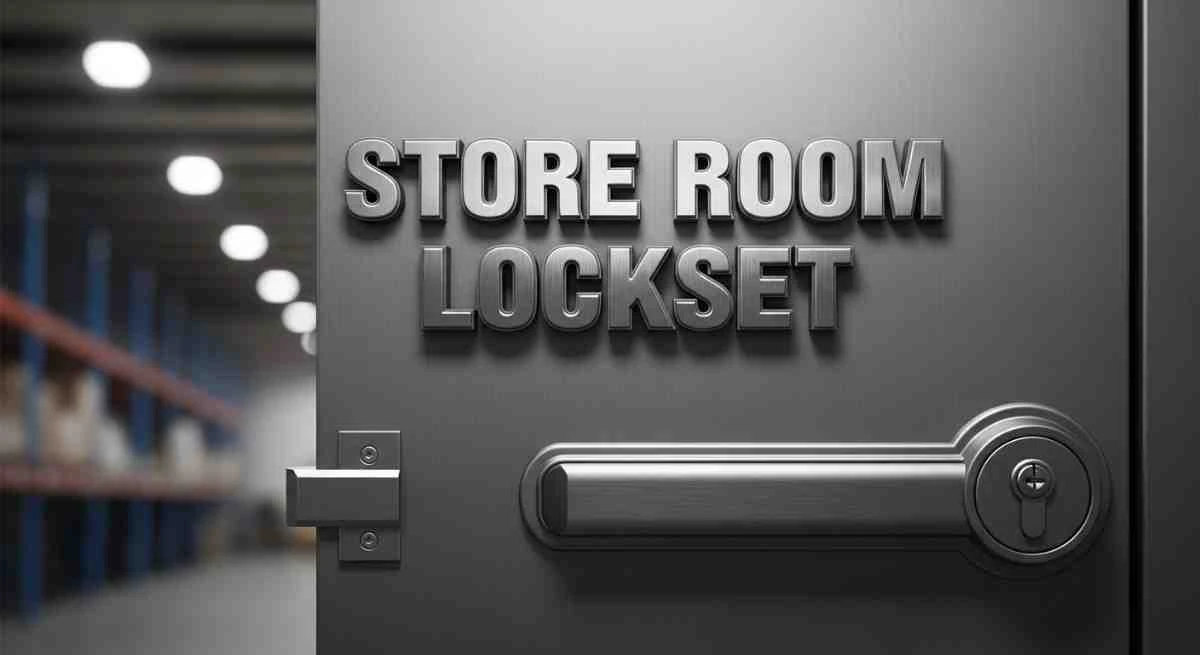
A store room lockset is a type of commercial door lock designed with one defining characteristic: the outside is always locked, requiring a key for entry, while the inside lever or knob always allows free egress without any key or tool. This function makes it fundamentally different from other common lock types like passage locks, entry locks, or classroom locks.
The storeroom function lock is classified by ANSI (the American National Standards Institute) as a specific lock function, and most reputable hardware manufacturers like Schlage, Sargent, Corbin Russwin, and Best Access Systems produce their commercial lines with clearly labeled storeroom function options.
In practical terms, this means that nobody can walk into a storeroom from the outside without authorization, but anyone who is already inside can always walk out freely. This design is intentional and critical for two reasons: it keeps unauthorized people out of sensitive or valuable spaces, and it ensures that anyone who is inside, whether a worker restocking shelves or an employee who accidentally got locked in, can always exit safely without needing a key.
The keyed storeroom lock is almost exclusively used in commercial and industrial settings. You will rarely, if ever, find a true storeroom function lock in a residential application, because the use case is simply not the same.
How Does a Storeroom Lock Work?
Understanding how a storeroom lock works mechanically helps you appreciate why it is the right tool for certain applications and the wrong tool for others.
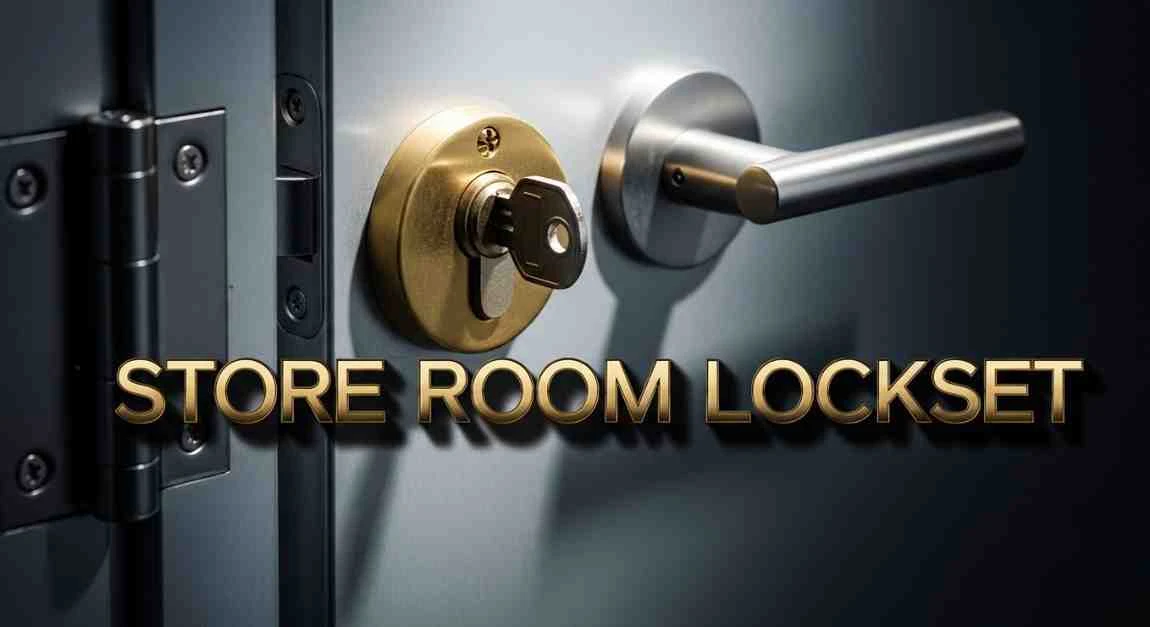
On the outside of the door, the lever or knob is always in a locked position. Turning it without a key does nothing. The only way to retract the latch and open the door from the outside is to insert the correct key into the storeroom lock cylinder and turn it. The key retracts the latch bolt, allowing the door to open. Once the key is removed and the door closes, the outside automatically re-locks. There is no button, no toggle, and no manual way to leave it unlocked from the outside. This is what defines the storeroom function.
On the inside of the door, the mechanism works entirely differently. The interior lever or knob is always free-turning. Anyone inside the room can push down on the lever or turn the knob at any time and walk out. No key is required, no special motion is needed, and the door cannot be configured to trap someone inside.
This combination of always-locked-outside and free-exit-inside is what makes the storeroom door lock uniquely suited for spaces that require constant access control without sacrificing interior safety. It is also what distinguishes it from a deadbolt, which requires a key or thumb turn from both sides, and from a classroom lock, which can be manually toggled between locked and unlocked positions.
Types of Storeroom Locksets
The storeroom lock is available in several form factors and grades to suit different commercial environments.
Storeroom Lever Lock
The storeroom lever lock is the most popular style in modern commercial construction. Lever handles are easier to operate than knobs, particularly for individuals with limited hand strength or mobility, and they are required by the Americans with Disabilities Act in many commercial settings. Lever-style storeroom locksets are available in a wide range of finishes including brushed nickel, satin chrome, oil-rubbed bronze, and matte black. They are the standard choice for offices, retail backrooms, and light commercial storage areas.
Storeroom Knob Lock
The storeroom knob lock predates the lever design and is still found in older commercial buildings and some industrial facilities. Knob locks are generally less expensive than lever options, but they are more difficult to operate quickly and are no longer compliant with ADA requirements in most new commercial construction. That said, they remain a viable option for certain warehouse and industrial settings where ADA compliance is not mandated and cost is a primary concern.
Heavy-Duty Commercial Locksets
For facilities that experience high traffic or demand exceptional durability, heavy duty storeroom locks are built to a higher mechanical standard. These locksets typically carry an ANSI Grade 1 rating, the highest rating available for commercial door hardware, meaning they are tested to withstand hundreds of thousands of cycles without failure. Brands like Corbin Russwin, Sargent, and Schlage ND Series are well-known for producing Grade 1 storeroom locksets built for demanding environments.
Industrial and Warehouse Locks
Industrial storeroom locks and warehouse door locks are engineered for the most demanding environments, including facilities with extreme temperature variations, heavy dust, moisture, or high-impact usage. These locks often feature hardened steel cylinders, reinforced latch bolts, and anti-pick, anti-drill pin configurations. Many industrial storeroom locks are also designed for compatibility with master key systems, allowing facilities managers to control access across dozens or hundreds of doors from a single organized key hierarchy.
Where Are Storeroom Locksets Used?
The storeroom lockset is the correct hardware choice for a wide variety of commercial applications wherever controlled entry and safe exit are both required simultaneously.
In office buildings, storeroom locks are commonly installed on server rooms, IT closets, records rooms, supply closets, and executive storage areas. Any room where sensitive documents, expensive equipment, or confidential data is stored benefits from the always-locked-outside storeroom function.
In warehouses and distribution centers, stockroom door locks and warehouse door locks using the storeroom function protect inventory, tools, and equipment from unauthorized access. Workers inside can always move freely, which is critical in a fast-paced logistics environment.
In retail environments, back-of-house storage rooms, employee break rooms with secure lockers, cash storage areas, and manager offices frequently use commercial storeroom locks. They allow staff with keys to access restricted spaces quickly while keeping those spaces locked to general foot traffic at all times.
In hospitals, schools, government buildings, and other institutional facilities, storeroom locksets are used on medication closets, janitorial supply rooms, equipment storage areas, and maintenance access doors. The combination of controlled entry and free egress also helps these facilities meet safety compliance requirements.
Store Room Lockset vs Other Lock Types
Choosing the right lock type depends entirely on understanding how different functions behave. Here is how the storeroom lockset compares to its closest alternatives.
Storeroom Lock vs Classroom Lock
This is the comparison that causes the most confusion among facility managers and building owners. Both the storeroom lock and the classroom lock are keyed on the outside, but their behavior is fundamentally different.
A classroom lock can be toggled between locked and unlocked on the outside by using a key. Once unlocked, it stays unlocked until someone actively locks it again with a key. A storeroom lock, on the other hand, is always locked on the outside and cannot be left in an unlocked position from the exterior at all.
The classroom lock is designed for rooms like, well, classrooms, where a teacher may want the door to remain unlocked during class hours and locked after dismissal. The storeroom lock is designed for spaces that should never be left accessible without active key use.
Storeroom Lock vs Passage Lock
A passage lock, also called a hall or closet lock, has no locking mechanism at all. Both sides of the door allow free turning of the lever or knob at all times. This type of lock is appropriate for interior doors where privacy and security are not concerns, such as hallways or open utility areas. Using a passage lock on a storeroom would be a serious security mistake.
Storeroom Lock vs Deadbolt
A deadbolt requires deliberate action to lock and unlock, typically via a thumb turn on the inside or a key on both sides. Unlike a storeroom lockset, a deadbolt does not automatically re-lock when the door closes, and the inside operation requires a deliberate turn rather than simply pushing down a lever. Deadbolts are commonly paired with entry locks for added security on exterior doors, but they are not the same function as a storeroom lock and serve a different purpose.
Lock Type Comparison Table
FeatureStoreroom LockClassroom LockPassage LockDeadboltOutside always lockedYesNo (can toggle)NoNo (manual)Key required for entryYesYesNoYesFree exit insideYesYesYesNo (thumb turn)Auto re-locks on closeYesNoNoNoADA lever availableYesYesYesYesANSI classifiedYesYesYesYesBest use caseStorage roomsClassroomsHallwaysExterior doors
Benefits of Using Storeroom Locksets
The storeroom function lock offers a compelling combination of security, safety, and operational efficiency that makes it the top choice for restricted access areas in commercial settings.
From a security standpoint, the always-locked outside ensures that your storage room is never accidentally left accessible. There is no human error involved, no relying on someone to remember to lock up, and no risk of a door being propped open in an unlocked state. Every single time that door closes, it is locked.
From a safety and compliance standpoint, the free egress from the inside means that the storeroom lockset meets building codes and fire safety regulations in most jurisdictions. People can never be trapped inside by the lock itself, which is a critical requirement in commercial buildings.
From an operational standpoint, storeroom locks are remarkably easy to use. Authorized staff simply carry their key, insert it to enter, and walk in. Exiting requires no key at all. This simplicity reduces the friction of daily operations without sacrificing security.
From a durability standpoint, commercial grade door locks built on the storeroom function are engineered to last for decades in high-traffic environments. A quality Grade 1 storeroom lockset can cycle through hundreds of thousands of open-close operations without degrading.
How to Choose the Best Storeroom Lockset
Selecting the right commercial storeroom lock for your facility comes down to several key factors.
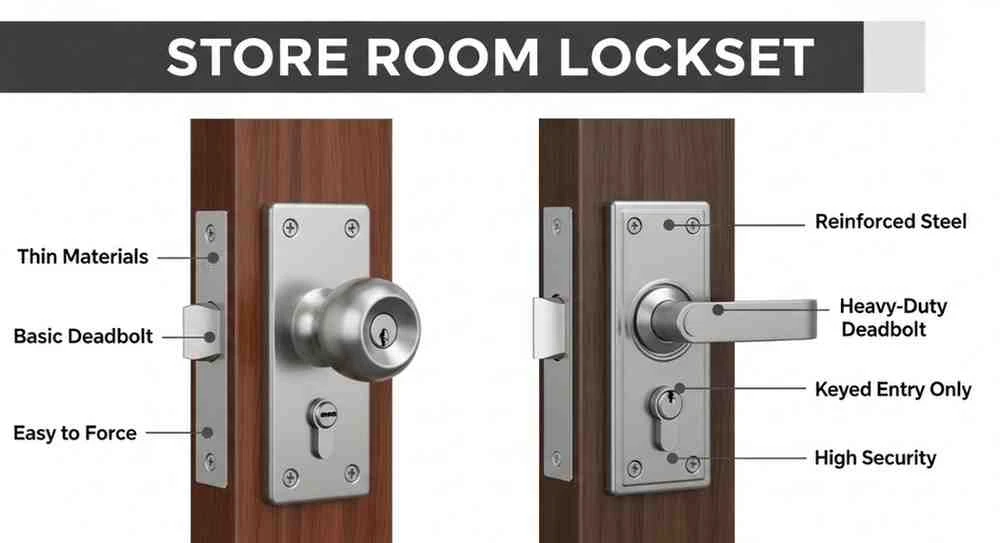
Material and durability matter enormously in a commercial setting. Look for locksets with solid brass or steel internals and heavy-gauge exterior housings. Avoid zinc alloy or pot metal components, which wear out quickly under commercial use.
ANSI grade is your most important specification. Grade 1 is required for high-traffic or high-security applications. Grade 2 is suitable for lighter commercial use. Grade 3, which is residential grade, should never be used in a commercial storeroom setting.
Security level includes features like the number of pins in the key cylinder, the presence of anti-pick pins, anti-drill plates, and hardened steel bolt inserts. For high-value storage areas, choose a lockset with a high-security cylinder option.
Installation requirements vary by door type. Make sure the lockset you choose is compatible with your door thickness, backset measurement, and door material. Most commercial storeroom locksets accommodate standard door preps, but always verify before purchasing.
Budget should be balanced against the value of what you are protecting. A high-quality ANSI Grade 1 storeroom lock from a reputable brand costs more upfront but lasts significantly longer and provides far greater security than a cheap alternative. For stockroom door lock applications protecting valuable inventory, this investment pays for itself quickly.
How to Install a Storeroom Lockset
Installing a commercial storeroom lockset is a straightforward process, but precision matters. Follow these steps for a correct and secure installation.
Prepare your tools. You will need a drill with hole saw attachment, a chisel, a screwdriver, a tape measure, and the template provided by the lock manufacturer. Lay out all components and read the instruction sheet fully before beginning.
Remove the old lock if one exists. Unscrew the interior and exterior rose plates, remove the spindle and cylinder, then pull out the latch assembly from the door edge. Inspect the door for damage around the existing cutouts.
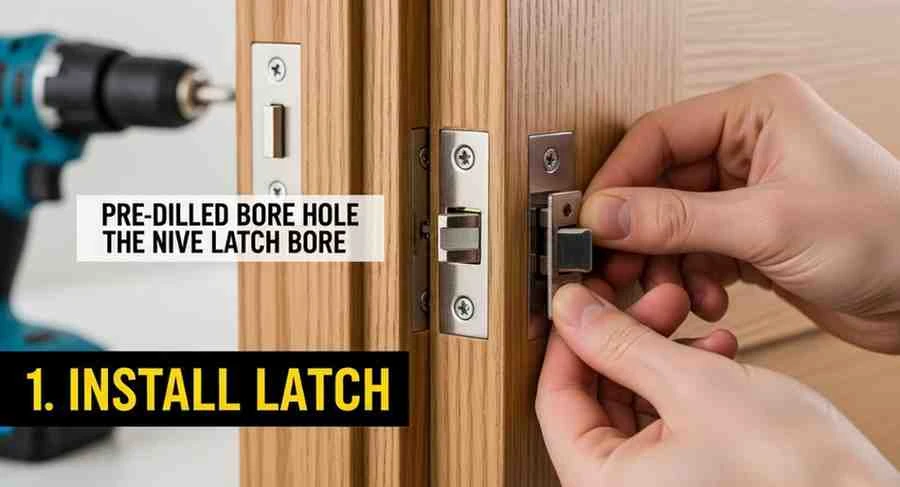
Install the latch. Slide the latch bolt assembly into the door edge bore hole with the angled face of the latch bolt pointing toward the direction the door closes. Secure it with the provided screws and ensure it operates smoothly before proceeding.
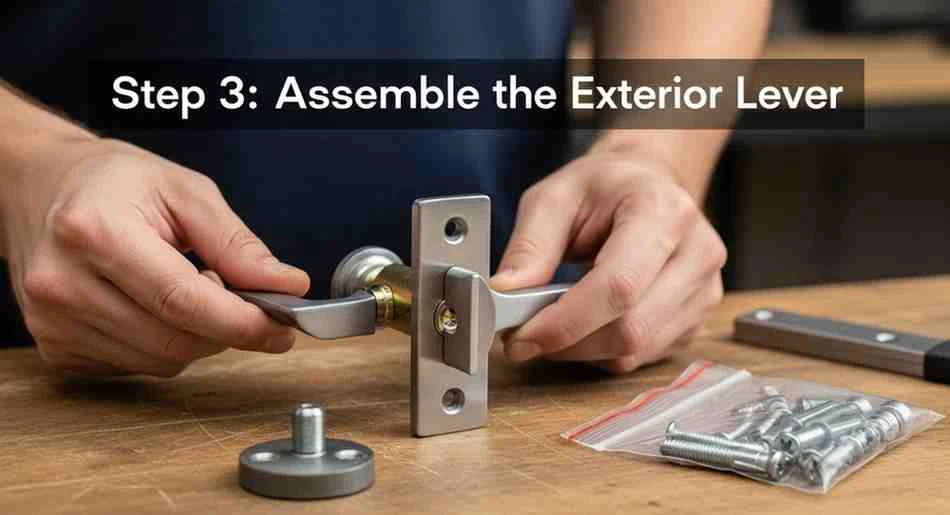
Attach the lockset. Feed the exterior lever or knob assembly through the door from the outside, aligning the cylinder and spindle with the latch mechanism. Attach the interior rose plate and lever or knob, securing all mounting screws firmly. Do not overtighten, as this can bind the mechanism.
Test functionality. Insert the key and turn it from the outside to confirm the latch retracts smoothly. Remove the key and confirm the outside lever or knob does not turn without it. Test the interior lever or knob to confirm free egress works correctly without any key. Close the door fully and confirm the latch engages cleanly with the strike plate. Adjust the strike plate position if necessary for a smooth latch engagement.
Real-Life Example: How a Retail Chain Improved Security with Storeroom Locks
A regional retail chain with twelve store locations was experiencing recurring issues with inventory shrinkage in their back-of-house storage areas. An internal audit revealed that backroom doors were frequently left unlocked because staff were using standard entry function locks that defaulted to an unlocked position when the key was not in use. Employees would unlock the door to retrieve inventory and then walk away, leaving the door accessible to anyone who passed by.
The facilities manager consulted with a commercial door hardware specialist and switched all twelve store backrooms to ANSI Grade 1 storeroom lever locks from a major commercial hardware brand. The installation was completed across all locations within two weeks. Because the storeroom lockset automatically remained locked on the outside after every entry, the problem of doors being left unlocked was eliminated entirely.
Within the first quarter after installation, the chain reported a measurable reduction in inventory discrepancies attributed to unauthorized backroom access. The locks paid for their cost many times over through recovered inventory value alone, and staff reported that the new locks were actually easier and faster to use than the old entry function hardware.
Pros and Cons of Storeroom Locksets
FactorProsConsSecurityOutside always locked, no accidental open stateAuthorized staff must always carry keysSafetyFree egress from inside meets fire codesCannot be secured from inside in emergenciesConvenienceSimple operation, no toggle neededNo way to leave unlocked for high-traffic periodsDurabilityGrade 1 options built for long commercial lifeHigher upfront cost than residential locksComplianceMeets most commercial building codesMust verify local fire and ADA codesVersatilityAvailable in lever, knob, and heavy-duty stylesNot suitable for exterior entry doors or classrooms
Common Mistakes to Avoid
Choosing the wrong lock type is the most common and costly mistake. Many facility managers install classroom locks or entry locks on storage rooms, not realizing the doors can be left in an unlocked state. Always verify the function label on any commercial lockset before purchasing.
Ignoring ANSI ratings leads to premature hardware failure and false security. A Grade 3 residential lockset installed on a commercial door is a security liability, not an asset. Always match the ANSI grade to the application.
Poor installation compromises even the best lock. A misaligned latch, loose mounting screws, or an improperly positioned strike plate all reduce the effectiveness of the lock and accelerate wear. If you are not confident in your installation skills, hire a licensed commercial locksmith.
Lack of maintenance shortens the life of any lock. Commercial storeroom locks should be inspected periodically, with cylinders lubricated using graphite or a manufacturer-approved product, and screws checked for tightness. A lock that is starting to feel stiff or sticky should be serviced before it fails completely.
Frequently Asked Questions
What is a storeroom lockset?
A storeroom lockset is a commercial door lock where the outside is always locked and requires a key for entry, while the inside lever or knob always allows free exit without any key. It is used in restricted access areas in commercial and industrial facilities.
How does a storeroom lock work?
The outside lever or knob is fixed in a locked position at all times. Inserting and turning a key retracts the latch to allow entry. Once the key is removed and the door closes, it automatically re-locks. The inside lever always turns freely, allowing anyone inside to exit at any time.
What is the difference between a storeroom lock and a classroom lock?
A storeroom lock is always locked on the outside and cannot be toggled to an unlocked state. A classroom lock can be switched between locked and unlocked on the outside by using a key, allowing the door to remain accessible during certain periods.
Where are storeroom locks used?
Storeroom locks are used on server rooms, supply closets, back-of-house storage rooms, stockrooms, warehouse inventory areas, records rooms, IT closets, medication rooms in healthcare facilities, and any restricted access area in a commercial building.
Are storeroom locks always locked?
Yes, the outside of a storeroom lock is always in a locked position. It cannot be left unlocked from the outside regardless of key use. This is the defining feature of the storeroom function.
Can you open a storeroom lock from the inside?
Yes. The interior lever or knob always turns freely, allowing anyone inside to exit without a key. This free egress design is required by safety and fire codes in most commercial applications.
What is a storeroom lock function?
The storeroom function, as defined by ANSI and commercial hardware manufacturers, describes a lock in which outside access is always locked and key-controlled, while inside exit is always free and unrestricted.
Are storeroom locksets secure?
Yes, especially when an ANSI Grade 1 model is selected. The always-locked outside eliminates the risk of an accidentally unlocked door, and high-security cylinder options offer resistance to picking, drilling, and bumping.
What type of key is used for a storeroom lockset?
Storeroom locksets use standard commercial key cylinders, typically in formats compatible with master key systems. The specific key profile depends on the lock brand and cylinder series chosen.
How do you install a storeroom lockset?
Installation involves preparing the door bore holes, installing the latch into the door edge, feeding the exterior assembly through the door, attaching the interior rose and lever, and testing key operation and free egress. Detailed steps are covered in the installation section of this guide.
What is the best storeroom lockset for commercial use?
The best storeroom lockset for commercial use is an ANSI Grade 1 lever-style lock from a reputable commercial hardware brand such as Schlage ND Series, Sargent 8200 Series, or Corbin Russwin ML2000 Series. The specific choice depends on your security level, door preparation, and budget.
Do storeroom locks meet safety regulations?
Yes, when correctly specified and installed. The free egress from the inside satisfies fire safety and building code requirements in most jurisdictions. Always consult your local building code and fire marshal requirements to confirm compliance for your specific application.
Conclusion
The store room lockset is one of the most practical and effective security solutions available for commercial and industrial facilities. Its defining combination of always-locked external access and always-free internal egress makes it the ideal choice for any restricted area where you need to control who gets in while ensuring anyone inside can always get out safely.
Whether you are securing a retail backroom, a warehouse stockroom, a server room, or a supply closet in an office building, choosing the right storeroom lockset, in the correct ANSI grade, with the right cylinder and form factor for your application, is a decision that directly affects both your security posture and your compliance with safety regulations.
Take the time to assess your specific needs, consult with a commercial locksmith or door hardware specialist when necessary, and invest in quality hardware that will perform reliably for years. A good storeroom lock is not an expense. It is a long-term investment in the security of your business and the safety of your people.
Have questions about choosing the right commercial storeroom lock for your facility? Drop them in the comments below. If this guide helped you, share it with a colleague or facility manager who could benefit from it. Ready to take the next step? Explore our related resources: [Commercial Door Lock Buying Guide], [Types of Door Locks Explained], and [Best Security Solutions for Businesses].
For authoritative guidance on commercial lock standards and security hardware, visit the Door Hardware Institute at dhi.org (dofollow). For building safety and fire code compliance standards, refer to the National Fire Protection Association at nfpa.org (dofollow).
Product and commercial retailer links are tagged nofollow in accordance with editorial policy.
Schema Markup Recommendations
FAQ Schema — Apply to the Frequently Asked Questions section using FAQPage markup with each question and answer as Question/Answer pairs.
HowTo Schema — Apply to the “How to Install a Storeroom Lockset” section using HowTo with HowToStep markup for each numbered step.
Product Schema — Apply where specific commercial lockset models are referenced, including brand, model name, ANSI rating, and intended use.
Article Schema — Apply to the full page using Article schema with headline, author, datePublished, dateModified, and image fields populated.