


Introduction
The kitchen backsplash has long been considered a design non-negotiable — a practical strip of tile sitting between your countertop and upper cabinets, doing its duty against grease and splashes. But today’s homeowners are asking a different question: what if we just didn’t have one?
The no backsplash kitchen is not a trend born from laziness or budget cuts. It is a deliberate, design-forward choice that aligns perfectly with the shift toward minimalist interiors, seamless surfaces, and clutter-free aesthetics. Across Europe, Australia, and increasingly North America, architects and interior designers are stripping back the kitchen to its most essential elements — and many are leaving that wall space gloriously bare or replacing it with sophisticated alternatives that look far more intentional than any tile grid could.
In this article, you will learn what a no backsplash kitchen really means, why it is gaining serious momentum, what the best design ideas and materials are, how to protect your walls without traditional tiling, and how to avoid the most common mistakes homeowners make when going backsplash-free.
What Is a No Backsplash Kitchen?
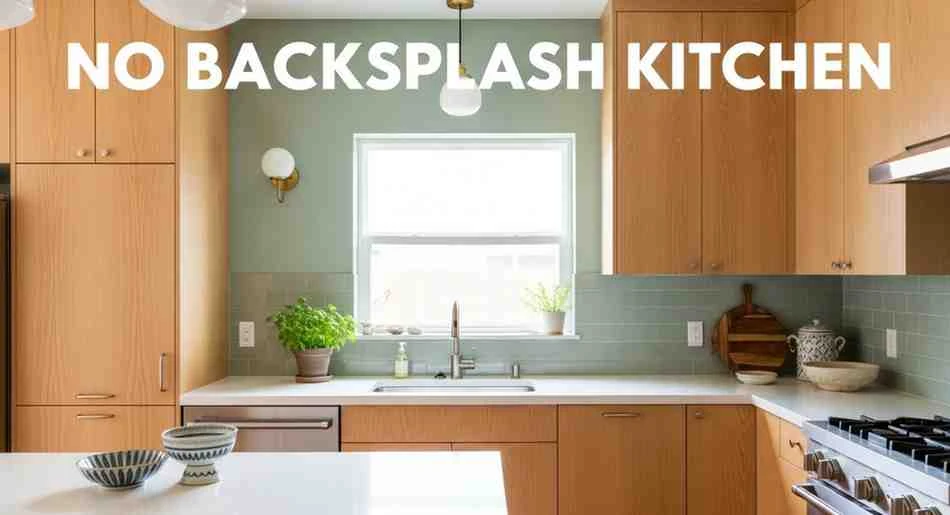
A no backsplash kitchen is simply a kitchen design where the traditional tiled or material backsplash — typically installed on the wall between the countertop and upper cabinetry — is either eliminated entirely or replaced with a seamless, continuous wall treatment that does not read as a traditional backsplash.
This does not mean the wall is left unprotected and vulnerable to cooking splashes. Instead, it means that designers and homeowners are choosing materials, finishes, and wall treatments that blend invisibly into the overall kitchen aesthetic rather than drawing attention as a decorative feature.
Why is it trending right now? Several forces are converging at once. Minimalism has dominated interior design globally for the better part of a decade, and the kitchen has not been immune. There is also a growing appetite for continuity — surfaces that flow from one to the next without interruption, creating a visual calm that busy tile patterns can disrupt. Pair that with the rise of handleless cabinetry, integrated appliances, and waterfall countertops, and suddenly a bold tile backsplash feels like it belongs to a different era.
According to Dezeen, one of the world’s leading architecture and design publications, seamless surfaces and material continuity are among the defining characteristics of contemporary kitchen design — and the backsplash is one of the first things to go in pursuit of that look.
Why Homeowners Are Choosing Kitchens Without Backsplashes
The Desire for a Clean, Seamless Look
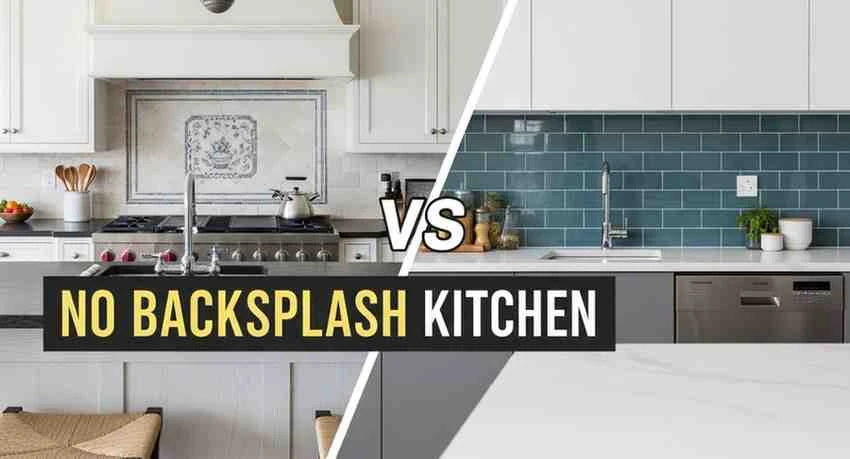
One of the most powerful drivers behind the no backsplash kitchen trend is the obsession with visual continuity. When a wall is tiled differently from everything else in the kitchen, it creates what designers sometimes call a visual interrupt — a moment where the eye is forced to stop and acknowledge a change in material, texture, or pattern. For homeowners pursuing a truly seamless kitchen design, that interrupt is the enemy.
When the wall behind the countertop is treated with the same material or finish as the surrounding cabinetry or walls, the entire kitchen reads as one cohesive composition. This is enormously effective in smaller kitchens, where reducing visual fragmentation makes the space feel larger, calmer, and more considered.
Modern Aesthetic Appeal
There is no denying it: the no backsplash kitchen simply looks current. It has the hallmarks of contemporary kitchen design — restraint, confidence, and a refusal to over-decorate. Where previous decades favored busy mosaic tiles, bold subway tile grids, or patterned encaustic ceramics, today’s luxury kitchen design ideas increasingly favor surfaces that whisper rather than shout.
This is particularly true in high-end new builds and renovations, where architects are specifying full slab walls, flush-to-ceiling cabinetry, and painted plaster finishes that create a gallery-like quietness throughout the kitchen.
Flexibility in Personalisation
Without a backsplash locked in, the kitchen wall becomes a blank canvas. Homeowners can change the color of a painted wall seasonally, swap out a removable panel, or simply update the look without the labor and cost of retiling. This flexibility is especially appealing in rental properties and starter homes where long-term commitment to a fixed finish feels unnecessary.
Pros and Cons of a No Backsplash Kitchen
Before committing to the backsplash-free look, it is worth weighing both sides honestly.
Pros
- Creates a clean, minimalist, and uninterrupted aesthetic
- Can make small kitchens feel larger and more open
- Eliminates grout lines, which are notoriously difficult to keep clean
- Allows for greater design flexibility and easy updates
- Often more cost-effective upfront than premium tile installation
- Achieves a luxury, seamless look when done with quality materials
- Compatible with virtually all cabinetry styles and color palettes
Cons
- Requires careful material selection to ensure wall protection
- Some materials used as alternatives (like stone slabs) can be expensive
- Painted walls need more frequent repainting in cooking-heavy kitchens
- Moisture and grease management requires more intentional planning
- Resale value concerns in markets where buyers expect a traditional backsplash
- Without proper sealing or material choice, walls can be damaged over time
- May require professional installation for more complex alternative finishes
The key takeaway is this: the no backsplash kitchen is entirely practical when approached thoughtfully. The risks are manageable; the rewards, for the right homeowner, are significant.
Best No Backsplash Kitchen Design Ideas
Minimalist Kitchen Design
The minimalist kitchen is the spiritual home of the backsplash-free approach. In this design language, every element earns its place through function and proportion, not decoration. Flat-front cabinetry in matte finishes, integrated appliances that disappear into the joinery, and walls treated with smooth plaster or high-quality matte paint create an atmosphere of serene order.
The trick in a minimalist kitchen without backsplash is to let the materials do the talking. A beautifully veined quartz countertop, a perfectly proportioned faucet, or a single piece of aged timber floating shelving can carry all the visual interest a kitchen needs without a single tile in sight.
Full Slab Wall Kitchens
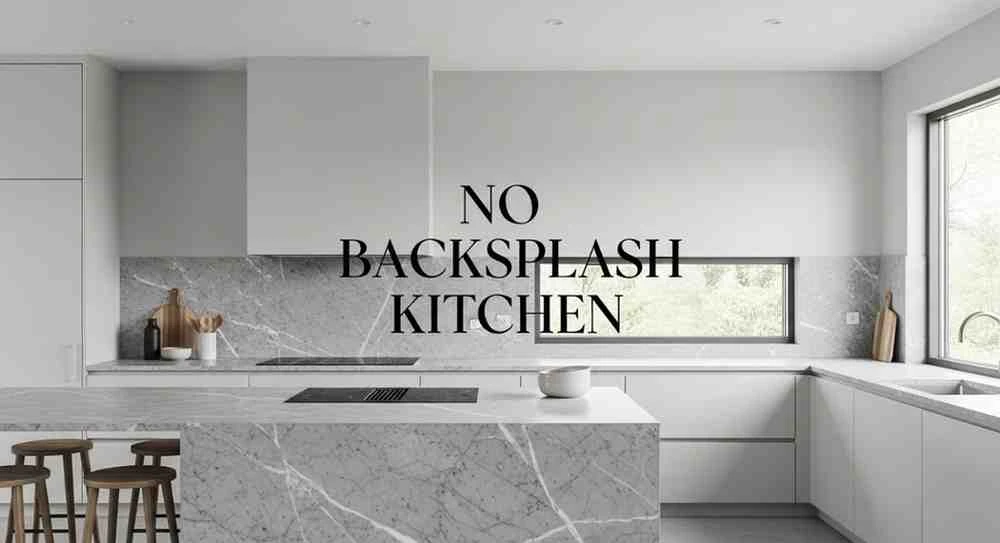
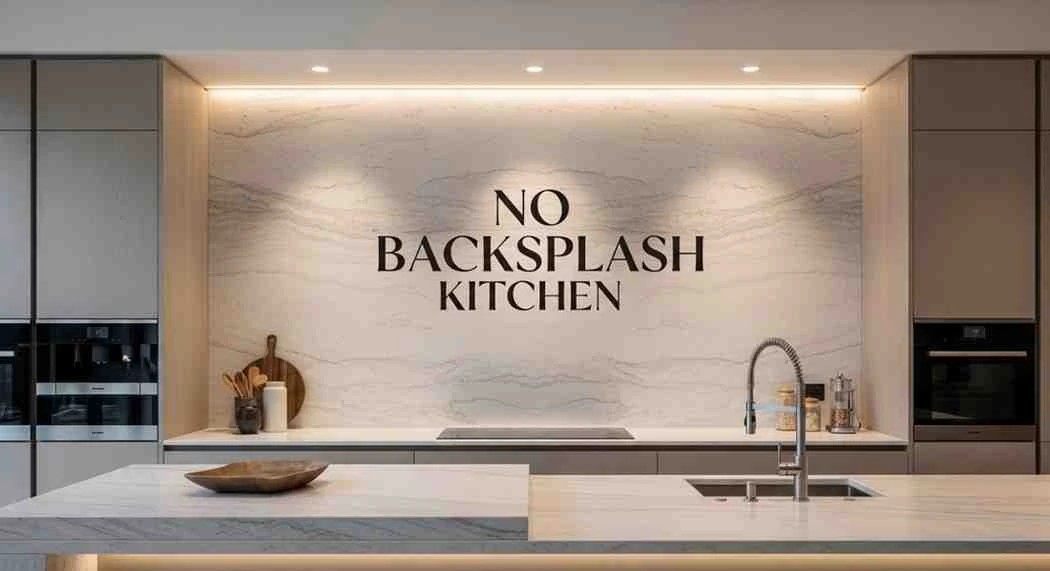
Perhaps the most striking version of the no backsplash kitchen is the full slab wall — where a single continuous piece of stone or engineered material rises from the countertop surface all the way to the upper cabinets or even the ceiling. The countertop and wall become one unified plane of material, with no grout line, no color break, and no transition. The effect is breathtaking.
Marble is the classic choice here. Calacatta, Statuario, and Arabescato varieties offer natural veining that makes the wall as beautiful as any artwork. Engineered quartz offers similar aesthetics with greater durability and stain resistance. Porcelain slab, increasingly available in very large format tiles, is another strong contender for this look.
The full slab wall is most often seen in luxury kitchen design, but the approach can be scaled. Even a modest porcelain slab in a simple light grey can achieve the seamless effect without a stratospheric budget.
Painted Wall Kitchens
The most accessible entry point into the no backsplash kitchen world is simply using a well-chosen, properly applied paint. This works best in kitchens where the cooking zone is not excessively splatter-prone — think households that do not deep-fry daily or heavily cook with oil at high temperatures.
The key is choosing the right paint. Kitchen-specific or bathroom-grade paints are formulated for washability and moisture resistance. Eggshell and satin finishes offer better wipe-down performance than matte. Some brands produce specialist splashback paints that claim genuine water resistance for light kitchen use.
Color matters here, too. Painted wall kitchens without backsplashes look best when the wall color is chosen to complement the cabinetry and countertop tones — creating the visual unity that makes the backsplash-free approach so appealing in the first place.
Glass Panel Kitchens
A glass panel behind the cooktop or main prep zone offers a modern, almost invisible form of wall protection. Frameless tempered glass panels — sometimes called splashback glass — sit flush against the wall and protect it from cooking splashes while remaining visually transparent. The wall color or material behind the glass remains visible, maintaining the aesthetic of the painted or finished wall.
Printed glass panels add another layer of design possibility. A subtle texture, a blush tone, or even a faint geometric pattern can be fused into the glass, giving the wall personality without the visual weight of tile.
Glass is easy to clean, entirely waterproof, and — when frameless and properly fitted — almost invisible. It is one of the most practical kitchen backsplash alternatives available for those who cook frequently and need genuine protection.
Marble and Stone Finishes
Beyond the full slab wall, marble and stone can be used in more targeted ways in a no backsplash kitchen. A honed limestone or sandstone surface applied directly to the wall around the cooking zone delivers rich natural texture with a cohesive, material-forward feel. Microcement — a thin, seamless coating applied over almost any surface — can create a stone-like finish across the entire kitchen wall without any joints or grout lines.
These finishes require sealing and periodic maintenance, but they deliver a warmth and depth that painted surfaces cannot replicate. They also photograph extraordinarily well, which matters in an era where kitchen aesthetics are shared and saved across Instagram and Pinterest constantly.
Kitchen Backsplash Alternatives
If a completely bare painted wall does not feel sufficient for your kitchen’s demands, there is a rich range of kitchen backsplash alternatives that achieve the seamless, design-forward look while providing real protection.
Wall Panels: PVC, acrylic, or composite wall panels are available in a vast range of finishes — from concrete grey to brushed gold to pure white gloss. They install quickly, require no grout, and are entirely waterproof. Panel systems are a popular choice in contemporary kitchen renovations and can be trimmed to fit any configuration.
Stone Slabs: As discussed above, a continuous slab of marble, quartzite, or engineered stone eliminates the need for any traditional backsplash. The countertop and wall become one continuous surface. This is the premium choice and the one that most effectively delivers the luxury kitchen look.
Stainless Steel Sheets: Commercial kitchens have long used stainless steel wall cladding, and the domestic kitchen world has caught up. A brushed or matte stainless steel panel behind the cooktop is hygienic, heat-resistant, easy to clean, and undeniably sleek in an industrial-modern kitchen. It does show fingerprints more readily than some alternatives, which is worth considering in family kitchens.
Waterproof Paint and Specialist Coatings: High-quality waterproof paints, epoxy coatings, and microcement finishes can all turn a standard wall into a protected kitchen surface. These options offer the most design freedom in terms of color and texture but require the most careful application and ongoing maintenance.
For more options, see our guide to [Modern Kitchen Design Ideas].
How to Protect Walls Without a Backsplash
The most common concern about the no backsplash kitchen is practical: without tile, how do you protect the wall from cooking splashes, moisture, and grease? The answer lies in material choice, sealing, and strategic planning.
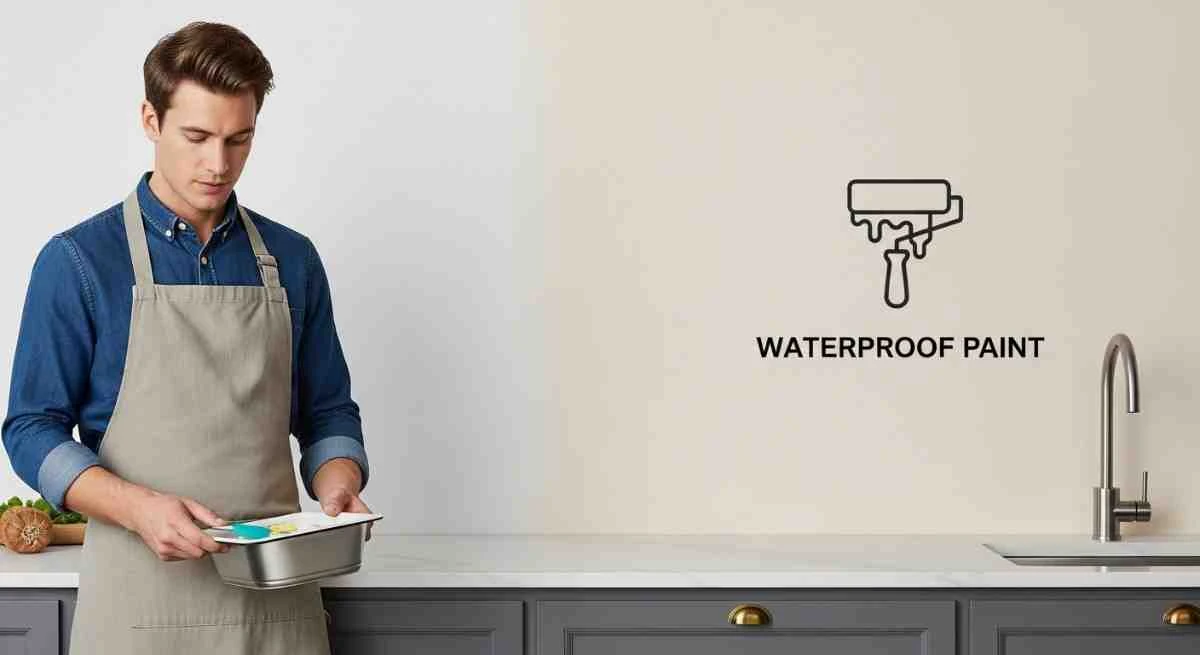
Choose the Right Materials From the Start. Any wall surface in a cooking zone needs to be wipeable and moisture-resistant. Paint should be at minimum an eggshell finish; satin or semi-gloss is better. Wall panels should be fully waterproof. Stone should always be sealed before use and resealed annually.
Use Sealants Proactively. Whether your wall is painted plaster, microcement, limestone, or wood cladding, a quality penetrating sealant creates an invisible barrier that repels water and grease. Reapply according to the manufacturer’s guidance — typically once a year for natural stone and every two to three years for painted surfaces.
Strategic Layout Planning. Where the wall genuinely needs the most protection is directly behind the hob or cooktop. This is where the full force of cooking happens. Consider using a more durable material or a glass panel just in this zone, even if the rest of the kitchen wall is a simpler finish. This targeted approach gives you protection where it counts without compromising the overall minimalist aesthetic.
Stay on Top of Maintenance. Wipe down walls after cooking sessions — particularly after anything involving oil or heavy steam. The longer splashes sit, the harder they become to remove and the more likely they are to cause staining or damage over time. This is simply good kitchen hygiene and is no more demanding than cleaning tile grout.
For more help with keeping your kitchen in peak condition, explore our [Kitchen Storage Solutions] guide and [Home Interior Design Guide].
Modern Trends in Backsplash-Free Kitchens
The no backsplash kitchen is not a static concept — it is evolving alongside broader design movements.
Seamless Surfaces Everywhere: The push for seamlessness is extending from the kitchen wall to the floor, ceiling, and joinery. Kitchens where the countertop, wall, and island all share the same material or a closely related material family are among the most sought-after designs in the current market.
Neutral Color Palettes: Warm whites, soft greiges, rich terracotta tones, and deep forest greens are dominating backsplash-free kitchens. These colors lend themselves to the uninterrupted wall aesthetic better than busier or more saturated tones.
Luxury Textures: Fluted wood panels, aged brass cladding, ribbed stone, and matte laminates with tactile surface finishes are bringing depth and interest to kitchen walls without resorting to tile. Texture, rather than pattern, is the design tool of the moment.
Open Wall Concepts: Some designers are going even further, removing upper cabinets entirely and leaving kitchen walls completely open — finished beautifully, hung with floating shelves, or simply left clean and unadorned. This open wall kitchen design speaks to a generation that values breathing room over storage density.
According to Architectural Digest, one of the world’s foremost luxury design publications, the move toward simplicity and material integrity in kitchen design is one of the most significant shifts the industry has seen in 30 years.
Real-Life Example: A Kitchen Transformation
Consider the experience of a homeowner in a 1990s semi-detached house in the north of England. The original kitchen featured cream subway tiles as a backsplash — clean and functional, but visually fragmented against the dark oak cabinetry and busy stone-effect countertops.
During a full kitchen renovation, the designer proposed removing the backsplash tiles entirely and replacing the wall with a single coat of microcement in a warm stone tone. The upper cabinets were also removed and replaced with two floating shelves in oiled oak. The result was transformative. The kitchen, which had previously felt cluttered and dated, suddenly read as open, airy, and completely contemporary.
The homeowner’s initial concern — that the microcement would be impossible to keep clean — proved unfounded. Sealed with a penetrating sealant and wiped down after cooking, the wall has remained in excellent condition more than two years after installation. The overall cost was lower than retiling and significantly quicker to install.
The before-and-after impact of removing the backsplash and introducing a seamless wall finish in this case is emblematic of what the no backsplash kitchen can achieve: a transformation that feels dramatic but is actually rooted in subtraction rather than addition.
Common Mistakes to Avoid
Even the best design idea can go wrong without proper planning. Here are the most common mistakes homeowners make when pursuing a backsplash-free kitchen — and how to avoid them.
Choosing the Wrong Wall Material. The biggest error is applying a surface that looks beautiful in a showroom but cannot handle the real conditions of a busy kitchen. Always test materials for heat resistance, moisture resistance, and cleanability before committing.
Ignoring Maintenance Requirements. Some backsplash alternative materials — particularly natural stone and microcement — need regular sealing and careful cleaning. If you are not prepared to maintain the surface, choose something more forgiving, like a glass panel or a high-quality wall panel system.
Poor Layout Planning. Not accounting for where the real splash zones are in your kitchen layout is a common mistake. The area directly behind a cooktop or hob needs a higher level of protection than a wall behind an island or prep area. Failing to plan for this creates problems down the line.
Overlooking Practicality in Favor of Aesthetics. The no backsplash kitchen is a powerful aesthetic choice, but it must serve the way you actually cook. A household with young children, a passion for deep frying, or a high-volume daily cooking routine needs more robust wall protection than a sleek painted plaster surface can provide. Match the design to the lifestyle.
Not Consulting a Professional. Some alternative finishes — microcement in particular — require skilled application. A poorly applied microcement finish will crack, stain, and fail within months. Spend the money on professional installation for complex finishes; the difference in longevity and appearance is worth it every time.
Design Checklist: Planning Your No Backsplash Kitchen
Before you begin, work through this checklist to ensure your backsplash-free kitchen is well planned:
- Identify the true splash zones in your kitchen layout — behind the hob, near the sink, along the primary prep area
- Choose a wall material appropriate for each zone’s level of exposure
- Confirm all chosen materials are sealed or sealable and easy to wipe clean
- Consider the long-term maintenance commitment of each material
- Ensure the wall finish color and texture is cohesive with cabinetry, countertops, and flooring
- Plan for proper ventilation and extraction to minimize grease buildup on walls
- Get professional advice on complex finishes like microcement or full stone slabs
- Factor in the full cost — material, installation, sealing, and ongoing maintenance
Material Comparison Table
| Material | Durability | Ease of Cleaning | Cost | Aesthetic Impact | Best For |
|---|---|---|---|---|---|
| Microcement | High (when sealed) | Good | Medium–High | Excellent | Seamless, textured look |
| Full Stone Slab | Very High | Very Good | High–Premium | Outstanding | Luxury kitchens |
| Glass Panel | Very High | Excellent | Medium | Clean, modern | High-use cooking zones |
| Stainless Steel | Very High | Good | Medium | Industrial, contemporary | Modern/commercial style |
| Waterproof Paint | Medium | Fair | Low | Subtle, flexible | Light-use kitchens |
| PVC/Acrylic Panels | High | Excellent | Low–Medium | Clean, versatile | Budget-conscious renovations |
| Porcelain Slab | Very High | Excellent | Medium–High | Sleek, modern | Contemporary kitchens |
Maintenance Tips for Backsplash-Free Kitchens
- Wipe down kitchen walls after every cooking session, especially after frying or boiling
- Use a mild dish soap solution rather than harsh chemical sprays on delicate finishes like microcement or stone
- Reseal natural stone walls annually or as directed by the material supplier
- For painted walls, keep a small quantity of the original paint for touch-ups — high-traffic walls need refreshing every one to two years
- Install a high-quality extraction hood to reduce the volume of airborne grease reaching the walls
- For glass panels, a streak-free glass cleaner applied weekly keeps the surface looking perfect
- Check silicone joints around panels and glass regularly for cracking or mold and re-seal as needed
Frequently Asked Questions
Can you have a no backsplash kitchen?
Absolutely. A no backsplash kitchen is a fully viable design choice when approached with the right materials and planning. Many contemporary and luxury kitchens worldwide are designed without a traditional tile backsplash and look stunning as a result.
Is backsplash necessary in a kitchen?
A backsplash is not structurally necessary, but the wall behind your cooking and prep areas does need some level of protection from moisture, heat, and grease. Whether that protection comes from tile, stone, glass, paint, or panels is entirely up to you and the demands of your cooking lifestyle.
What can I use instead of a backsplash?
There are many excellent alternatives to a traditional tile backsplash, including full stone or porcelain slabs, frameless glass panels, stainless steel wall cladding, waterproof paint or specialist coatings, microcement, and decorative wall panel systems. Each has different aesthetic and practical trade-offs.
How do you protect walls without backsplash?
The key is choosing moisture-resistant and wipeable wall surfaces, applying appropriate sealants, staying on top of regular cleaning after cooking, and using a powerful extractor hood to minimize airborne grease. In the most splash-prone zones, a glass panel or stone slab provides the most robust protection.
Are backsplash-free kitchens practical?
Yes, when planned correctly. The no backsplash kitchen is entirely practical in households with moderate cooking habits who choose appropriate materials. For very high-intensity cooking environments, more robust alternatives to paint — such as stone slabs or glass panels — should be considered.
What are modern backsplash alternatives?
Modern backsplash alternatives include full slab walls in marble, quartzite, or porcelain; frameless glass panels; brushed stainless steel cladding; microcement; specialist waterproof paints; and contemporary acrylic or PVC wall panel systems. All of these deliver a cleaner, more seamless look than traditional tile.
Is a backsplash outdated in modern kitchens?
Not universally, but in the context of contemporary minimalist kitchen design, a decorative tile backsplash can feel at odds with the seamless, uninterrupted aesthetic that defines modern interiors. Many high-end designers are actively moving away from the traditional backsplash in favor of more cohesive wall treatments.
How to design a kitchen without backsplash?
Start by identifying your cooking habits and splash zones. Choose an appropriate wall material — paint, glass panel, stone slab, or microcement — for each zone. Ensure all surfaces are properly sealed and easy to maintain. Focus on creating visual continuity between the wall, cabinetry, and countertop finishes. Consult a professional for complex or premium finishes.
What materials work best without backsplash?
Microcement, full stone or porcelain slabs, glass panels, and stainless steel all perform excellently in backsplash-free kitchens. For lower-budget or lower-intensity applications, specialist kitchen waterproof paint and quality wall panel systems are also strong performers.
Do luxury kitchens use backsplashes?
Some luxury kitchens do feature backsplashes — particularly when rare or beautiful stone is used as a showpiece element. However, the strongest trend in luxury kitchen design currently favors full slab walls, seamless surfaces, and the elimination of the backsplash as a separate design feature in favor of complete material continuity.
Conclusion
The no backsplash kitchen is one of the most compelling expressions of modern design thinking: less is more, continuity is beauty, and the spaces we live in should feel as calm and considered as possible. From painted plaster walls to breathtaking full marble slabs, the range of approaches available makes this aesthetic accessible at every budget level.
Choosing to go backsplash-free is not about cutting corners — it is about making a deliberate, sophisticated decision that puts design integrity first. When backed by the right materials, proper sealing, and a thoughtful understanding of how your kitchen actually works, a no backsplash kitchen can be every bit as practical as it is beautiful.
If you are planning a kitchen renovation or simply dreaming about what your ideal kitchen could look like, we hope this guide has given you the inspiration, confidence, and practical knowledge to explore the backsplash-free path. The results, as countless homeowners and designers are discovering, are worth it.
Ready to start planning your dream kitchen? Share this article with someone who is renovating, save it to your Pinterest board for inspiration, or leave a comment below telling us — would you go backsplash-free? We would love to hear your thoughts.