


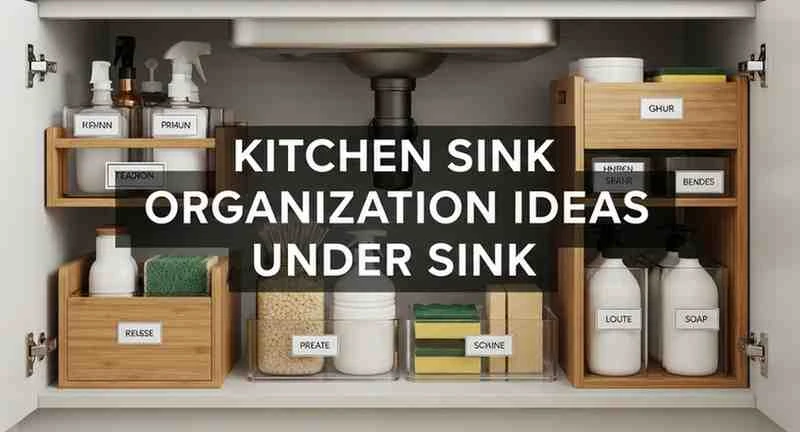
Open the cabinet under your kitchen sink right now. If you’re greeted by a pile of tangled spray bottles, leaking soap containers, random cleaning cloths, and mystery items shoved into dark corners — you’re not alone. The under-sink cabinet is one of the most neglected and chaotic spaces in most kitchens. Yet it’s also one of the most used.F
Whether you’re a homeowner, a renter, or someone who simply wants a more functional kitchen, this guide is built for you. We’re going to walk through the best kitchen sink organization ideas under sink — practical, affordable, and easy to implement no matter how awkward your cabinet space is.
By the end of this article, you’ll know exactly how to transform that dark, cramped cabinet into a well-organized, easy-to-access storage powerhouse.
Why Under Sink Organization Matters
Most people treat the under-sink cabinet as a dumping ground. Items get tossed in, the door closes, and the problem is forgotten — until you desperately need the dish soap and have to dig through a mountain of clutter to find it.
Good kitchen under sink storage does more than just look nice. It improves your daily workflow. When every item has a place, you spend less time searching and more time actually cooking, cleaning, and enjoying your kitchen. An organized space also reduces the chances of spills, leaks going unnoticed, or products getting damaged.
Beyond convenience, an organized under-sink cabinet can extend the life of your cabinet itself. Moisture from leaks is one of the leading causes of under-sink cabinet damage. When the space is organized, you’re more likely to notice a drip or soft spot early before it becomes a costly repair.
Simply put, under sink kitchen storage ideas aren’t just about aesthetics — they’re about making your kitchen work better for you every single day.
Common Challenges in Under Sink Storage
Before diving into solutions, it’s worth understanding why this space is so difficult to organize in the first place.
Pipes and Awkward Space
The biggest obstacle to under kitchen sink organization is the plumbing. The drain pipe, water supply lines, and sometimes a garbage disposal take up a significant chunk of the cabinet’s interior. This makes it nearly impossible to use standard shelving or boxes without working around these obstacles.
Limited Accessibility
The under-sink cabinet is typically deep and low. Items pushed to the back are hard to see and even harder to reach. This is why things get lost and forgotten — out of sight really does mean out of mind in this case.
Moisture and Humidity
Kitchens are humid environments, and the space under the sink is especially prone to moisture. A slow drip from the faucet or condensation on cold pipes can quietly damage cardboard boxes, warp wooden organizers, and encourage mold growth if you’re not careful.
Knowing these challenges ahead of time means you can choose organizers and systems that actually account for them — rather than fighting against the space.
Best Kitchen Sink Organization Ideas Under Sink
Now let’s get into the good stuff. These are the most effective, practical, and widely loved strategies for organizing under kitchen sink spaces of all shapes and sizes.
Use Pull-Out Drawers
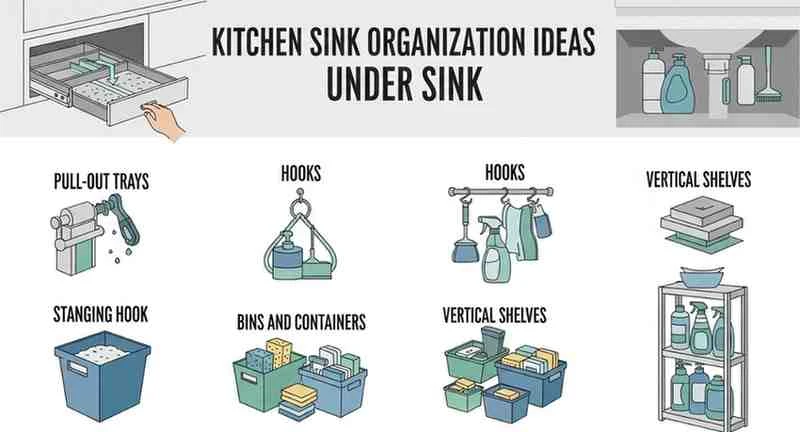
Pull-out drawers are arguably the single best upgrade you can make to under-sink storage. Instead of reaching into the depths of the cabinet and hoping for the best, a pull-out drawer brings everything to you. You slide it out, see all your items at a glance, grab what you need, and slide it back in.
These drawers come in many configurations designed specifically to fit around plumbing pipes. Look for U-shaped or notched drawer systems that slide right around your drain pipe. Many are adjustable, so they work even if your pipe positioning is slightly off-center.
They work especially well for frequently used items like dish soap, scrubbing brushes, sponges, and garbage bags. If you invest in only one upgrade for your under-sink kitchen storage, make it pull-out drawers.
Install Stackable Bins
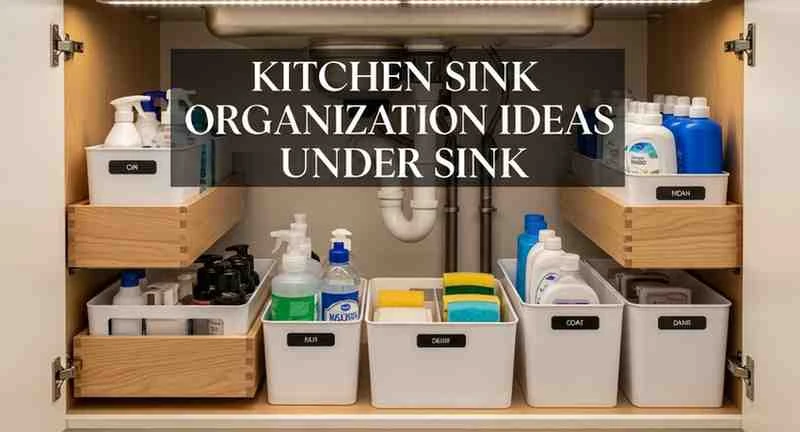
Stackable storage bins are affordable, flexible, and incredibly effective. Because the under-sink area often has pipes running through the middle, stacking bins on either side of the plumbing is a great way to use otherwise wasted vertical space.
Clear bins are particularly useful here because you can see the contents without pulling everything out. Use one bin for dish supplies, another for cleaning sprays, and another for backup supplies like extra sponges or trash bags.
The stackable format means you can customize the height based on what you’re storing. Tall items go in taller sections; small bottles and sponges get stacked neatly in lower bins.
Add Cabinet Door Organizers
The inside of your cabinet door is prime real estate that most people completely ignore. A slim door-mounted organizer can hold spray bottles, gloves, foil, plastic wrap, or even small cleaning tools — all without taking up any floor space inside the cabinet.
Over-the-door organizers specifically designed for kitchen cabinet doors typically use hooks, tension clips, or adhesive mounts. They’re easy to install without any drilling and can be removed without damage, making them perfect for renters.
This is one of the most underutilized kitchen organization hacks out there, and it can genuinely double your effective storage space.
Use Tension Rods for Sprays
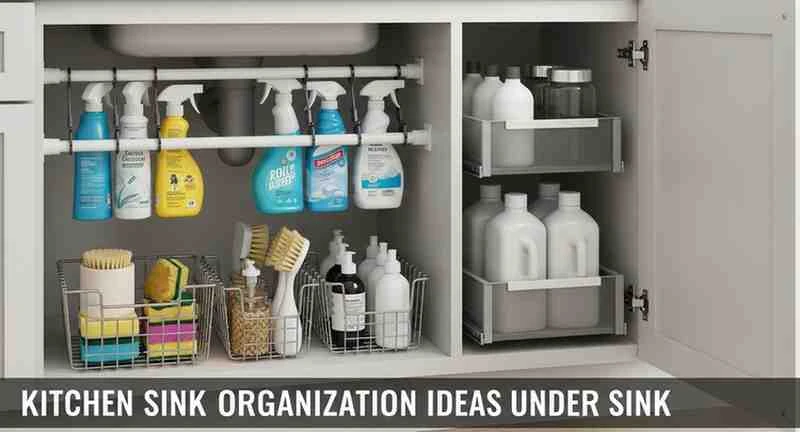
This DIY trick has taken the home organization world by storm — and for good reason. A simple tension rod installed horizontally inside your cabinet creates an instant hanging bar for spray bottles. You hang the spray bottles by their triggers, keeping them upright, easy to grab, and completely off the cabinet floor.
This frees up the floor of the cabinet for larger items like a bucket, a jug of dish soap, or a caddy. Tension rods are inexpensive, require no installation, and can be adjusted or removed in seconds. They’re one of the best budget-friendly under sink storage solutions you can find.
You can even install two tension rods at different heights to create multiple hanging zones for different sized bottles.
Use Vertical Storage Solutions
Because the under-sink space tends to be wide but not always tall, many people miss the opportunity to go vertical. A slim under-sink shelving unit — designed with plumbing cutouts — can effectively double or triple your usable storage by creating two or three levels inside the cabinet.
These shelving units elevate smaller items so nothing gets buried. Place your most-used items on the top shelf at eye level, and use the lower levels for less frequently needed products.
You can also use small risers or adjustable wire shelves to create custom height configurations based on what you’re storing.
Under Sink Storage Ideas for Small Kitchens
If you’re working with a particularly small under-sink cabinet — common in apartments and older homes — the challenge is even greater. Every inch has to earn its place.
The key here is multi-purpose organizers. A cleaning caddy, for example, can hold multiple items in a single, portable unit. When you need to clean, you grab the entire caddy and carry it with you. When you’re done, it goes right back in the cabinet.
Lazy susans — rotating turntable organizers — are another excellent option for small cabinets. They let you spin the contents rather than reaching in and out, making deep cabinet corners accessible for the first time.
Magnetic strips mounted on the inside of cabinet walls can hold small metal items like scissors or utility tools. Slim stackable bins arranged vertically around the pipe use space that would otherwise be dead zones.
For small kitchens especially, thinking in zones is essential. Designate a zone for dish supplies, a zone for cleaning products, and a zone for under-sink extras like trash bags or rubber gloves. Even if the zones are tiny, having them defined keeps the cabinet from descending back into chaos.
How to Organize Under the Kitchen Sink Step by Step
If you’re starting from scratch — or starting over after a failed attempt — here’s a step-by-step process that actually works.
Step 1: Declutter Everything Pull every single item out of the cabinet. Throw away anything expired, empty, or that you haven’t used in over six months. Be ruthless. The less you have to store, the easier the whole process becomes.
Step 2: Categorize Your Items Group what remains into categories: dish supplies, cleaning supplies, trash bags, gloves, backup stock. This gives you a clear picture of what you’re working with and how much storage you actually need.
Step 3: Measure Your Cabinet Before buying any organizers, measure the interior width, depth, and height of your cabinet. Also measure where the pipes sit. This prevents buying products that won’t fit.
Step 4: Add Organizers Based on your categories and measurements, choose your organizers. For most people, a combination of pull-out drawers, a door organizer, and one or two stackable bins covers everything.
Step 5: Optimize Vertical Space Always look up. If there’s clearance, add a shelf or use stackable bins to go higher. Don’t let vertical space go to waste.
Step 6: Maintain Regularly Every month or two, do a quick under-sink check. Toss anything empty or expired, and make sure everything is back in its designated spot. A five-minute reset every few weeks keeps things from becoming a disaster again.
Budget-Friendly Under Sink Organization Ideas
You don’t need to spend a lot of money to get a well-organized under-sink cabinet. Some of the most effective solutions cost next to nothing.
Tension rods for spray bottle storage cost just a few dollars at any hardware store. Stackable clear bins from dollar stores or discount retailers work just as well as high-end versions. A lazy susan from a thrift store, cleaned up and placed inside the cabinet, can be a total game-changer.
For DIY enthusiasts, a simple wooden shelf cut to fit around your pipes can be built for just a few dollars in materials and an hour of time. Even a basic tension shower caddy can be repurposed as an under-sink organizer.
The key is to spend money strategically. If you’re going to splurge on anything, make it the pull-out drawer system — it delivers the biggest improvement in accessibility and usability. Everything else can be budget-friendly without sacrificing effectiveness.
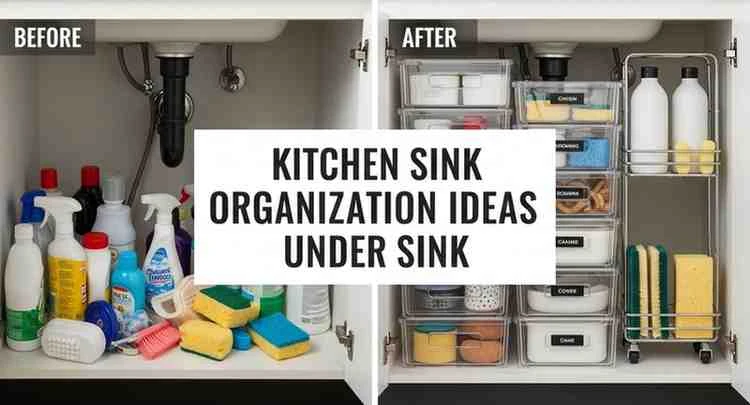
Real-Life Example: A Before and After Transformation
Consider a typical kitchen scenario: a homeowner with a mid-sized under-sink cabinet stuffed with seven different cleaning sprays (three of them nearly empty), a broken scrub brush, two sponges, a tangled pair of rubber gloves, three different dish soaps, a roll of paper towels that got wet and warped, and an unknown bottle without a label.
After applying the step-by-step process above, the same cabinet was transformed. The broken brush and mystery bottle were thrown away. The nearly-empty sprays were consolidated. A tension rod was installed to hang the remaining four sprays. A two-tier stackable bin system was placed on one side of the pipe, holding dish soap, sponges, and gloves in labeled bins. A door organizer was mounted inside the cabinet door holding backup supplies. A small lazy susan was placed on the other side of the pipe for the cleaning caddy.
The result: everything visible, everything accessible, nothing wasted. The entire transformation took under two hours and cost less than $40.
Pros and Cons of Different Storage Solutions
| Storage Solution | Pros | Cons |
|---|---|---|
| Pull-Out Drawers | Excellent accessibility, works around pipes | Higher cost, requires measuring |
| Stackable Bins | Affordable, flexible, clear options | Can tip if not arranged carefully |
| Door Organizers | Uses dead space, no drilling needed | Weight limits, not for heavy items |
| Tension Rods | Extremely cheap, easy DIY | Only suitable for spray bottles |
| Lazy Susan | Great for corners, easy rotation | Round shape wastes some space |
| Under-Sink Shelf | Maximizes vertical space | Must be fitted around pipes |
| Cleaning Caddy | Portable, multi-purpose | Takes floor space when stored |
Common Mistakes to Avoid
Overcrowding the Cabinet More storage products don’t mean more organization. If you fill every organizer to the brim, you’ve just created structured clutter. Store only what you regularly use under the sink.
Ignoring Vertical Space Most people use the floor of the cabinet and nothing else. Always look for ways to add height with shelves or stackable systems.
Not Accounting for Pipes Buying a shelf or drawer system without measuring around your plumbing is one of the most frustrating and wasteful mistakes you can make. Always measure first.
Choosing the Wrong Materials Cardboard boxes and fabric bins can absorb moisture and develop mold under the sink. Stick to plastic, wire, or coated organizers that can handle the humidity.
Skipping Maintenance Organization is not a one-time event. Without a regular quick reset, the cabinet will slowly drift back to chaos.
Quick Organization Checklist
- ✅ Remove and declutter all items
- ✅ Check for leaks or moisture issues before organizing
- ✅ Measure cabinet interior and pipe placement
- ✅ Choose organizers that fit around plumbing
- ✅ Install a door organizer on the inside of the cabinet door
- ✅ Use tension rods for spray bottles
- ✅ Add stackable bins or a pull-out drawer system
- ✅ Label everything clearly
- ✅ Leave a little breathing room — don’t overpack
- ✅ Schedule a monthly 5-minute reset
Maintenance Tips
Keep a small trash bag or bin liner under the sink so empties go straight in the trash before they become clutter. Do a quarterly product audit — check expiration dates and toss anything you haven’t touched in three months. After any plumbing work, always reorganize the cabinet before closing it up again. Wipe down the interior of the cabinet with a dry cloth every few months to catch moisture before it becomes a problem.
Frequently Asked Questions
How do you organize under the kitchen sink?
Start by removing everything and decluttering. Then categorize your remaining items, measure the space (including pipe placement), and choose organizers like pull-out drawers, stackable bins, and door organizers that work around your plumbing. Zone your items by category and maintain the system monthly.
What should be stored under the kitchen sink?
Dish soap, sponges, scrub brushes, rubber gloves, cleaning sprays, trash bags, and a small cleaning caddy are ideal. Avoid storing food, medications, or anything that should stay completely dry in this space.
How can I maximize space under my sink?
Use vertical space with stackable bins or an under-sink shelf. Hang spray bottles on a tension rod. Mount a door organizer inside the cabinet door. Use a lazy susan for corner access. Every surface and wall inside the cabinet is potential storage.
What are the best under sink storage ideas?
Pull-out drawers offer the best accessibility. Door organizers unlock hidden space. Tension rods are the best budget trick. Stackable clear bins keep things visible and tidy. A lazy susan is ideal for corner cabinets or deep shelves.
How do you organize cleaning supplies in the kitchen?
Group your cleaning supplies by type — dish supplies in one area, surface cleaners in another, scrubbing tools in a third. Use a cleaning caddy for portability, and label bins so everything has a clear home.
What are budget-friendly under sink storage solutions?
Tension rods, dollar store bins, repurposed lazy susans, and DIY wooden shelves are all highly effective and very affordable. You can organize your entire under-sink cabinet for under $30 if you shop smart.
How do you deal with pipes under sink storage?
Choose organizers designed with cutouts or U-shapes that fit around the drain pipe. Use the space on either side of the pipes for stacked bins or shelves. The pipes divide the cabinet naturally into two zones — use both sides strategically.
What organizers work best under a kitchen sink?
A pull-out drawer system, stackable clear bins, a tension rod for sprays, a door-mounted organizer, and a cleaning caddy together form the ideal under-sink organization system for most kitchens.
How do I declutter under my sink?
Pull everything out. Throw away empties, expired products, and anything you don’t actually use. Only return items that belong in the kitchen and that you use regularly. Be strict — the less you store here, the easier it is to keep organized.
How do I make under sink storage look neat?
Use matching bins and organizers in a consistent color scheme. Label everything clearly. Use clear containers where possible so you can see contents at a glance. Avoid overpacking, and do a quick tidy-up monthly to keep things looking clean.
Conclusion
The space under your kitchen sink has enormous potential — it’s just waiting to be unlocked. With the right kitchen sink organization ideas under sink, you can transform one of the messiest, most frustrating spaces in your home into a clean, functional, and completely stress-free storage zone.
Start small if you need to. Install a tension rod this weekend. Add one set of stackable bins. Mount a door organizer. Each small step builds toward a cabinet that genuinely works for you rather than against you.
The best time to organize your under-sink cabinet was six months ago. The second best time is right now.
If this guide helped you, share it with a friend who’s been staring at their cluttered cabinet and dreading the clean-up. Drop a comment below with your favorite under-sink organization trick. Save this article for your next weekend project — and then actually do it. Your future self will thank you every single time you reach under that sink and instantly find exactly what you need.
For more ideas, explore related guides on [Kitchen Storage Ideas], [Home Organization Tips], and [Small Space Hacks].
External Resources:
- The Container Store’s organization guides — dofollow
- This Old House home improvement tips — dofollow
- Product links to specific organizers — nofollow
Schema Markup Recommendations: Use FAQ Schema for the Frequently Asked Questions section to improve chances of appearing in Google’s rich results. Use Article Schema with author, datePublished, and headline fields to support Google E-E-A-T signals and help search engines understand the content structure.