


Introduction
Most homeowners treat the washroom as an afterthought — a purely functional room that gets whatever space is left over after the living room, bedroom, and kitchen have been planned. That thinking is costing you one of the biggest opportunities in your home.
The washroom is the first space you enter in the morning and the last you leave at night. It sets the tone for your day, hosts your most private moments, and — when designed well — can feel like a personal retreat. Yet poor lighting, cramped layouts, bad tile choices, and zero storage remain the most common complaints in homes across Pakistan, India, and beyond.
This guide to washroom interior design covers everything: what the discipline actually means, the key design elements, modern and luxury ideas, small-space strategies, layout planning, color and tile selection, and the most common mistakes to avoid. Whether you are renovating an existing bathroom or starting from scratch, this article gives you the practical knowledge to make smart, beautiful decisions.
What is Washroom Interior Design?
Washroom interior design is the deliberate planning and styling of a bathroom space to balance functionality, aesthetics, safety, and comfort. It goes far beyond choosing tiles and a sink. A well-designed washroom considers how a person moves through the space, where light falls, how steam and moisture behave, what storage is needed, and how every surface and fixture works together visually.
In modern homes, the washroom has evolved from a purely utilitarian room into a design statement. Bathrooms in high-end residential projects now rival bedrooms in terms of investment and creative effort. Even in compact apartments, thoughtful washroom interior design can transform a cramped, dated room into something that feels considered and calm.
The discipline draws on principles from architecture, ergonomics, spatial planning, color theory, and product design. A good bathroom designer thinks simultaneously about plumbing constraints, ventilation requirements, user habits, and visual harmony.
Key Elements of Washroom Interior Design
Getting the foundations right before making aesthetic decisions is the most important rule in bathroom design. These are the core elements every washroom project must address.
Layout Planning
The layout determines everything else. A poor layout — no matter how beautiful the tiles — will produce a bathroom that is frustrating to use. The standard approach is to map out the wet zone (shower and bath area), the dry zone (vanity, mirror, and storage), and the toilet zone separately. Each needs adequate space and clear separation to function properly.
The minimum comfortable bathroom layout for a full bathroom (shower, toilet, vanity) requires approximately 35–40 square feet. Smaller spaces demand creative zone compression. Always position plumbing fixtures against walls with existing pipe access to control costs.
Color Schemes
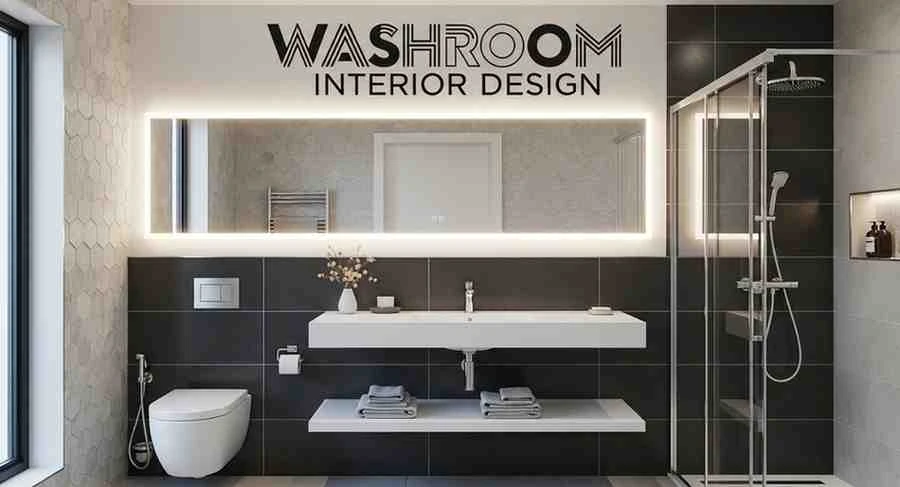
Color in a washroom behaves differently than in other rooms because of reflective surfaces, artificial lighting, steam, and the small scale of most bathrooms. Light, neutral colors — whites, soft greys, warm beiges, sage greens — visually expand the space and remain versatile over time. Darker tones like charcoal, navy, and forest green have become increasingly popular in contemporary and luxury designs, where they create a dramatic, cocooning effect.
The safest approach is a 60-30-10 rule: 60% dominant neutral, 30% secondary tone (often seen in tiles or cabinetry), and 10% accent (in fixtures, accessories, or grout).
Lighting
Bathroom lighting is perhaps the most underestimated element of washroom interior design. Most bathrooms rely on a single overhead light — a choice that creates harsh shadows and makes the room feel clinical. A layered approach works far better: ambient lighting for general illumination, task lighting around the vanity mirror for grooming, and accent lighting (under-cabinet LEDs, recessed floor strips) for atmosphere and visual depth.
Warm white LEDs (2700K–3000K) are generally preferred over cool white (4000K+) for washrooms because they render skin tones more naturally and create a more relaxed atmosphere.
Fixtures and Fittings
Wall-mounted vanities, rimless toilets, frameless glass shower enclosures, and concealed cisterns define the contemporary bathroom aesthetic. Beyond looks, fixtures determine how easy a bathroom is to clean, how durable it will be, and how much water it consumes. Investing in quality taps, showerheads, and flush systems pays off over the long term in both performance and appearance.
Matte black and brushed gold finishes have largely replaced chrome as the statement metal choices in modern bathroom design. Brushed nickel remains a safe, timeless option.
Storage Integration
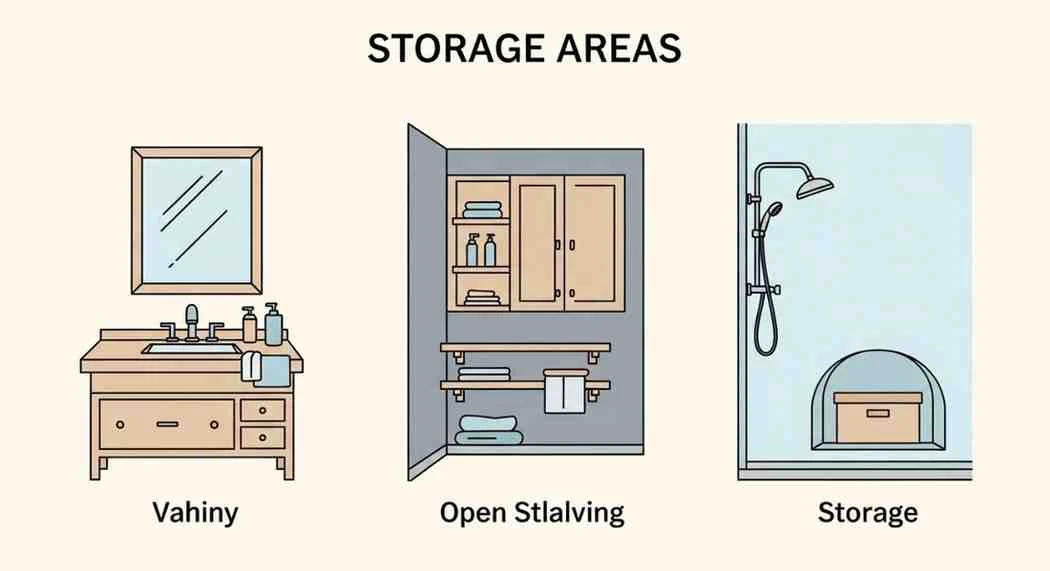
Storage is the silent problem in most bathrooms. Clutter on countertops defeats even the most beautiful design. Recessed wall niches in shower areas, mirrored medicine cabinets, floating vanity units with soft-close drawers, and over-toilet shelving units are all effective solutions. The goal is to keep surfaces clean and products hidden while keeping everything accessible.
Modern Washroom Interior Design Ideas
Modern bathroom design is defined by clean geometry, minimal ornamentation, and a focus on material quality. Here are the most widely appreciated directions in contemporary washroom interior design.
Minimalist Bathroom Design
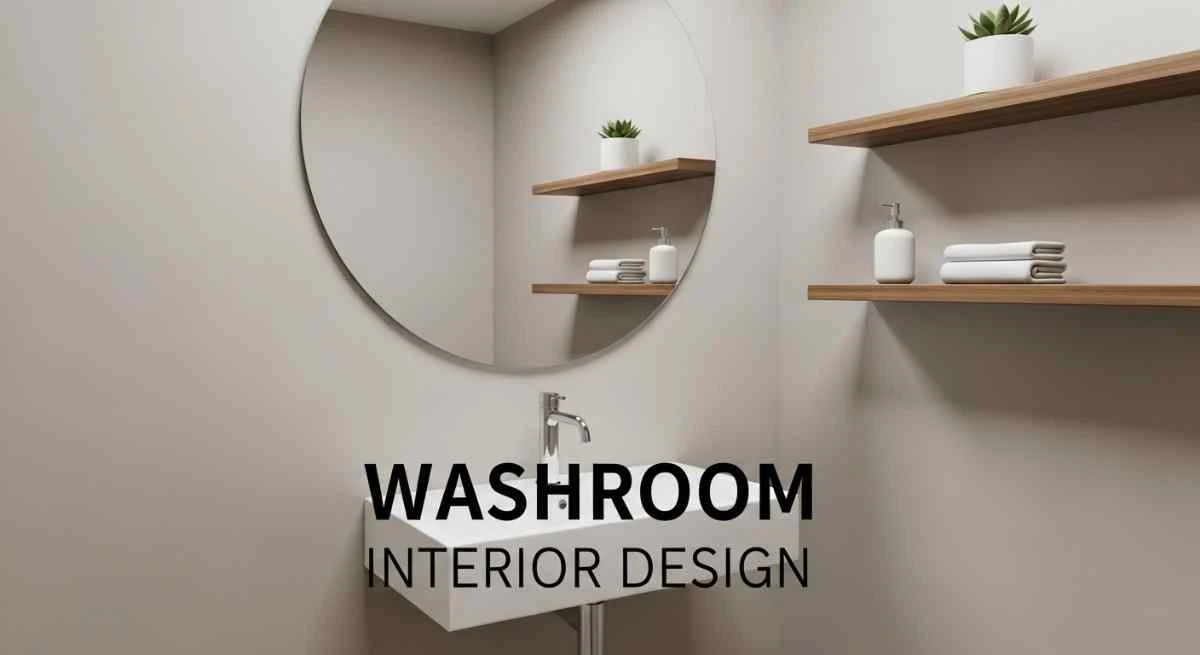
The minimalist bathroom eliminates everything unnecessary. Frameless shower enclosures, wall-hung toilets, floating vanities, and concealed storage create a sense of calm order. The color palette stays controlled — whites, greys, warm beiges, or a single bold tone used consistently. Grout lines are thin, surfaces are smooth, and accessories are kept to an absolute minimum.
Minimalism works especially well in small washrooms because visual noise is reduced, making the space feel larger and more intentional.
Contemporary Bathroom Layouts
Contemporary design sits between minimalism and maximalism. It embraces clean lines but allows more material variety — wood accents alongside stone tiles, mixed metals, textured wall surfaces. Open shower areas without enclosures (wet room format), double vanities, and statement mirrors are common features. Contemporary bathrooms feel lived-in but still elevated.
Smart and Modular Bathroom Design
Modular bathroom design uses pre-configured vanity and storage units that can be arranged and combined according to space. Smart bathroom features — digital shower controls, heated floors, sensor-activated mirrors with built-in lighting and defogging — are becoming more accessible and are particularly popular in urban apartment renovations.
Small Washroom Interior Design Ideas
Designing a small bathroom well is genuinely challenging. Every decision carries more weight when space is limited. These strategies consistently produce the best results.
Space-Saving Layouts for Small Bathrooms
The corner shower is the single most effective layout choice for small bathrooms. Placing the shower in a corner frees up the center of the room for movement and keeps the toilet and vanity accessible without crowding. Wall-mounted toilets and floating vanities eliminate visual bulk at floor level, making the room feel more open.
Pocket doors or barn-style sliding doors save the swing space that a hinged door requires — often recovering 8–12 square feet of usable floor area.
Compact Storage Solutions
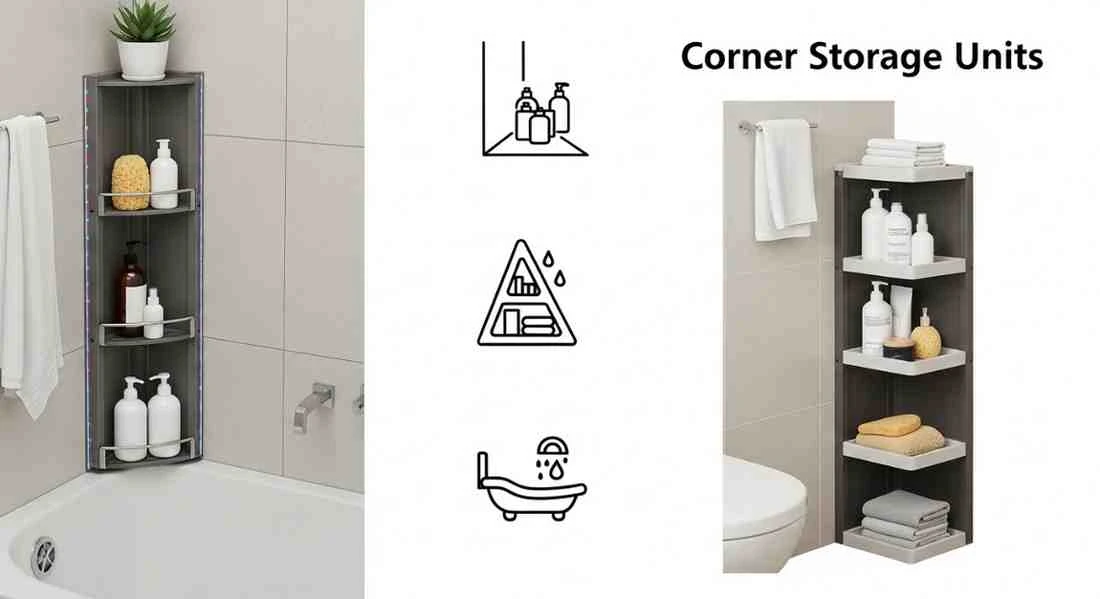
Recessed niches cut into shower walls provide shampoo and soap storage without protruding into the room. Mirrored medicine cabinets replace standard mirrors while doubling as concealed storage. Magnetic strips inside cabinet doors hold small metal accessories. Vertical shelving units above the toilet take advantage of otherwise unused wall space.
Tricks to Make a Small Bathroom Look Bigger
Large-format tiles (60x60cm or larger) with minimal grout lines visually expand a small floor area. Running the same tile up the wall without a break extends the eye upward and eliminates the visual interruption of a border. Frameless glass shower screens allow the eye to travel the full depth of the room. A large mirror — ideally spanning the full width of the vanity wall — doubles the perceived space.
Light, reflective surfaces (glossy tiles, polished stone, large mirrors) bounce light around and prevent the room from feeling boxed in.
Luxury Washroom Interior Design Ideas
Luxury bathroom design is not simply about spending more money. It is about using premium materials deliberately, creating a multi-sensory experience, and achieving a level of finish and detailing that feels genuinely special.
Premium Materials
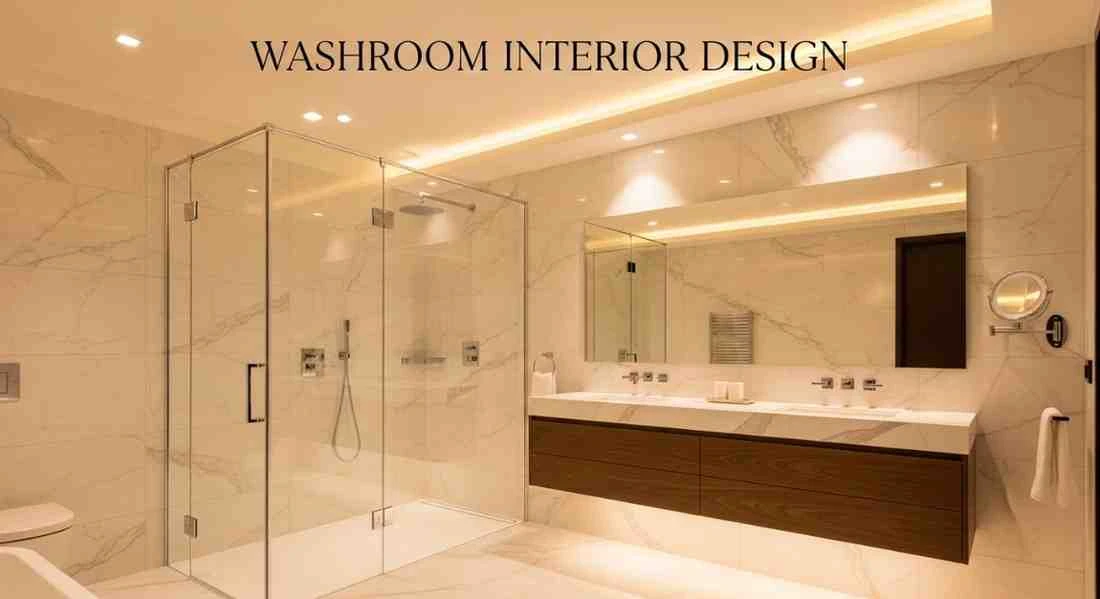
Natural stone — marble, travertine, limestone — remains the gold standard for luxury washroom surfaces. Bookmatched marble panels (where two adjacent slabs are opened like a book and mirrored) create a dramatic feature wall effect. Large-format porcelain tiles with stone or terrazzo finishes offer a more durable and affordable alternative with similar visual impact.
Teak or solid oak vanity tops, custom-made cabinetry with lacquered finishes, and hand-finished plaster walls are also associated with high-end bathroom design.
Elegant Lighting in Luxury Bathrooms
Luxury washrooms use lighting as a design feature, not just a utility. Cove lighting along the ceiling perimeter creates a soft halo effect. Backlit mirrors eliminate harsh shadows while adding a sophisticated glow. Freestanding chandeliers or designer pendant lights above a bathtub are increasingly seen in residential bathroom projects. Dimmer switches on all circuits allow the mood to shift from bright and functional to calm and atmospheric.
High-End Fixtures
Freestanding bathtubs — particularly in matte stone or sculpted resin — remain the centerpiece of luxury bathroom design. Rainfall showerheads, wall-mounted body jets, digital thermostatic controls, and heated towel rails in brushed gold or matte black all contribute to a spa-like experience. Sensor-activated faucets and self-cleaning toilet seats are increasingly common at the premium end of the market.
Bathroom Layout Planning Guide
Efficient bathroom layout planning follows a logical sequence.
Wet and Dry Zone Separation
The wet zone (shower, bath, and any floor-level features) should be clearly separated from the dry zone (vanity, mirror, storage, and toilet) to prevent water damage and reduce slip hazards. In open-plan wet rooms, this separation is achieved through floor drainage gradients rather than physical barriers.
Space Optimization
Standard clearances to follow: at least 70cm in front of the toilet and vanity, 90cm of standing space inside the shower (more is better), and a minimum of 60cm between any two fixtures. These dimensions ensure the bathroom is comfortable to use without feeling cramped.
Ergonomic Bathroom Design
Ergonomics in bathroom design means placing elements at heights and positions that suit the actual users. Vanity height, mirror positioning, towel rail placement, and shower controls should all be calibrated to the height and mobility of the people using the space. For households with elderly members or children, additional accessibility considerations — grab bars, non-slip surfaces, wider doorways — should be built in from the beginning.
Choosing Colors, Tiles, and Materials
Tile Patterns and Ideas
Subway tiles in a brick pattern remain popular and versatile. Herringbone patterns add energy and movement. Large-format plain tiles feel calm and contemporary. Patterned cement tiles or Moroccan-inspired ceramic tiles introduce personality without requiring complex surface treatments. Hexagonal mosaic tiles are a classic choice for shower floors because their small size allows them to conform to the drain gradient without visible cutting.
Color Combinations That Work
White and wood tones feel warm and Scandinavian. Grey and white feel clean and urban. Navy and brass feel bold and vintage-inspired. Sage green and terracotta feel organic and earthy. Black and white remains timelessly graphic. All-white with colored grout has become a popular contemporary choice — the grout color becomes a subtle but distinctive design feature.
Material Selection
For wet areas, always prioritize non-porous, moisture-resistant materials. Glazed porcelain and ceramic tiles are the practical workhorses of bathroom design. Natural stone is beautiful but requires sealing and more maintenance. For vanity tops, engineered quartz is durable and low-maintenance. Solid wood in bathrooms requires careful sealing and ventilation to prevent warping.
Lighting Ideas for Washrooms
Ambient Lighting
Ambient lighting provides the base level of illumination for the entire room. Recessed ceiling downlights, flush-mounted ceiling fixtures, and cove lighting along the ceiling perimeter are all common ambient solutions. Aim for even, shadow-free coverage across the floor and main surfaces.
Task Lighting
Task lighting is positioned specifically to support grooming at the vanity. The most effective placement is on both sides of the mirror at face height — this eliminates the unflattering shadows that overhead lighting creates on the face. Vertical strip lights or sconces on either side of the mirror are the professional standard.
Accent Lighting
Accent lighting adds depth, drama, and atmosphere. Under-vanity LED strips that create a floating effect, recessed toe-kick lighting along the base of cabinetry, backlit shower niches, and feature lighting inside display shelving all add layers of visual interest beyond the purely functional.
Real-Life Example: Before and After Washroom Transformation
Consider a typical 45-square-foot apartment bathroom in Lahore: dated beige tiles from floor to ceiling, a pedestal sink with no storage, a single bare bulb overhead, and a frosted glass window that provided little natural light. The room felt cramped, clinical, and dark.
The transformation involved replacing the beige tiles with large-format warm grey porcelain (floor to ceiling, no border break), swapping the pedestal sink for a 90cm floating vanity with two soft-close drawers, installing a full-width backlit mirror with built-in anti-fog function, adding a recessed niche in the shower wall, and fitting three-layer lighting (recessed ambient, mirror task, and under-vanity accent strips).
The result: a bathroom that felt significantly larger, was dramatically more functional, and took less time to clean. The total cost was managed by keeping the plumbing positions unchanged — the single most effective way to control bathroom renovation costs.
Pros and Cons of Different Washroom Design Styles
| Design Style | Pros | Cons |
|---|---|---|
| Minimalist | Easy to clean, timeless, feels spacious | Can feel cold or impersonal if poorly executed |
| Contemporary | Versatile, warm, livable | Requires careful material coordination |
| Luxury/High-End | Stunning results, high resale value | High cost, requires professional execution |
| Rustic/Traditional | Warm, characterful, cozy | Can feel dated, harder to keep clean |
| Industrial | Bold, distinctive, gender-neutral | Dark tones can make small rooms feel smaller |
| Scandinavian | Light, airy, functional | Limited visual drama |
| Maximalist/Eclectic | Highly personal, vibrant | Risk of feeling cluttered; not evergreen |
Common Washroom Design Mistakes to Avoid
Poor layout planning is the most expensive mistake. Moving plumbing after the fact costs several times more than getting the layout right at the planning stage. Always finalize the layout before choosing any finishes.
Bad lighting — specifically relying on a single overhead source — is the second most damaging error. It makes the room feel institutional and makes grooming difficult. Layer your lighting.
Ignoring storage produces beautiful bathrooms that are impossible to keep tidy. Plan storage before you plan aesthetics. Know where every bottle, towel, and device will live before you commit to a layout.
Overcrowding fixtures in a small space makes the room harder to use and harder to clean. Fewer, better fixtures always outperform a cramped collection of budget choices.
Neglecting ventilation leads to mold, peeling paint, and damaged surfaces within months. Every washroom needs either a window or a properly specified exhaust fan. This is non-negotiable.
Choosing trendy over timeless on major surfaces (tiles, vanities, fixtures) means the room dates quickly. Save bold trend choices for easily replaceable accessories.
Quick Design Checklist
Before finalizing your washroom design, confirm the following:
- Layout finalized with all plumbing positions fixed
- Wet and dry zones clearly defined
- Storage planned for every category of item
- Three-layer lighting scheme designed (ambient, task, accent)
- Non-slip flooring in wet areas specified
- Ventilation solution confirmed (window or exhaust fan)
- All fixture heights checked for ergonomics
- Tile and grout colors selected together, not separately
- Waterproofing membrane specified for all wet areas
- Accessories (towel rails, toilet paper holder, hooks) coordinated in finish
Latest Bathroom Design Trends (2025–2026)
Japandi bathrooms — the fusion of Japanese minimalism and Scandinavian warmth — are dominating aspirational bathroom design globally. Expect natural stone, warm wood tones, muted earthy colors, and deep soaking tubs.
Terrazzo is making a strong comeback, now appearing on full floors, walls, and even custom-made sink basins. Colored grout — particularly warm beige, terracotta, and charcoal — is replacing standard white grout as a subtle but effective design statement. Fluted glass shower screens and fluted cabinet fronts continue to gain popularity as they add texture without visual noise. Matte black fixtures are consolidating their position as the contemporary alternative to chrome, while brushed brass is becoming the choice for warmer, more luxurious schemes.
Frequently Asked Questions
What is washroom interior design? Washroom interior design is the professional or personal practice of planning, styling, and detailing a bathroom space to balance functionality, comfort, aesthetics, and safety. It covers layout, lighting, colors, fixtures, storage, and materials.
How do you design a modern washroom? Start with a functional layout, choose a clean color palette, select contemporary fixtures (wall-mounted, matte finishes), plan three layers of lighting, integrate hidden storage, and use large-format tiles with minimal grout lines.
What are the best washroom interior design ideas? Floating vanities, frameless glass showers, backlit mirrors, recessed niches, large-format tiles, and layered lighting consistently produce the best results regardless of budget.
How can I design a small washroom? Use a corner shower, wall-mounted toilet, floating vanity, large mirror, pocket door, and large-format tiles in light colors. Vertical storage and recessed niches maximize function without adding bulk.
What colors are best for washroom interior design? White, soft grey, warm beige, sage green, and light wood tones work best for most washrooms. Darker tones like charcoal and navy can be effective in larger spaces or when used with excellent lighting.
How do you plan a bathroom layout? Identify wet and dry zones, maintain standard clearances (70cm in front of fixtures, 90cm shower interior), keep plumbing against existing pipe walls, and always finalize the layout before choosing finishes.
What are the latest bathroom design trends? Japandi aesthetics, terrazzo surfaces, colored grout, fluted glass and cabinet fronts, matte black and brushed brass fixtures, and smart bathroom technology are the leading trends for 2025–2026.
How can I make my washroom look luxurious? Invest in natural stone or high-quality stone-look porcelain, install a freestanding tub or rainfall shower, use layered warm lighting, choose coordinated brushed gold or matte black fixtures, and eliminate clutter with proper concealed storage.
What are space-saving washroom design ideas? Corner showers, wall-mounted toilets, floating vanities, pocket doors, recessed shower niches, over-toilet shelving, and mirrored medicine cabinets all save space effectively.
How to make a small washroom look bigger? Use large-format tiles with thin grout lines, run the same tile from floor to ceiling, install a large mirror or full-width mirror, use a frameless shower screen, and choose light colors with reflective finishes.
Conclusion
Washroom interior design is one of the highest-return investments you can make in your home — both in terms of daily quality of life and long-term property value. The principles are consistent regardless of budget: start with a functional layout, build in proper storage, layer your lighting, choose durable and moisture-appropriate materials, and make aesthetic choices that are timeless rather than purely trendy.
A well-designed washroom does not need to be large or expensive. It needs to be thoughtful. Small decisions — the height of a mirror, the color of grout, the placement of a niche — compound into a room that either works beautifully or frustrates constantly.
Use this guide as your starting reference, explore the linked resources below for deeper dives into specific topics, and begin your planning with clarity rather than guesswork. Your washroom deserves the same design attention as any other room in your home — arguably more, given how much time you actually spend there.
Start planning your washroom makeover today. Save this article for reference, share it with someone who is renovating, and drop your design questions or ideas in the comments below — we would love to see what you are working on.
Further Reading:
- [Bathroom Storage Ideas] — explore smart storage solutions for every bathroom size
- [Small Space Design Tips] — principles for making compact rooms feel generous
- [Home Interior Design Guide] — the complete framework for designing your entire home
External Authority Sources:
- Architectural Digest — bathroom design trends and luxury inspiration: https://www.architecturaldigest.com (dofollow)
- Houzz — bathroom layout ideas and real homeowner transformations: https://www.houzz.com (dofollow)
Schema Markup Recommended: FAQ Schema (for the FAQ section) and Article Schema (for the full article) to improve Google rich result eligibility and search visibility.