


Introduction
Healthy snacking has changed dramatically over the past decade. Where once a mid-afternoon snack meant reaching for a bag of crisps or a sugary biscuit, millions of people today are reaching for something that works harder — something that fuels their workouts, supports muscle recovery, keeps hunger in check, and fits into a genuinely balanced diet. Whey protein snacks sit at the center of this shift.
Whether you’re a dedicated gym-goer trying to hit daily protein targets, a busy professional looking for something convenient that won’t derail your nutrition goals, or simply someone who wants to snack smarter without giving up on taste, whey protein snacks have become one of the most popular solutions in the healthy eating space.
This guide covers everything you need to know — what whey protein snacks actually are, how they compare to other protein sources, which types deliver the best nutrition, when to eat them, what to look for on labels, and how to avoid the common traps that turn supposedly healthy snacks into overpriced junk food.
Nutritional needs vary significantly from person to person, so this guide is designed to inform rather than prescribe. Think of it as a framework for making better-informed snacking decisions, not a rigid meal plan.
What Are Whey Protein Snacks?
Whey protein snacks are food products formulated with whey protein as a primary ingredient, typically designed to deliver a meaningful protein contribution in a convenient, portable format.
Whey itself is a byproduct of cheese production. When milk is curdled to make cheese, the liquid that separates out is whey. That liquid is then processed and dried to produce whey protein powder, which exists in three main forms: whey protein concentrate, whey protein isolate, and whey protein hydrolysate. Each varies in protein percentage, lactose content, and processing degree.
Whey protein concentrate is the most common form in mainstream snack products. It typically contains between 70 and 80 percent protein by weight, along with some fat and lactose. Whey protein isolate undergoes additional processing to remove most of the fat and lactose, resulting in a product that is typically 90 percent or more protein. Hydrolysate is pre-digested for faster absorption and is most commonly found in premium sports nutrition products.
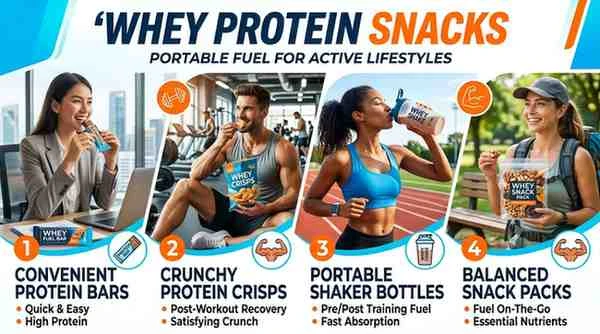
In practical snacking terms, whey protein appears in products including protein bars, protein crisps and chips, protein cookies and brownies, protein puddings, protein shakes and ready-to-drink beverages, and protein-enriched crackers and puffs. The format has expanded significantly as the sports nutrition industry has grown — what was once a niche supplement category is now mainstream food retail.
Benefits of High Protein Snacking
Understanding why high-protein snacking has become so popular requires looking at what protein actually does in the body and how snack timing interacts with broader nutrition.
Satiety and Appetite Management
Protein is consistently identified in nutrition research as the most satiating macronutrient. Compared to carbohydrates and fat, protein produces stronger feelings of fullness and reduces appetite more effectively per calorie consumed. For people managing their weight or trying to reduce overall calorie intake, replacing lower-protein snacks with higher-protein alternatives can help control hunger between meals without requiring willpower alone.
Muscle Protein Synthesis Support
For people engaged in regular resistance training or high-intensity physical activity, protein intake across the day — including from snacks — supports muscle protein synthesis, the process by which the body repairs and builds muscle tissue. Spreading protein intake across multiple meals and snacks is generally considered more effective than consuming all daily protein in one or two large meals.
Sustained Energy
Protein digests more slowly than simple carbohydrates, contributing to a steadier energy release rather than the spike-and-crash cycle associated with high-sugar snacks. For people managing energy levels across a demanding workday or extended training session, this slower digestion profile is a practical benefit.
Blood Sugar Stability
Pairing protein with carbohydrates tends to moderate the glycemic response of a meal or snack. Protein-rich snacks with moderate carbohydrate content are generally associated with a more stable blood glucose response than carbohydrate-only snacks — a consideration relevant for people managing energy levels, hunger patterns, or blood sugar.
These are general nutritional principles. Individual responses vary, and the overall composition of your diet matters far more than any single snack choice.
Whey Protein vs Other Protein Sources
Whey protein is popular in snack formulations for several reasons, but it’s worth understanding how it compares to other protein sources you’ll encounter in the high-protein snack market.
Whey Protein
Whey is a complete protein, meaning it contains all nine essential amino acids in meaningful quantities. It has a particularly high leucine content, which plays a key role in stimulating muscle protein synthesis. It absorbs relatively quickly compared to other proteins. The main considerations are that it’s derived from dairy (making it unsuitable for vegans and potentially problematic for people with lactose intolerance, depending on the form used) and it tends to be more expensive than plant-based alternatives.
Casein Protein
Also dairy-derived, casein digests much more slowly than whey. It’s sometimes preferred for evening snacking because of its slow protein release, but it’s less common in mainstream snack products due to its thicker, more gel-like texture.
Plant Proteins
Pea protein, soy protein, brown rice protein, and blended plant protein combinations are increasingly common in protein snack products. They serve vegan and dairy-free consumers and have improved significantly in taste and texture over recent years. Most plant proteins are nutritionally effective when consumed in sufficient quantities, though some have lower leucine content or incomplete amino acid profiles when used in isolation.
Egg White Protein
Common in some protein bar and snack formulations, egg white protein is another complete protein source with a clean flavor profile and good digestibility. It’s a solid option for people avoiding dairy who still consume animal products.
For most people who tolerate dairy, whey protein isolate or concentrate remains the most nutritionally efficient and cost-effective protein source in snack products. Plant proteins are excellent alternatives for those with dietary restrictions.
Best Whey Protein Snacks for Gym and Fitness
For gym-goers and active individuals, the criteria for a good protein snack extend beyond simple protein content. Portability, convenience, taste, and how a snack fits into training nutrition all matter.
Protein Bars
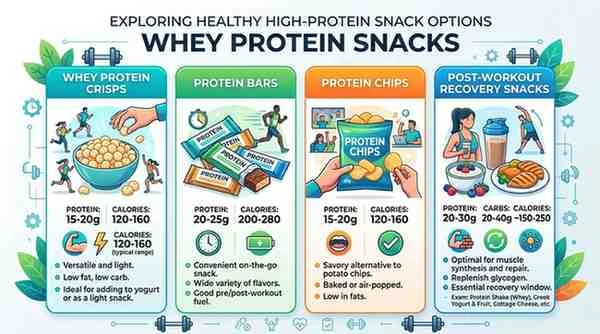
Protein bars are the most established format in the fitness snack space. A quality protein bar typically delivers 15 to 25 grams of protein in a palm-sized, individually wrapped package. The range of products is enormous — from genuinely clean-label bars with minimal ingredients to heavily processed products that use protein content as cover for high sugar and artificial additive loads.
When evaluating a protein bar for gym use, prioritize protein content relative to total calories, sugar content, ingredient quality, and whether it suits your pre or post-workout timing preferences.
Protein Crisps and Chips
Protein crisps have become one of the fastest-growing segments in the sports nutrition snack category. Brands like Quest Protein Chips pioneered a format that delivers 18 to 21 grams of protein per bag in a crunchy, chip-like experience that appeals to people who find traditional protein bars too sweet or dense.
Protein crisps are particularly useful as substitutes for standard crisps during an evening snack, in a packed gym bag, or as a post-workout hunger fix that doesn’t feel like a supplement.
Ready-to-Drink Protein Shakes
Pre-mixed protein shakes require no preparation and deliver 20 to 30 grams of protein in a portable bottle. They’re among the most convenient post-workout options when you need protein quickly without preparation. The trade-off is that they tend to be among the more expensive per-gram-of-protein options and involve packaging waste.
Greek Yogurt and Skyr
Not a manufactured snack in the strict sense, but high-protein dairy products like Greek yogurt and Icelandic skyr are among the most nutritionally clean whey-protein-rich snack options available. A standard serving of full-fat Greek yogurt can deliver 15 to 20 grams of protein with minimal additives. They’re less portable than packaged snacks but ideal for home, office, or gym bag use with a small cooler.
Low Carb and Low Sugar Protein Snacks
For people following low-carbohydrate or ketogenic diets, or simply trying to manage sugar intake, navigating the protein snack market requires reading labels carefully. The protein bar category in particular has historically included products that are high in sugar alcohols, artificial sweeteners, or hidden carbohydrates despite their fitness positioning.
Genuinely low-carb protein snacks include hard-boiled eggs, cheese portions, meat sticks and jerky, protein crisps with minimal carbohydrates, and whey protein isolate-based bars that use low-glycemic sweeteners.
When reviewing labels for low-carb suitability, look at net carbohydrates (total carbs minus fiber) rather than total carbs alone, examine the sweetener used (some sugar alcohols like erythritol have minimal glycemic impact; others like maltitol are much higher), and check serving size relative to the nutritional figures quoted.
Keto-friendly protein snack brands have expanded considerably in recent years, making it more practical than it used to be to find low-carb options with acceptable protein content and taste without making everything from scratch.
Healthy Grab-and-Go Protein Snack Ideas
Convenience is one of the primary drivers of protein snack adoption. For people with demanding schedules who struggle to prepare food in advance, having reliable grab-and-go options removes a significant barrier to consistent healthy snacking.
Practical grab-and-go whey protein snack options include:
- Single-serve protein bars in a variety of flavors to prevent taste fatigue
- Protein crisp packs that fit easily in a bag or desk drawer
- Ready-to-drink protein shakes that don’t require refrigeration before opening
- Individual cheese portions or babybel-style snacks for fridge-ready grab-and-go
- Single-serve Greek yogurt cups that fit in a work bag with a small ice pack
- Protein-enriched trail mix varieties with nuts, seeds, and protein puffs
- Meat jerky or biltong sticks in individual packaging for longer shelf life
Building a consistent snack inventory — keeping a selection of these options stocked at home, at your desk, in your gym bag, and in your car — removes the decision-making friction that leads to poor snack choices in moments of genuine hunger.
Post-Workout Recovery Snacks Explained
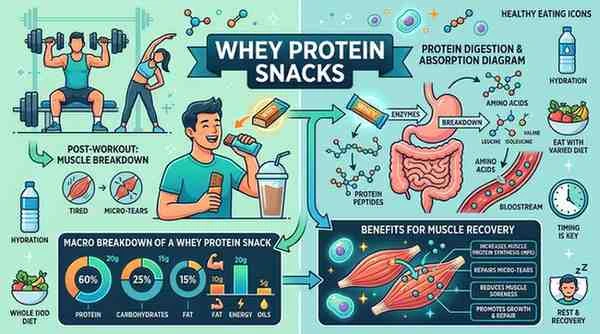
Post-workout nutrition is one of the most discussed topics in fitness, and protein’s role in it is well-established. After resistance training or high-intensity exercise, muscle tissue has been stressed and partially broken down. Consuming protein in the period following exercise supports the muscle protein synthesis process that repairs and builds that tissue.
The idea that there is a narrow 30-minute “anabolic window” during which you must consume protein or miss the opportunity entirely has been significantly nuanced by more recent research. While consuming protein after training is beneficial, the total protein intake across the day matters more than precise timing for most people.
For post-workout snacking specifically, a protein source that digests reasonably quickly — like whey protein — is commonly recommended because of its absorption profile and high leucine content. Pairing protein with some carbohydrates after training can help replenish muscle glycogen, which is particularly relevant after endurance or high-volume training.
Practical post-workout whey protein snack options include a protein shake with a banana, Greek yogurt with oats and fruit, a protein crisp pack, or a protein bar consumed alongside a piece of fruit.
Protein Snacks for Weight Management
High-protein snacking occupies an interesting position in weight management discussions. On one hand, protein’s satiety effects can genuinely help reduce overall calorie intake by managing hunger more effectively. On the other hand, protein snacks are not calorie-free, and some products are marketed as health foods despite containing significant calories from fats and sugars alongside their protein content.
Effective use of protein snacks for weight management involves treating them as a genuine nutritional tool rather than a free food. A protein bar that delivers 20 grams of protein but also 300 calories and 20 grams of sugar is not inherently a good weight management choice — it depends entirely on how it fits into the overall daily calorie and macro picture.
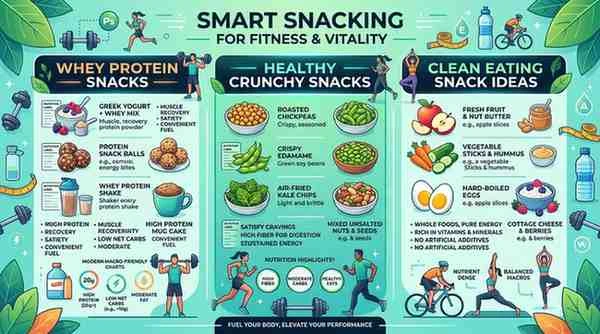
Lower-calorie protein snack options like Greek yogurt, protein crisps, hard-boiled eggs, and cottage cheese tend to deliver better protein-per-calorie ratios for weight management purposes than most packaged protein bars. Including them strategically — in the mid-morning or mid-afternoon periods where hunger typically peaks and leads to poor food choices — is where their weight management value is most clearly realized.
Are Whey Protein Snacks Healthy?
The honest answer is: it depends on the product and the context.
Whey protein itself is a well-studied ingredient with a strong safety record and clear nutritional benefits for most people. The health value of a whey protein snack product depends heavily on the other ingredients in the formulation, the total macro and calorie profile, and how the product fits into the broader diet.
A protein crisp made with whey protein isolate, rice flour, and minimal additives is a nutritionally reasonable snack choice. A protein bar containing whey protein alongside corn syrup, palm oil, and a long list of artificial additives is a different nutritional proposition despite being marketed in the same category.
Evaluating the healthiness of any specific product requires looking at the full ingredient list and nutritional panel rather than relying on front-of-pack marketing claims. Terms like “natural,” “clean,” “high protein,” and “fitness” are used loosely across the industry.
For people with dairy sensitivities, lactose intolerance, or dairy allergies, whey protein products require careful evaluation. Whey protein isolate contains very little lactose and may be tolerated by many people with mild lactose sensitivity, but individual responses vary.
Best Crunchy Protein Snacks
Texture matters enormously in snacking satisfaction, and the success of protein crisps demonstrates how significant the demand for crunchy protein options is. Many people find that protein bars — despite their nutritional merits — don’t satisfy the specific craving for something crispy and savory.
The best crunchy whey protein snacks currently available include:
- Whey protein crisps in barbecue, salt-and-vinegar, and ranch flavors that closely replicate the experience of conventional crisps
- Protein puffs in a corn puff-style texture with higher protein than standard puffed snacks
- Baked protein crackers in seeded and savory varieties
- Edamame and broad bean snacks that combine plant protein with a crunchy format
- Roasted chickpea snacks, which while not whey-based offer a crunchy high-protein alternative with fiber
Crunchy protein snacks are particularly effective as replacements for habitual evening snacking on conventional crisps or crackers — the texture satisfaction is similar while the nutritional profile is substantially better.
Protein Bars vs Protein Crisps
These two formats represent the dominant packaged whey protein snack categories and appeal to different snacking contexts.
Protein bars are denser, more calorie-concentrated, and more commonly used as a meal bridge or post-workout recovery snack. Their portability and extended shelf life make them ideal for bags and travel. The main criticisms are their sweetness (most protein bars are sweet rather than savory), their sometimes dense or chewy texture, and the variability in ingredient quality across the market.
Protein crisps are lighter, lower in total calories per serving than most bars, and satisfy savory crunchy cravings that protein bars can’t address. They’re better suited as snack replacements than as meal supplements. Their lower calorie density makes them less effective as post-workout recovery options if your goal is significant protein and calorie replenishment.
The practical answer for most people is to keep both available and use them in different contexts — protein bars as portable meal bridges or post-workout options, protein crisps as daily snacking alternatives.
Snacks for Athletes and Active Lifestyles
Competitive athletes and highly active individuals have protein and calorie requirements that differ significantly from the general population. Total daily protein needs are higher, timing around training sessions matters more, and recovery nutrition has a more direct impact on performance.
For athletes, whey protein snacks fit into a broader sports nutrition strategy rather than serving as standalone solutions. Key considerations include the timing of protein intake relative to training, the amino acid profile of protein sources used, overall daily protein targets based on body weight and training volume, and total calorie requirements to support performance and recovery.
Snack choices that work well for athletes and highly active people include protein-and-carbohydrate combinations for pre-training energy and post-training recovery, high-protein dairy products for between-session nutrition, and calorie-dense protein bars for high-volume training days where energy requirements are elevated.
Athletes should work with a registered sports dietitian for personalized nutritional guidance, particularly for competition preparation or high-performance training programs.
Clean Eating High Protein Snack Ideas
Clean eating, while variably defined, generally refers to a dietary approach emphasizing whole, minimally processed foods with short, recognizable ingredient lists. Applying this principle to protein snacking means prioritizing whole food protein sources and minimally processed protein products over heavily engineered nutrition products.
Clean high-protein snack ideas include:
- Hard-boiled eggs — approximately 6 grams of protein each, portable, minimal processing, no additives
- Cottage cheese with fruit — 15 to 20 grams of protein per serving, few ingredients, versatile
- Natural Greek yogurt — 15 to 20 grams per serving from live-culture dairy with no added sugar versions
- Turkey or chicken slices — lean animal protein, minimal processing in plain varieties
- Nut butter with apple or celery — combining plant protein and fat with fiber and natural carbohydrates
- Edamame — 17 grams of complete plant protein per cup, whole food, minimal processing
- Homemade protein balls with whey protein, oats, nut butter, and honey
The clean eating approach to protein snacking tends to be more work than reaching for a packaged product, but the ingredient quality and overall nutritional profile of whole food options are generally superior.
How Much Protein Should a Snack Contain?
There is no universal correct answer to this question since protein needs vary by body weight, activity level, overall diet composition, and individual health goals. However, some general frameworks are useful.
General nutrition guidance for adults typically suggests protein intakes in the range of 0.8 grams per kilogram of body weight per day as a minimum, with higher recommendations of 1.6 to 2.2 grams per kilogram commonly cited for people engaged in regular resistance training or endurance exercise.
For a snack to make a meaningful contribution to daily protein intake, a target of 10 to 20 grams per snack is a reasonable benchmark for most active adults. Products delivering fewer than 5 grams of protein per serving are nutritionally closer to conventional snacks than to genuine high-protein options, regardless of marketing claims.
For post-workout specifically, research suggests that consuming 20 to 40 grams of high-quality protein after training effectively stimulates muscle protein synthesis in most adults. A protein bar or shake delivering 20 to 25 grams meets this range comfortably.
Protein Snack Ingredients to Look For
Reading labels effectively is the most important practical skill for navigating the protein snack market. These are the ingredients and markers worth prioritizing:
Protein source quality matters. Whey protein isolate as the first listed protein source indicates a higher-purity product than concentrate-heavy formulations. Look for the protein source clearly identified near the top of the ingredient list.
Sugar content deserves close attention. A product delivering 20 grams of protein but 25 grams of sugar is a different nutritional proposition from one delivering the same protein with 3 grams of sugar.
Fiber content adds value. Protein snacks that also deliver meaningful fiber (4 grams or more per serving) support satiety and digestive health beyond protein’s contribution alone.
Ingredient list length is an informal quality indicator. Shorter ingredient lists with recognizable components generally indicate more minimal processing, though this is not a universal rule.
Serving size must be checked. Nutritional figures are per serving, and serving sizes vary dramatically between products. Always normalize to a consistent unit (per 100 grams, for example) when comparing products.
Common Mistakes When Buying Protein Snacks
The protein snack market is competitive and marketing-heavy. These are the most common mistakes that lead people to make poor purchasing decisions.
Trusting front-of-pack claims without reading the full label is the most frequent error. “High protein,” “natural,” and “clean” are marketing terms with no standardized regulatory definition in many markets. The nutritional panel and ingredient list tell the actual story.
Overlooking calories is particularly common among people who associate “protein” with weight loss. Calorie content varies enormously across protein snack products — some protein bars contain as many calories as a small meal.
Ignoring sugar alcohols in low-carb products. Products marketed as low-sugar or keto-friendly sometimes use sugar alcohols extensively. While some sugar alcohols have minimal impact on blood sugar, others can cause digestive discomfort in some people, and their calorie contribution varies.
Buying based on taste testing alone without comparing nutritional value leads to sticking with products that may deliver less protein per calorie or more sugar than alternatives you haven’t tried.
Homemade vs Store-Bought Protein Snacks
Making your own protein snacks at home offers genuine advantages — primarily ingredient control, cost efficiency, and the ability to customize flavors and macros precisely. A batch of protein balls made with whey protein powder, oats, nut butter, and honey takes about 15 minutes and costs significantly less per serving than comparable packaged products.
The practical disadvantages are time investment, shorter shelf life, and lower convenience compared to packaged snacks you can throw in a bag without preparation.
For people with time and interest in food preparation, a hybrid approach works well — homemade snacks as the primary option with packaged products as backup for when preparation isn’t practical.
Best Times to Eat Protein Snacks
Protein snacks serve different functions depending on when they’re consumed.
Mid-morning (10 to 11 AM) is one of the most effective snack windows for managing hunger — particularly for people who eat breakfast early. A protein-rich mid-morning snack maintains satiety until lunch and prevents the aggressive hunger that leads to overeating at the midday meal.
Mid-afternoon (3 to 4 PM) is the other classic hunger window, coinciding with the natural circadian energy dip that occurs a few hours after lunch. A protein snack here sustains energy and focus through the remainder of the working day and reduces the likelihood of arriving home ravenously hungry.
Pre-workout, approximately 1 to 2 hours before training, a moderate protein snack combined with some carbohydrates provides sustained energy without causing digestive discomfort during exercise.
Post-workout, within a few hours after training, a protein-rich snack supports muscle recovery and glycogen replenishment. Timing is useful but not as critical as overall daily protein intake.
Before bed, a slower-digesting protein source like cottage cheese or casein is sometimes used to maintain overnight protein availability for muscle recovery during sleep.
Budget-Friendly Healthy Protein Snacks
Protein snacks have a reputation for expense, and specialty branded products can indeed be costly. However, several high-protein snack options deliver excellent nutritional value at significantly lower costs.
Eggs are consistently among the cheapest sources of complete, high-quality protein available anywhere. Hard-boiled eggs prepared in batches cost pennies per serving and deliver 6 grams of protein each.
Cottage cheese is similarly excellent value — typically lower cost per gram of protein than most branded protein bars, with a clean nutritional profile.
Canned tuna and sardines offer very high protein per unit cost, are shelf-stable, and work well as portable snacks when paired with crackers or eaten straight from a single-serve tin.
Plain Greek yogurt bought in larger tubs is significantly cheaper per serving than individual cups or branded protein products.
Whey protein powder is actually one of the cheapest per-gram-of-protein options when purchased in bulk and used to prepare shakes or homemade snacks, despite the higher upfront cost of a large container.
Future Trends in Healthy Snacking
The healthy snack industry is continuing to evolve, and several trends are shaping the next generation of protein snack products.
Functional ingredients beyond protein are becoming increasingly integrated — snacks combining protein with probiotics, adaptogens, collagen, or specific vitamin and mineral formulations reflect growing consumer interest in multi-functional wellness foods.
Plant-based protein snacks are growing rapidly as formulation technology improves the taste and texture of pea, hemp, and other plant proteins. This trend is expanding the protein snack market beyond traditional sports nutrition audiences.
Cleaner label products with shorter ingredient lists and more recognizable components are capturing market share from heavily processed alternatives as consumer label literacy increases.
Personalization — protein snack subscription services and customizable macro profiles — is emerging as a way for consumers to align snack nutrition more precisely with individual health and fitness goals.
The direction is clear: protein snacking is becoming more sophisticated, more accessible, and more integrated with broader wellness priorities beyond purely athletic performance.
Nutrition and Comparison Tables
Protein Content Comparison by Snack Type
| Snack Type | Protein per Serving | Calories | Sugar | Carbs | Best Use | Weight Management | Post-Workout | Convenience |
|---|---|---|---|---|---|---|---|---|
| Whey Protein Bar | 15–25g | 180–300 | 3–20g | 15–35g | Meal bridge / recovery | Moderate | Good | Very High |
| Protein Crisps | 15–21g | 100–140 | 0–2g | 5–15g | Snack replacement | Good | Moderate | Very High |
| Greek Yogurt | 15–20g | 90–150 | 4–8g | 5–10g | Anytime snack | Good | Good | Moderate |
| Hard-Boiled Egg | 6g each | 70 | 0g | 0.5g | Portable snack | Good | Moderate | High |
| Cottage Cheese | 14–20g | 100–160 | 4–6g | 5–8g | Evening / anytime | Good | Good | Moderate |
| RTD Protein Shake | 20–30g | 150–200 | 1–5g | 5–10g | Post-workout | Moderate | Excellent | Very High |
| Meat Jerky | 10–15g | 70–120 | 2–7g | 3–10g | On-the-go | Good | Moderate | Very High |
| Edamame | 17g per cup | 190 | 3g | 14g | Plant-based snack | Good | Moderate | Moderate |
| Protein Puffs | 10–15g | 100–130 | 0–3g | 8–15g | Crunchy snacking | Good | Low | Very High |
| Homemade Protein Balls | 8–15g | 120–200 | 5–12g | 12–25g | Customizable snack | Variable | Moderate | Low |
Note: Nutritional figures are approximate ranges based on typical products in each category. Specific products vary significantly. Always check individual product labels.
Whey Protein Snack Format Comparison
| Feature | Protein Bar | Protein Crisps | RTD Shake | Greek Yogurt | Protein Puffs |
|---|---|---|---|---|---|
| Protein per serve | High | High | Very High | High | Moderate |
| Calorie density | High | Low–Medium | Medium | Low–Medium | Low |
| Convenience | Very High | Very High | Very High | Moderate | Very High |
| Taste variety | Wide | Moderate | Wide | Limited | Moderate |
| Suitability for travel | Excellent | Excellent | Good | Poor | Excellent |
| Post-workout suitability | Good | Moderate | Excellent | Good | Low |
| Clean label options | Variable | Variable | Variable | Good | Variable |
| Cost per serving | Medium–High | Medium | Medium–High | Low–Medium | Medium |
FAQ Section
What are the best high protein snacks?
The best high-protein snacks depend on your goals and preferences, but consistently strong options include Greek yogurt, cottage cheese, hard-boiled eggs, whey protein bars, protein crisps, ready-to-drink protein shakes, edamame, meat jerky, and homemade protein balls. Each offers a different balance of convenience, taste, and nutrition.
Are protein snacks healthy?
Many are, but not all. The healthiness of any protein snack depends on its full nutritional profile — including sugar content, calorie count, ingredient quality, and how it fits your overall diet — not just its protein content. Whole food options like Greek yogurt and hard-boiled eggs are nutritionally cleaner than many processed protein bars. Always read full labels rather than relying on front-of-pack marketing.
Which protein snacks are best for weight loss?
Protein snacks that are high in protein relative to their calorie content are most useful for weight management — options like protein crisps, Greek yogurt, cottage cheese, hard-boiled eggs, and plain meat jerky tend to offer good protein-to-calorie ratios. Be aware that some protein bars are calorie-dense despite their fitness positioning.
Are high protein snacks good for muscle gain?
Protein intake — including from snacks — supports muscle protein synthesis when combined with appropriate resistance training. Snacks delivering 15 to 25 grams of high-quality whey or other complete protein contribute meaningfully to daily protein targets that support muscle development.
What are low carb protein snacks?
Good low-carb protein snacks include hard-boiled eggs, cheese, meat jerky and biltong, certain protein crisps with minimal carbohydrate content, cottage cheese, and plain Greek yogurt. Many branded keto protein products also deliver high protein with minimal net carbohydrates.
Can protein snacks help with weight management?
They can, as part of a balanced approach to nutrition. Protein’s satiety effects help manage hunger between meals, potentially reducing overall calorie intake. However, protein snacks are not a weight loss solution in isolation — total calorie balance, food quality across all meals, and activity levels all matter far more.
How much protein should a snack contain?
For most active adults, a snack delivering 10 to 20 grams of protein makes a meaningful contribution to daily protein targets. Post-workout, 20 to 40 grams is commonly recommended to effectively stimulate muscle protein synthesis. Products with fewer than 5 grams of protein per serving are not genuinely high-protein options despite potential marketing framing.
What are the healthiest protein bars?
The healthiest protein bars typically have short ingredient lists with recognizable components, 15 or more grams of protein, limited added sugar (under 5 grams is a reasonable target for clean-label products), minimal artificial additives, and protein content that is the primary driver of calories rather than fat and sugar. RXBAR, KIND Protein, and similar minimally processed options are commonly cited in this category, though specific products should always be evaluated on their individual nutritional merits.
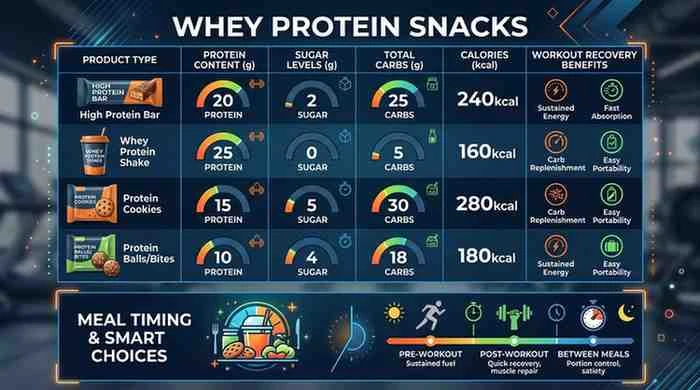
What are good post-workout snacks?
Good post-workout snacks combine protein for muscle recovery with some carbohydrates for glycogen replenishment — options like a protein shake with fruit, Greek yogurt with oats, a protein bar with a banana, or cottage cheese with berries. Total daily nutrition matters more than precise timing, but consuming protein within a few hours after training is beneficial.
Which snacks help keep you full longer?
Protein and fiber are the two nutrients most associated with sustained satiety. Snacks that combine meaningful protein with dietary fiber — Greek yogurt with berries, cottage cheese, edamame, or protein bars with added fiber — tend to maintain fullness more effectively than protein-only or carbohydrate-only snacks.
Are whey protein snacks healthy for everyone?
Whey protein is safe and nutritionally beneficial for most people. People with dairy allergies should avoid whey entirely. People with lactose intolerance may tolerate whey protein isolate (which contains very little lactose) better than concentrate. Individuals with specific medical conditions or unusual dietary needs should consult a healthcare professional or registered dietitian for personalized guidance.
What are healthy crunchy snacks?
Healthy crunchy protein snacks include protein crisps, protein puffs, roasted edamame, baked chickpeas, raw nuts (in controlled portions), and protein-enriched crackers. These provide the textural satisfaction of conventional crunchy snacks with significantly better nutritional profiles.
Where can I buy high protein snacks online?
High-protein snacks are widely available through major online retailers, specialist sports nutrition websites, supermarket delivery services, and direct-from-brand subscription programs. When purchasing online, the same label-reading principles apply — evaluate nutritional information and ingredient quality rather than relying on search rankings or sponsored placement.
Conclusion
Whey protein snacks represent one of the most practical tools available for people trying to eat well consistently amid busy, demanding lives. When chosen carefully and integrated thoughtfully into a balanced diet, they support satiety, contribute to daily protein needs, and make healthy snacking both convenient and genuinely enjoyable.
The key takeaway from this guide is that the protein snack market is large, varied, and inconsistently regulated in terms of marketing claims. Not every product with “high protein” on the label lives up to that positioning when the full nutritional picture is examined. Building the habit of reading complete nutritional panels, comparing protein content to total calories and sugar levels, and prioritizing ingredient quality over packaging design is the most reliable path to consistently good snacking choices.
Whey protein snacks work best as part of a broader nutrition strategy — not as a substitute for whole food meals, but as a genuinely useful addition to a diet that prioritizes quality, balance, and consistency. Used that way, they earn their place in any active person’s nutritional toolkit.
Nutritional needs vary between individuals. If you have specific health conditions, fitness goals, or dietary requirements, working with a registered dietitian provides personalized guidance that general articles cannot replace.
Start Snacking Smarter Today
Ready to upgrade your snacking routine with high-quality whey protein options that actually support your goals? Here’s a simple action plan:
- Audit your current snacks. Look at what you’re actually eating between meals and evaluate the protein, sugar, and calorie content against the benchmarks in this guide.
- Stock up on staples. Start with accessible, clean options like Greek yogurt, hard-boiled eggs, and cottage cheese before investing in specialty products.
- Try protein crisps as a crisp replacement. For one week, swap your evening snack for a protein crisp alternative and notice the difference in how you feel.
- Read one label this week. Pick up any packaged protein product and work through the full nutritional panel using the criteria in this guide.
- Build a snack rotation. Keeping 3 to 4 different protein snack options available reduces taste fatigue and ensures you always have something suitable regardless of the context.
For more guidance on building a high-protein lifestyle, explore our related content on workout nutrition fundamentals, high-protein meal planning, clean eating for active lifestyles, and low-carb food guides to support your fitness journey.